
What employee wellness means at work

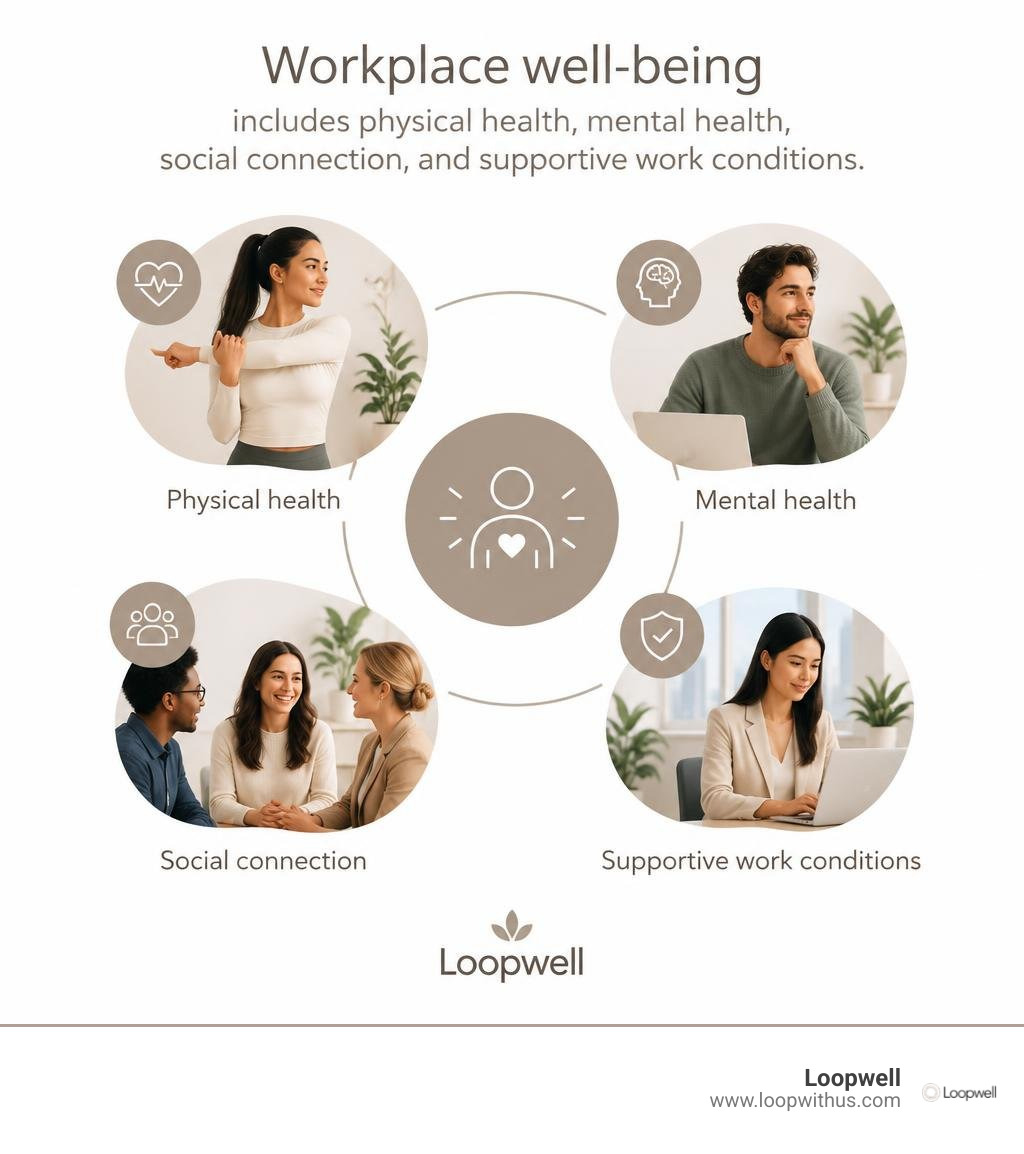
Employee wellness means supporting people's physical, mental, and social health at work. A useful program pairs access to care and healthy habits with a workplace where people can speak up, manage their workload, and feel supported. Its goals are to help employees feel better and to reduce risks such as burnout and avoidable absence.
The evidence calls for care, not big promises. A Harvard-led randomized study found that a workplace program improved some health behaviors but did not significantly change medical spending or absenteeism after 18 months. That is why this guide looks beyond perks to the work environment, employee trust, and ways to measure what changes.
I'm Debbie Looney, and I'll walk you through what the research means in practice.
Understanding Employee Wellness: Theoretical Frameworks and Core Objectives
Modern occupational health psychology views work through a broad lens. As outlined in research on employee wellbeing and workplace psychology, human thriving depends on a dynamic interaction between personal vitality and organizational culture. Rather than treating wellness as a one-off seminar on stress, leading organizations look at how job demands, leadership habits, and team relationships shape daily experience.
Two foundational models explain this relationship:
- The Job Demands-Resources (JD-R) Model: Every role carries structural demands (workload, emotional labor, deadlines) and core resources (autonomy, supervisor feedback, psychological safety). When demands outpace resources over long stretches, burnout follows. When organizations supply ample resources, team members stay energized and engaged.
- Conservation of Resources (COR) Theory: People work hard to acquire, protect, and maintain psychological resources. Workplaces that deplete these resources without offering moments for recovery trigger chronic stress.
Building on these foundations, positive psychology points to the PERMA-W model, which expands Martin Seligman's well-being framework into the workplace:
- Positive Emotions: Experiencing day-to-day satisfaction, joy, and psychological comfort.
- Engagement: Finding flow and deep focus in daily responsibilities.
- Relationships: Building genuine, supportive connections with colleagues.
- Meaning: Connecting everyday tasks to a shared, purposeful mission.
- Accomplishment: Receiving recognition and celebrating tangible progress.
- Workplace Factors: Creating safe physical spaces, ergonomic comfort, and fair policies.
To see how these principles build real organizational resilience, explore the value of well-being in the workplace across modern teams.
The Strategic Goals of a Comprehensive Employee Wellness Program
A structured wellness program aims to solve real human and business challenges through clear, compassionate steps:
- Preventive Healthcare: Encouraging regular checkups, early health screenings, and simple daily movement to manage risks before they grow.
- Chronic Disease Management: Providing evidence-based education and coaching around nutrition, sleep, and metabolic health.
- Stress Reduction: Giving teams practical tools, such as breathwork and mindfulness exercises, to help regulate their nervous systems.
- Work-Life Integration: Setting clear boundaries around digital availability so people can rest without guilt.
- Talent Acquisition and Retention: Offering supportive benefits that attract high-performing professionals and encourage them to build long-term careers.
Perceived Organizational Support and the Psychological Contract
At its heart, well-being relies on social exchange theory. When people see that their company invests in their health without hidden motives, their perceived organizational support rises.
A comprehensive study published in SAGE Open on wellness programs and perceived organizational support shows that when leadership takes an active, caring role in employee health, teams respond with higher trust, proactive collaboration, and stronger affective commitment. Wellness is not a transaction; it is a clear signal that leadership values the human beings behind the work.
The Business Case: Measurable Impacts on Organizational Performance and ROI

Investing in team health protects both morale and financial stability. According to data from the Centers for Disease Control and Prevention (CDC) alongside workplace health analyses from Harvard University, personal and family health challenges cost U.S. employers over $225 billion each year in absenteeism alone, averaging more than $1,685 per employee.
When you account for presenteeism—working while unwell or deeply burned out—the total toll on productivity exceeds half a trillion dollars annually across the national economy.
Research demonstrates that well-designed, comprehensive health initiatives yield clear economic returns. Landmark Harvard research demonstrates an average return of $3.27 for every dollar invested in wellness programs through reduced healthcare expenses and lower turnover. Read our in-depth study on corporate wellness return on investment for a closer look at the financial data.
Key Mediating Factors: Job Satisfaction and Organizational Commitment
Within sustainable human resource management, researchers evaluate how wellness initiatives shape business performance through structural equation modeling. The data reveals that health perks alone do not lift performance overnight. Instead, they work through two vital bridges: job satisfaction and organizational commitment.
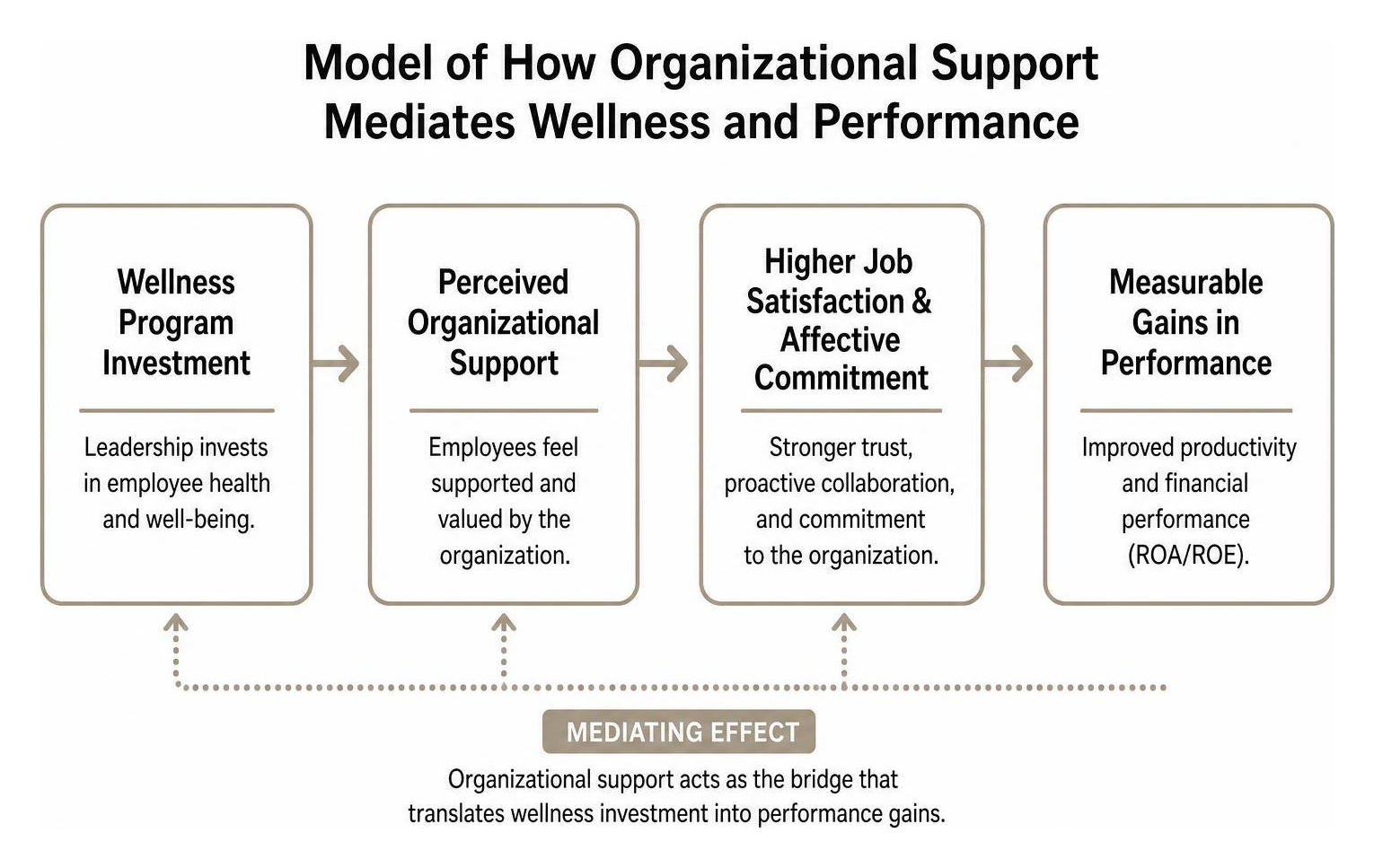
When employees feel supported, voluntary turnover drops. In fact, 87 percent of professionals factor health and wellness benefits into their decision when choosing an employer. Furthermore, 89 percent of workers at companies with dedicated wellness offerings report higher overall happiness and everyday life satisfaction.
Quantifiable Health Outcomes and Healthcare Claim Reductions
Targeted clinical interventions deliver concrete, measurable savings backed by medical research from institutions like Stanford and Harvard. When companies introduce lab-based diagnostic testing to identify early risks for cardiovascular and metabolic conditions, participants spend 30 percent less in annual medical claims compared to non-participants, according to practical data compiled in workplace wellness evaluations.
Catching health risks early protects people from preventable illness while sparing organizations the high costs of complex medical interventions.
Essential Components of an Evidence-Based Employee Wellness Strategy
A successful wellness strategy looks at the whole person using a biopsychosocial approach. It connects physical health, emotional balance, social community, and thoughtful environmental design.
Rather than relying on isolated initiatives, organizations see the best outcomes by weaving these elements together into an integrated corporate wellness ecosystem.
| Wellness Approach | Program Characteristics | Typical Employee Engagement | Organizational Impact |
|---|---|---|---|
| Single-Focus Initiatives | Standalone gym discounts, occasional lunch-and-learns, generic health newsletters. | Low (10%–15%); often engages only those who are already active. | Minimal cultural shift; negligible change in healthcare costs or retention. |
| Integrated Multi-Component Strategy | Executive modeling, diagnostic screenings, biophilic spaces, executive retreats, inclusive mental health care. | High (60%–85%); broad appeal across varied life stages. | Substantial gains in trust, a 30% reduction in claims, and higher talent retention. |
To bring these elements to life, high-performing organizations pair their regular workplace routines with immersive, off-site experiences. Located in Northern New Jersey and easily accessible from New York City, Loopwell offers a luxury sanctuary for corporate off-sites, wellness retreats, and premier events.
Featuring hospitality amenities such as full screen walls for dynamic presentations, high-end farm-to-table catering, and dedicated private parking, our space provides a refreshing alternative to traditional meeting rooms. Whether teams gather for focused strategic planning or cultural celebrations like a World Cup watch party, experiencing wellness in an inspiring setting sparks genuine, lasting connection.
Mental Health and Psychological Safety in the Workplace
Psychological safety is the bedrock of team health. The U.S. Surgeon General's Framework for Workplace Mental Health and Well-Being highlights five essential human needs at work:
- Protection from Harm: Ensuring both physical safety and a culture free from harassment or chronic overwork.
- Connection and Community: Building trusting, collaborative peer relationships that combat workplace loneliness.
- Work-Life Harmony: Offering genuine schedule flexibility and respecting time off.
- Mattering at Work: Showing employees that their contributions are seen, valued, and directly tied to team success.
- Opportunity for Growth: Providing clear pathways for learning, mentorship, and career development.
As detailed in academic research on workplace stress reduction and well-being programs, practical interventions such as mindfulness-based stress reduction, accessible Employee Assistance Programs (EAPs), and mental health recharge days help teams navigate demanding quarters with calm focus.
Thought leaders like Dr. Judith Joseph and holistic advocates like Michelle Maros remind us that leaders must model healthy boundaries themselves. When executives speak openly about managing stress and prioritize recovery, it normalizes self-care for everyone.
Tailoring Interventions for Diverse, Hybrid, and Multigenerational Workforces
In 2026, workforces span multiple generations, working styles, and family structures. A rigid wellness plan rarely meets everyone's needs. Inclusive wellness programs use precision health strategies to support varied life stages:
- Hormonal and Mid-Life Health: Offering evidence-backed education on perimenopause, menopause, and metabolic health, drawing on insights from medical experts like Dr. Mindy Pelz.
- Career and Emotional Well-Being: Incorporating guidance from career wellness leaders like Amina AlTai to help people build fulfilling roles aligned with their strengths.
- Circadian and Physical Vitality: Applying Stanford Medicine nervous system and sleep research, such as protocols highlighted on the Huberman Lab, to help hybrid workers maintain energy throughout the week.
- Combating Digital Isolation: Creating intentional moments for face-to-face community building to balance the isolation of remote work.
Review our strategic corporate wellness tips for 2026 to discover fresh ideas for designing equitable, multigenerational wellness experiences.
Implementing and Sustaining Workplace Well-Being Initiatives

Launching a sustainable wellness initiative requires thoughtful planning, active listening, and continuous refinement.
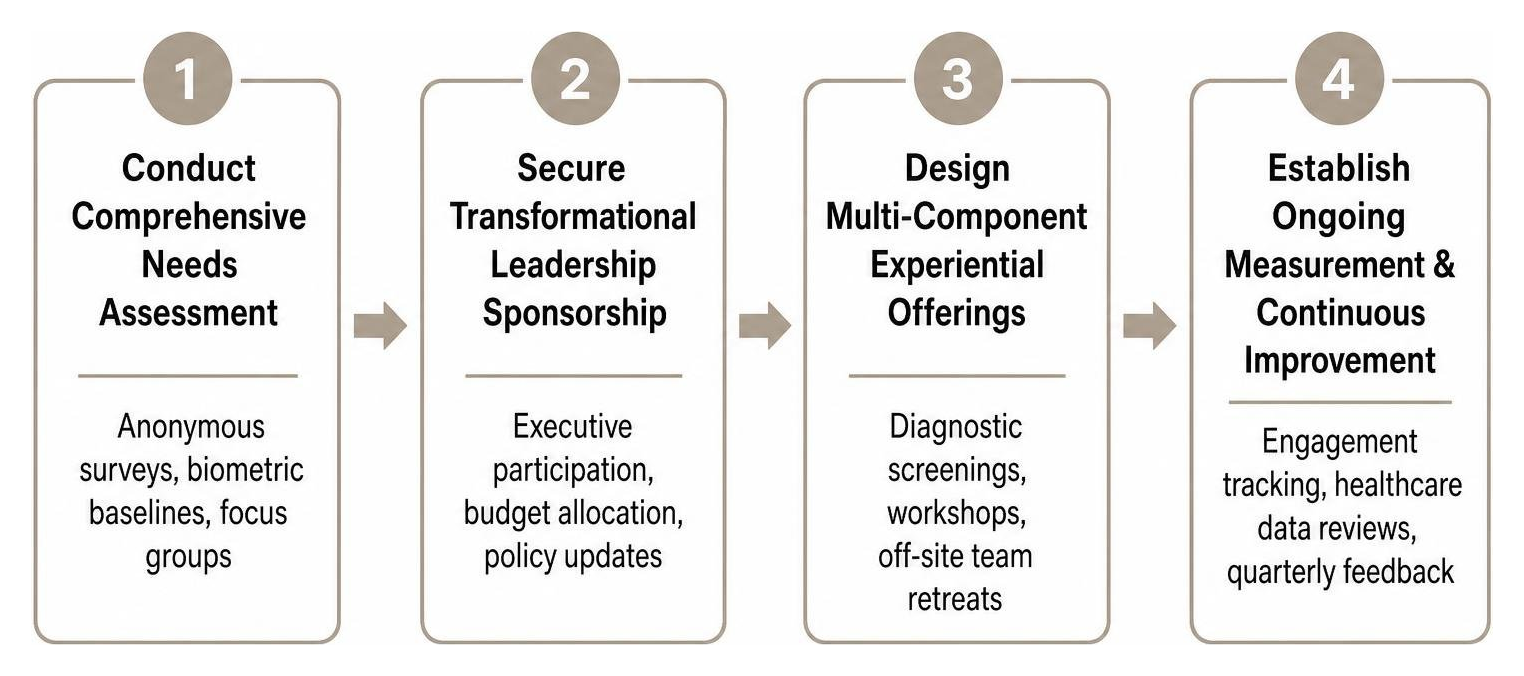
To build a program that lasts, explore our curated workplace well-being solutions designed for evolving organizations.
Overcoming Implementation Barriers and Resource Constraints
Even well-intentioned wellness programs can run into practical hurdles:
- Middle Management Misalignment: If team leads prioritize urgent tasks over team health, participation drops. Train managers to champion well-being and protect their teams' recovery time.
- Privacy Concerns: Employees often hesitate to share health data. Partner with independent third-party providers who uphold strict medical confidentiality.
- Digital Fatigue: Replace endless webinars with tactile, in-person workshops, shared nutritious meals, and restorative off-site retreats that create genuine human connection.
Measuring Success: Metrics, KPIs, and Continuous Quality Improvement
To ensure your wellness investments deliver value, track both quantitative data and qualitative feedback:
- Health Risk Baselines: Monitor aggregate, anonymized metrics from annual health screenings and diagnostic testing.
- EAP and Benefit Utilization: Track participation across mental health sessions, wellness workshops, and preventive care visits.
- Operational Metrics: Measure trends in unplanned sick leave, voluntary turnover rates, and internal promotion velocity.
- Culture and Engagement Surveys: Use validated survey tools to measure perceived organizational support and everyday job satisfaction.
Understanding the deep link between employee engagement and wellness helps leadership make smart, data-informed adjustments over time.
Frequently Asked Questions About Employee Wellness
What are the primary benefits of an employee wellness program for employers?
Comprehensive wellness programs lower direct medical claims, reduce costly absenteeism, and improve daily focus and productivity. They also strengthen company culture and serve as a compelling differentiator when recruiting and retaining top talent.
How does perceived organizational support influence employee wellness outcomes?
When employees see that leadership genuinely cares about their health, their perceived organizational support increases. This builds psychological trust, lifts job satisfaction, lowers burnout, and fosters a collaborative culture where people do their best work.
What metrics best determine the return on investment of workplace wellness initiatives?
The clearest indicators include changes in per-employee healthcare claims over time, reductions in unplanned sick days, lower voluntary turnover rates, and higher scores on validated employee engagement and well-being surveys.
Conclusion
Building a healthy, thriving workplace is an ongoing commitment to sustainable human resource management. Grounded in peer-reviewed insights from institutions like Harvard and Stanford, the evidence is clear: when organizations invest in the physical, mental, and social vitality of their teams, performance and retention follow naturally.
We invite your leadership team to step away from daily desk routines and join us in Montclair, New Jersey. Experience transformative corporate well-being experiences with Loopwell, where world-class thought leadership, restorative environments, and meaningful human connection come together to help your organization thrive.