
The Science-Backed Guide to Employee Engagement & Wellness
Why Employee Engagement and Wellness Work Better Together

Employee engagement and wellness are connected but different: engagement is the energy and commitment people bring to their work, while well-being reflects whether they are healthy, supported, and able to sustain that effort. Organizations need both. Engagement without well-being can lead to high performance in the short term, then stress and burnout. Well-being without engagement may improve comfort but not purpose, growth, or results.
The practical priority is to improve the work itself: give people a voice, manageable workloads, supportive managers, meaningful recognition, growth opportunities, and enough flexibility to recover. Stanford research on positive workplace cultures supports this approach, linking supportive, respectful environments with stronger employee health and performance.
When employees believe their organization cares about their overall well-being, they are far more likely to be engaged and less likely to report frequent burnout. This is not a wellness-perk problem. It is a culture, job design, and leadership problem.
I'm Debbie Looney, and this guide explains how leaders can build a workplace where people can contribute fully without sacrificing their health.
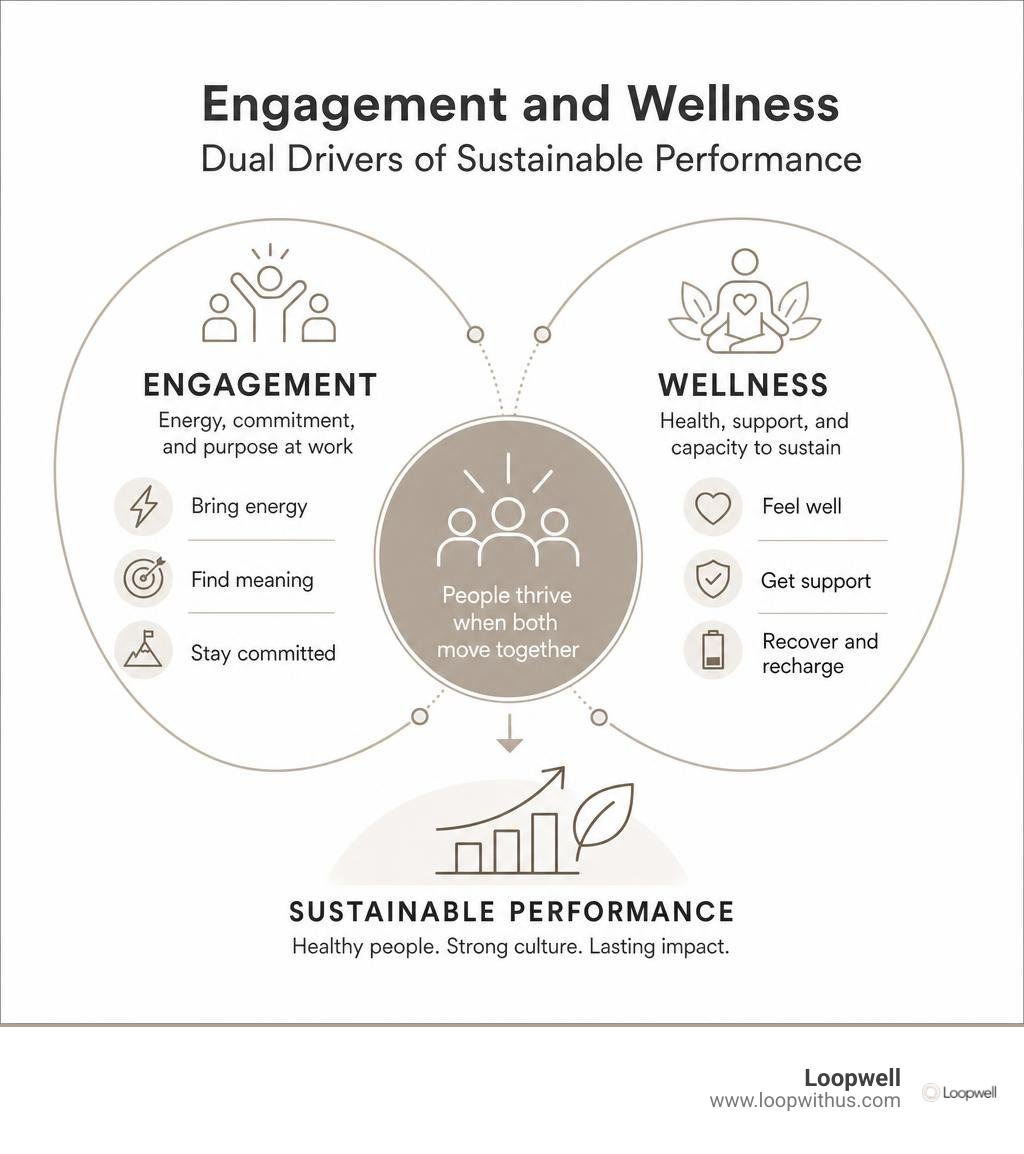
The Symbiotic Science of Employee Engagement and Wellness
When we look closely at organizational health, we see that high performance is powered by a dual engine: psychological capital and physiological vitality. For decades, traditional human resource playbooks treated employee engagement and physical wellness as separate initiatives managed in distinct silos. Modern organizational science from institutions like Harvard and Stanford shows that these two forces are fundamentally intertwined.
Engagement is characterized by vigor (high energy and mental resilience), dedication (a sense of significance and pride), and absorption (being pleasantly immersed in one's responsibilities). Sustaining that level of energy requires a foundation of physical, emotional, and psychological health. When an organization asks for dedication without actively replenishing psychological capital, it accelerates emotional exhaustion.
Understanding the value of well-being in the workplace helps leadership teams realize that wellness is not merely a reactive benefit—it is the biological and psychological prerequisite for sustainable output. Rigorous empirical analysis of engagement and well-being mediating organizational performance reveals that well-being alone produces only moderate organizational performance. High well-being must be paired with active engagement to convert healthy capacity into exceptional innovation, retention, and productivity.

Defining the Difference Between Wellness and Whole-Person Well-Being
To design initiatives that genuinely resonate, we must distinguish between superficial employee wellness perks and holistic employee well-being. Historically, workplace wellness focused primarily on isolated physical health markers—such as step challenges, gym stipends, or occasional biometric screenings. While physical activity is vital, modern workers navigate complex realities involving mental strain, financial uncertainty, and changing social dynamics.
Whole-person well-being encompasses five universal, interconnected dimensions:
- Career Well-Being: Liking what you do every day and having clear pathways for professional growth.
- Social Well-Being: Experiencing psychological safety, mutual trust, and meaningful workplace friendships.
- Financial Well-Being: Having the financial security, compensation clarity, and budgeting tools to manage daily life without chronic anxiety.
- Physical Well-Being: Having the vitality, sleep quality, and physiological stamina to accomplish daily goals.
- Community and Purpose (Eudaimonia): Feeling aligned with an organization’s mission and having a genuine sense of meaning in your daily contributions.
| Dimension | Isolated Wellness Perks | Holistic Employee Well-Being |
|---|---|---|
| Primary Focus | Physical habits & biometrics | Whole-person human experience & daily workflow |
| Core Interventions | Step trackers, discounted gym passes | Workload pacing, psychological safety, autonomy |
| Driver of Success | Individual incentive participation | Cultural norms, managerial coaching, job design |
| Mental Health | Standalone crisis hotlines | De-stigmatized culture, empathetic leadership |
| Organizational Role | HR benefit line item | Core strategic capability and operational driver |
Holistic well-being considers how the work environment itself impacts human vitality. As holistic career coach Amina AlTai often emphasizes, burnout is rarely an individual failure of self-care; it is an organizational symptom of misaligned values, unclear boundaries, and unsustainable operational systems.
The Organizational Cost of the Burnout Zone
Neglecting the balance between dedication and recovery creates what researchers identify as the "Burnout Zone." In this state, team members remain highly committed to their duties, but their underlying well-being is severely depleted. According to Stanford and Gallup research, employees who are engaged but not thriving are 61% more likely to experience frequent burnout, 48% more likely to report daily stress, and twice as likely to experience persistent sadness and anger.
The financial and operational costs of this imbalance are substantial. While organizations with highly engaged, thriving teams demonstrate a 23% profitability lift and a 75% reduction in absenteeism, neglecting well-being costs enterprise organizations roughly $20 million in lost opportunity for every 10,000 employees. Furthermore, 27% of U.S. workers report experiencing burnout very often or always, making them 2.6 times more likely to leave their current employer.
Data from the 2026 Enterprise Workforce Wellbeing Report highlights that 70% of enterprise employees feel organizational commitments to well-being have stalled or declined over recent years, with financial strain and daily workload pacing representing the primary friction points. When leadership fails to design sustainable workloads, the resulting turnover and presenteeism drain organizational resources.
Strategic Systems to Drive Sustainable Performance
Building a high-performing organization requires transitioning from isolated wellness events to systematic, workflow-embedded practices. Achieving a strong return on investment for corporate wellness programs demands that well-being principles be woven directly into daily operating rhythms, meeting structures, and managerial expectations.
Extensive McKinsey Health Institute research on workplace health interventions emphasizes that high-impact interventions target multiple dimensions of health simultaneously while removing friction from the daily workflow. Rather than requiring employees to navigate complex benefits portals during personal hours, effective organizations integrate micro-recovery moments, asynchronous focus blocks, and clear communication guardrails directly into the standard business week.
Proven Strategies for Improving Employee Engagement and Wellness Simultaneously
To build an ecosystem where engagement and vitality reinforce each other, organizations should execute a structured operational blueprint:
- Establish Two-Way Communication and Psychological Safety: Harvard research demonstrates that when employees feel their voice is heard, they are 4.6 times more likely to feel empowered to perform at their best. Replace top-down monologues with transparent town halls, regular pulse check-ins, and clear action on employee feedback.
- Empower Teams with Autonomous Job Crafting: Granting team members autonomy over how they structure their daily output fosters vigor and dedication. When professionals have control over their pacing, daily cognitive fatigue decreases significantly.
- Institutionalize Authentic Recognition Systems: Recognition holds the most weight when it is timely, specific, and tied to personal effort rather than corporate platitudes. Peer-to-peer appreciation boards and public team celebrations foster belonging and mutual trust.
- Operationalize Protected Recovery Windows: Encourage healthy work-life integration by establishing clear boundaries around after-hours communication. As wellness educator Michelle Maros reminds us, creating space for stillness and mental unwinding is essential for sustained emotional resilience.
Insights from Deloitte workplace well-being research show that 80% of employees consider holistic well-being central to their long-term organizational success, proving that systemic cultural support is a top retention priority for high-performing talent.

Tailoring Employee Engagement and Wellness for Frontline and Deskless Teams
A critical gap in many corporate strategies is the oversight of deskless and frontline staff—who make up roughly 75% of the global workforce. Frontline workers across healthcare, retail, logistics, and hospitality experience unique physical strains, shift fatigue, and high emotional labor. Approximately 37% of deskless workers indicate they are likely to leave within six months if flexibility, recognition, and well-being are ignored.
Furthermore, while 65% of employers believe their mental health policies are adequate, only 27% of frontline workers agree. Frontline engagement strategies must be tailored to their day-to-day realities:
- Mobile-First Microlearning: Deliver professional development and wellness resources in bite-sized, mobile-friendly modules that can be accessed without complex computer logins.
- Predictable and Flexible Scheduling: Provide shift transparency and collaborative scheduling tools to help team members manage family obligations and personal recovery.
- Targeted Rest and Ergonomics: Design physical work environments with ergonomic support, quiet break lounges, and hydration stations.
A landmark hospitality workplace wellness and CSR perception study revealed that employee wellness programs significantly elevate frontline engagement because workers perceive these initiatives as tangible proof of authentic corporate social responsibility and care. When organizations invest in frontline health, team members reciprocate with higher dedication and exceptional customer care.
Designing Experiential Corporate Well-Being and Connection
In an era increasingly shaped by hybrid models and automated workflows, intentional human connection has become essential for high-trust team cultures. Research published in Harvard Business Review and MIT Sloan confirms that loneliness and isolation can significantly undermine organizational creativity and cross-functional collaboration.
Fostering stronger relationships at work directly elevates team resilience, discretionary effort, and collective problem-solving. When team members share meaningful experiences outside of transactional video calls, they build relational trust that helps them navigate high-stakes business challenges with confidence.
To break through digital fatigue, enterprise organizations across New York City and Northern New Jersey are turning toward curated in-person experiences and off-site gatherings. Whether hosting an executive strategy retreat, an interactive well-being workshop, or a premier team gathering like a FIFA watch party, utilizing a dedicated space enhances the experience. Spaces featuring high-end catering, full-wall interactive digital screens, and private parking provide a comfortable, professional setting that encourages open dialogue, relaxation, and creative alignment.
Equipping Managers as Well-Being Coaches
Managers account for up to 70% of the variance in team engagement and well-being. However, middle managers often experience significant burnout as they navigate strategic executive mandates alongside frontline team needs. According to the WebMD Health Services Workplace Report, middle managers experience burnout at rates more than three times higher than individual contributors.
Organizations must train managers to shift from administrative supervisors to empathetic performance coaches by focusing on key behaviors:
- Conducting Weekly 1-on-1 Coaching Check-Ins: Dedicate time to discuss workload pacing, strengths alignment, and personal growth alongside tactical deliverables.
- Normalizing Mental Health Conversations: Reduce stigma by proactively sharing organizational mental health resources and Employee Assistance Programs (EAPs).
- Monitoring Cognitive Load: Identify early signs of cognitive fatigue and redistribute assignments across the team to prevent chronic overload.
- Modeling Sustainable Work Habits: Encourage leaders to disconnect during vacations and respect rest periods, giving teams permission to maintain healthy boundaries.
Cultivating Purpose and Growth Through Transformative Events
True employee vitality flourishes when daily work aligns with personal purpose. When team members understand how their specific role contributes to a broader mission, their daily energy increases. Nine in ten workers consider access to learning and continuous professional development a deciding factor in staying with their current organization.
Opportunities for finding purpose and wellbeing at work empower professionals to connect their personal strengths with strategic business impact. Exposure to evidence-based insights from wellness leaders—such as the mental health frameworks of Dr. Judith Joseph or the physiological protocols shared on the Huberman Lab and by Dr. Mindy Pelz—equips employees with practical tools to optimize focus, hormonal balance, and daily recovery.
Measuring Impact: Metrics and Analytics for Modern Leaders
To maintain executive alignment and budget allocation, organizations must measure employee engagement and wellness using rigorous, predictive analytics rather than relying solely on subjective sentiment.
Leading organizations implement comprehensive workforce analytics systems that combine subjective life evaluation indices with objective operational performance data. As pioneering wellness frameworks suggest, measuring how employees rate their current professional experience alongside their future career trajectory helps leadership anticipate retention trends and identify organizational risks well before they impact the bottom line.
Leading Indicators of Burnout vs. Lagging Retention Metrics
Traditional HR metrics—such as annual turnover percentages and exit interviews—are lagging indicators. By the time an exit interview takes place, the organizational cost of disengagement and talent loss has already been incurred. Leaders need real-time, leading indicators to address systemic friction proactively.
Key leading indicators that signal impending team burnout include:
- Shifts in Meeting Participation: A sudden drop in voluntary contributions, creative brainstorming, and peer feedback during team discussions.
- Increased Micro-Absenteeism and Sick Day Utilization: An uptick in unplanned short-term absences or patterns of Monday/Friday leaves.
- Rising Digital Exhaustion: Team members sending routine communications during late-night or weekend hours, indicating unsustainable workloads.
- Declining Engagement in Voluntary Initiatives: Reduced participation in community resource groups, mentorship initiatives, or voluntary learning programs.
- Escalating Interpersonal Friction: An increase in cross-departmental communication misunderstandings or declining peer collaboration scores.
Tracking these leading indicators enables management to redistribute responsibilities, adjust unrealistic project timelines, and deploy targeted support before talent leaves the organization.
Quantifying ROI and Business Valuation Outperformance
Investing in holistic well-being delivers clear, measurable financial returns. Large-scale empirical research conducted by the University of Oxford Wellbeing Research Centre, analyzing over 1,700 publicly listed corporations, proves that organizations prioritizing workforce well-being consistently outperform broader market benchmarks.
The financial return manifests across several core areas:
- Elevated Return on Assets (ROA): High-well-being organizations generate superior gross margins and operational efficiency by maintaining consistent, experienced teams.
- Higher Firm Valuation (Tobin's q): Financial markets increasingly recognize that healthy, engaged workforces mitigate operational risk and drive sustainable innovation.
- Direct Healthcare Cost Reductions: Effective preventive wellness programs and stress reduction initiatives yield a measurable return by curbing corporate medical expenditures and disability claims.
Frequently Asked Questions About Employee Engagement and Well-Being
What is the primary difference between employee engagement and employee well-being?
Employee engagement represents an employee's emotional dedication, focus, and discretionary vigor applied toward their job responsibilities and organizational goals. In contrast, employee well-being is a multidimensional evaluation of whole-person health, covering physical vitality, emotional stability, career alignment, financial resilience, and social connection. Engagement reflects the energy an employee gives to the organization, while well-being reflects the underlying personal health and institutional support that sustains that energy over time.
How do wellness programs directly drive employee engagement?
Wellness programs drive engagement through social exchange dynamics and perceived corporate support. When organizations provide high-impact, accessible well-being resources—such as mental health support, flexible scheduling, and ergonomic workspaces—employees recognize that leadership genuinely cares about their holistic health. This builds organizational trust and reciprocal commitment, motivating team members to bring higher enthusiasm, creativity, and dedication to their daily responsibilities.
Why do engaged employees still experience high rates of burnout?
Engaged employees often experience burnout when their high commitment and dedication are not balanced with adequate recovery, manageable workloads, and psychological safety. Highly engaged professionals frequently push through cognitive fatigue and systemic friction to achieve business goals. Without clear communication boundaries, realistic project pacing, and supportive managerial coaching, their psychological resources deplete, placing them in the "Burnout Zone"—where they remain committed to their work but are mentally and physically exhausted.
Conclusion
Creating a resilient, high-performing organization is not about choosing between operational excellence and human vitality. Long-term profitability, innovation, and retention happen when employee engagement and whole-person wellness work in harmony. Neglecting either side of this equation undermines workforce potential, while cultivating both builds an adaptable, energized team capable of navigating rapid workplace change.
Transforming workplace culture requires moving past superficial perks and embedding sustainable well-being directly into leadership behaviors, team norms, and daily workflows. By partnering with experts to deliver tailored corporate wellness solutions, forward-thinking organizations can create supportive, engaging environments where people thrive and business results follow.