
10 Surprising Social Activities That Are Proven to Boost Well-being
Social Well-Being Activities You Can Try This Week

Social well-being activities help you build supportive relationships and feel part of a community. Try a group hike, shared gardening, an art circle, a walking meeting, or cooking with family. Short on time? Send a thank-you note or make a five-minute call. Pick one activity you enjoy and make it a regular date.
Why make room for connection? The Harvard Study of Adult Development links close relationships with better health and happiness. You don't need a packed calendar; a small, steady habit is a good place to start.
This guide shares 10 ways to connect that you can adapt to your life.
The Science of Relational Health: Why Connection Matters

Human beings are wired for connection. Decades of neuroscience from institutions like Stanford University reveal that relational bonding is not a luxury—it is a physiological imperative. When we engage in meaningful, face-to-face interaction, our nervous system releases oxytocin and dopamine, stimulates the vagus nerve, and reduces circulating cortisol. In contrast, Harvard Medical School research highlights that prolonged isolation triggers neural pathways associated with physical threat, driving up systemic inflammation and elevating the risk of cardiovascular disease by nearly 30%.
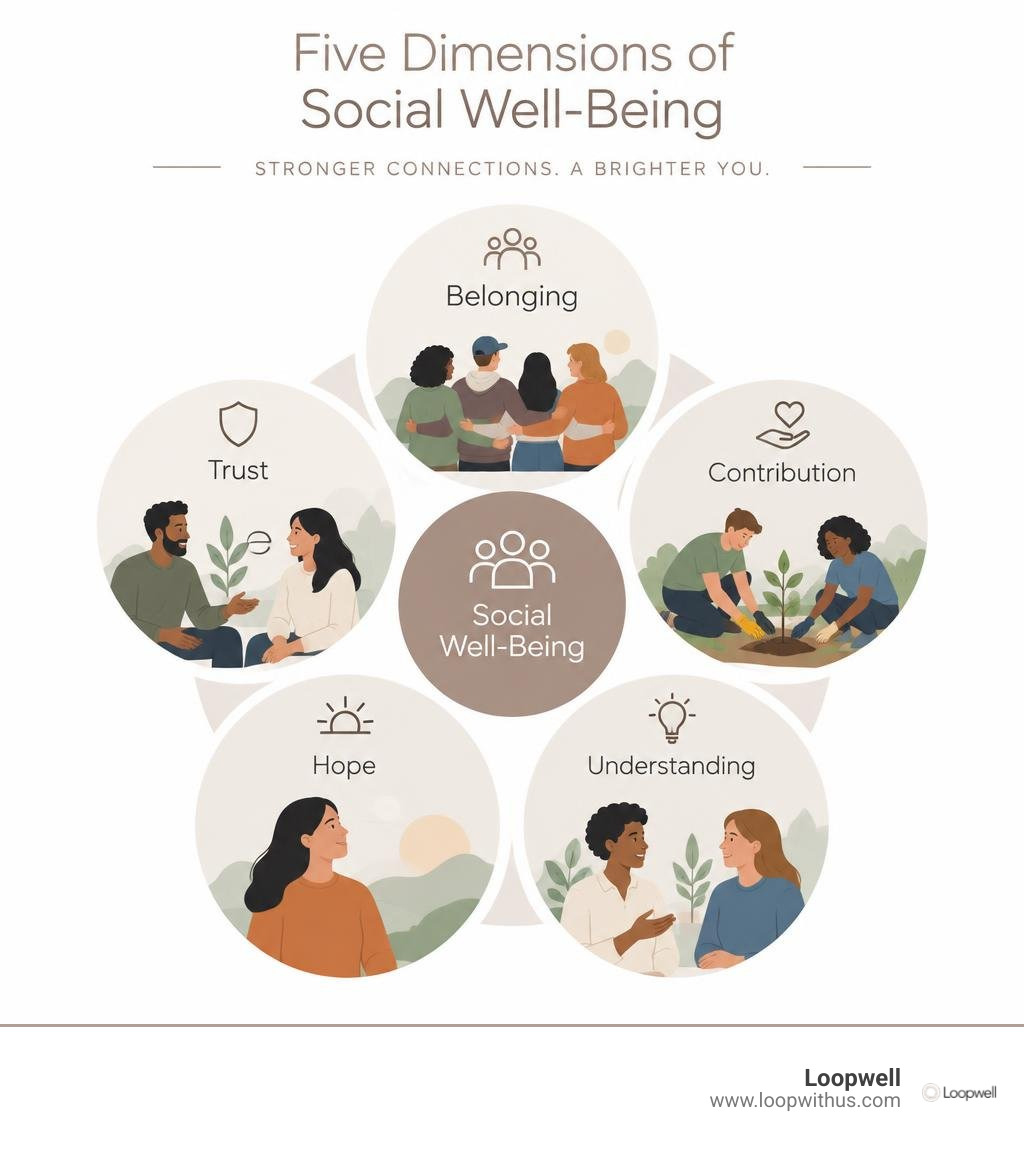
In positive psychology, Harvard and Stanford researchers build upon models of social well-being that emphasize five distinct social dimensions:
- Social Integration: A feeling of belonging to a community.
- Social Acceptance: Holding a positive view of human nature and trusting others.
- Social Contribution: Believing our daily activities add value to the world.
- Social Actualization: Having hope in the potential and trajectory of society.
- Social Coherence: Feeling that our social world is understandable and meaningful.
Understanding these dimensions shows why individual self-care routines like solo meditation or bubble baths can only take us so far. Research from Harvard and Stanford demonstrates that social well-being predicts subjective life satisfaction over time, whereas general happiness alone does not necessarily improve social ties. Cultivating social well-being and community connection builds psychological safety and creates a supportive foundation where prosocial behaviors can thrive.
10 Transformative Social Well-Being Activities Backed by Research
When exploring community-based interventions, a landmark scoping review on social prescribing for community health (Sadio et al., 2024) revealed that non-clinical group activities significantly reduce loneliness, elevate mood, and boost overall life satisfaction across diverse age groups.
The table below outlines ten high-impact activities categorized by effort, group format, and primary health benefit:
| Activity | Effort Level | Group Format | Primary Benefit |
|---|---|---|---|
| 1. Adult Recess & Play | Medium | Medium to Large Group | Stress reduction & endorphin release |
| 2. Group Nature Treks | Medium | Small to Medium Group | Cortisol reduction & ecotherapy |
| 3. Communal Gardening | Medium | Small Group | Intergenerational bonding & purpose |
| 4. Mindful Mixology | Low to Medium | Intimate to Medium Group | Sober connection & psychological safety |
| 5. Expressive Arts & Jam Sessions | Medium | Small to Medium Group | Emotional processing & creative flow |
| 6. Loving-Kindness Circles | Low | Intimate Group (2–8) | Compassion training & active listening |
| 7. Walking 1:1s & Step Challenges | Low | Dyads & Workplace Teams | Increased workplace retention & dual-task focus |
| 8. Laughter Yoga | Low to Medium | Medium to Large Group | Dopamine surge & respiratory health |
| 9. Culinary Skill-Sharing | Medium | Small Group | Cultural exchange & caregiver respite |
| 10. Micro-Gratitude Exchanges | Very Low | Dyads & Asynchronous | Immediate mood elevation & relational trust |
1. Adult Recess and Structured Play
Remember the sheer exhilaration of hearing the school recess bell? As adults navigating modern professional demands, our schedules often turn into an endless cycle of work, screen time, and chores. Adult recess counters this grind through unstructured, play-based activities.
Rooted in the African philosophy of Ubuntu—the understanding that "I am because we are"—play creates a low-stakes environment where social barriers dissolve. Stanford University research demonstrates that when adults engage in lighthearted relay games, four-square, or improvisational exercises, the brain produces endorphins and neurotransmitters that actively counteract chronic stress. Play allows adults to step away from professional titles and connect as humans, building resilience and authentic camaraderie.
2. Group Nature Treks and "Hike & Chill" Gatherings
Combining physical movement with the restorative power of the natural world creates an environment where conversation flows easily. Group hikes remove the intense pressure of continuous eye contact that sometimes makes conventional networking feel awkward.
Stanford University research indicates that walking in natural green spaces reduces neural activity in brain regions associated with stress and rumination, easing the nervous system and helping people open up about their lives. Structured community nature programs and casual weekend trail groups offer the accountability of a fitness routine alongside the mental recharge of ecotherapy.
3. Communal Gardening and Green Social Prescriptions
Working with soil, seeds, and plants provides a tactile, shared goal that bridges generational divides. Communal gardening—often highlighted in social prescribing frameworks—brings together retirees, working professionals, and children to cultivate living spaces.
Studies from Harvard Medical School demonstrate that horticultural activities lower depressive symptoms and foster environmental wellness. Participants share knowledge on composting, plant care, and seasonal harvesting, creating an organic sense of interdependence and mutual accomplishment.
4. Mindful Gathering Around Non-Alcoholic Mixology

Social rituals often center around alcohol, which can exclude individuals seeking healthier lifestyle choices, navigating recovery, or simply wanting to maintain mental clarity. The modern social landscape is evolving through mindful gathering spaces that celebrate the mindful mocktail movement.
Interactive evenings focused on crafting functional, botanical infusions and adaptogenic mocktails allow guests to savor artisanal flavors while engaging in meaningful conversation. According to Harvard Health findings, alcohol-free environments protect restorative sleep quality, preserve executive cognitive function, and offer a welcoming space for inclusive social connection.
5. Creative and Mindful Social Well-Being Activities
Research from Harvard Medical School shows that engaging in expressive arts within a supportive group lowers stress biomarkers and helps process emotions that words alone cannot always reach. Collaborative art nights, communal music jams, and creative writing circles offer shared vulnerability without requiring technical artistic skill.
These gatherings act as modern community building practices, turning creative exploration into collective healing. By making art side-by-side, participants exchange ideas, release creative blocks, and build deep social coherence.
6. Loving-Kindness Meditation and Empathy Circles
Neuroscience research from Stanford University confirms that cultivating empathy is an active, trainable skill. Loving-Kindness Meditation (LKM) paired with structured empathy circles teaches participants to generate compassion for themselves, their loved ones, neutral acquaintances, and even challenging relationships.
These circles often practice Active Constructive Responding—a communication technique where listeners respond to another person's positive news with genuine enthusiasm, curiosity, and warmth. Developing this conversational habit strengthens what positive psychologists call High-Quality Connections (HQRs), which are characterized by emotional capacity, psychological safety, and mutual vitality.
7. Walking 1:1 Meetings and Team Step Challenges
Workplace stress remains a leading driver of burnout, with data indicating that nearly 50% of employees need support managing day-to-day pressure. Incorporating social wellness directly into the workday transforms company culture and strengthens retention.
Research from institutions including Harvard and Stanford shows that employees who feel supported across core well-being elements are 59% less likely to look for another job. Furthermore, workplace relationship research confirms that mutual trust and regular social touchpoints directly boost engagement and collaboration. Replacing sedentary boardroom check-ins with walking 1:1s encourages creative problem-solving while naturally integrating light physical activity.
8. Laughter Yoga and Communal Movement
Laughter Yoga combines intentional laughter exercises with yogic breathwork (pranayama). Research from Stanford University indicates that because the human brain cannot distinguish between simulated and spontaneous laughter, participants experience an immediate surge of endorphins and dopamine.
What begins as an intentional exercise quickly turns into genuine, shared laughter. This practice breaks down social tension, improves cardiovascular circulation, and creates an uplifting bond among participants in community centers, schools, and corporate retreats.
9. Intergenerational Cooking and Skill-Sharing Circles
Kitchens have long served as the heart of community life. Intergenerational cooking circles bring together elders, parents, and young adults to prepare nutrient-dense meals while passing down family recipes, cultural traditions, and practical culinary skills.
This shared activity offers practical respite for family caregivers by providing a built-in support network. Studies from Harvard Medical School emphasize that intergenerational social engagement delivers essential cognitive stimulation and purposeful social roles for older adults, showing how good nutrition and relational health naturally reinforce one another.
10. Low-Effort, High-Impact Social Well-Being Activities for Busy Schedules
Boosting your social wellness does not require reorganizing your entire week. Studies from Harvard and Stanford confirm that intentional micro-connections provide significant emotional lift and stress reduction with minimal time commitment:
- Gratitude Note Exchanges: Spend two minutes sending a specific, sincere text or handwritten note thanking someone for their support.
- 5-Minute Check-Ins: Schedule a brief phone call or audio message with a friend during your morning commute.
- Peer Recognition Boards: Use a digital or physical board at work to highlight and celebrate everyday contributions from colleagues.
- Random Acts of Kindness: Buy a coffee for the person behind you in line or leave an encouraging sticky note for a coworker.

How to Measure and Assess Your Social Wellness
Evaluating your social health is just as valuable as tracking sleep, physical activity, or nutrition. Validated assessment tools, such as the Mental Health Continuum–Short Form (MHC-SF) and the European Social Survey (ESS), measure social well-being through practical self-reflection questions:
- Integration: Do I feel a genuine sense of belonging within a community or neighborhood?
- Contribution: Do I feel that my daily actions make a positive difference to others?
- Acceptance: Can I comfortably maintain trust and empathy in my relationships?
- Coherence: Does the world around me feel understandable, or am I feeling disconnected?
Conducting regular relational energy audits helps you understand which environments leave you feeling energized and which drain your reserves. For caregivers and busy professionals, this self-assessment helps you set healthy boundaries, prioritize restorative friendships, and prevent social burnout.
Frequently Asked Questions About Social Well-Being Activities
What is the difference between social wellness and social well-being?
Social wellness refers to the actionable, daily habits, communication skills, and intentional routines you practice to build healthy connections. Social well-being is the broader, overarching state of feeling supported, integrated, and valued within your community. In short: social wellness is the practice, while social well-being is the outcome.
How can introverts engage in social wellness activities without burnout?
Introverts thrive in structured, low-stimulation environments with clear start and end times. Activities like silent co-working sessions, book discussions, nature walks, or small-group creative workshops offer meaningful connection without overwhelming your social battery. It is always wise to schedule quiet downtime before and after social gatherings to recharge.
How many close connections are needed to maintain social health?
Quality matters far more than quantity. Longitudinal findings from Harvard research reveal that life satisfaction rises with the number of trusted confidants a person can turn to in times of need, whereas managing an excessive number of superficial acquaintances can increase stress. Maintaining 3 to 5 deeply trusted, reciprocal relationships provides strong protection against loneliness and emotional strain.
Conclusion
Nurturing your social health is an ongoing, lifelong journey of intentional connection. By weaving structured play, outdoor movement, mindful mocktail gatherings, and micro-habits of gratitude into your weekly routine, you support your cardiovascular health, improve cognitive clarity, and cultivate a deep sense of belonging.
At Loopwell, we bring world-class thought leaders together with local practitioners in premier, light-filled spaces designed for human connection, experiential workshops, and restorative gatherings. Whether you are seeking transformative corporate retreats or personal enrichment, explore our Loopwell community membership to connect with a community dedicated to flourishing together.
Reference List
Sadio R, Henriques A, Nogueira P, Costa A. "Social prescription for the elderly: a community-based scoping review.." Primary health care research & development, 2024. PMCID PMC11569851.