
The Definitive Guide to Science-Backed Digital Wellness Platforms
What Is a Digital Wellness Platform and How Does It Differ from Traditional Programs?

Modern workplace health has evolved far beyond the era of annual health risk appraisals and static pamphlets. When organizations look at building a living model of wellness, they require an agile infrastructure capable of meeting team members where they are. A digital wellness platform serves as a centralized operational hub that unifies biometrics, habit tracking, mental health resources, and personalized coaching into a cohesive digital experience.
Instead of treating employee health as an episodic, check-the-box corporate exercise, these platforms foster continuous engagement. They integrate with smart devices, offer accessible mobile applications, and leverage asynchronous communication to support lifestyle transformation throughout the daily rhythm of work and home life.
| Feature Domain | Traditional Workplace Wellness Programs | Modern Digital Wellness Platforms |
|---|---|---|
| Delivery Model | On-site events, paper logs, annual health fairs | Cloud-based web portals, mobile apps, wearable syncing |
| Engagement Cadence | Episodic (monthly challenges or annual checkups) | Real-time, daily micro-interactions, automated nudges |
| Personalization | Generalized, one-size-fits-all advice | AI-driven pathways, psychometric profiling, tailored goals |
| Data & Insights | Lagging, aggregate self-reported surveys | Real-time population analytics, trend monitoring |
| Mental Health Support | Basic EAP brochures, reactive referrals | Proactive stress management, micro-mindfulness, on-demand coaching |
| Accessibility | Limited to physical office locations | Borderless access for hybrid, remote, and distributed teams |
Core Capabilities of a Modern Digital Wellness Platform
A truly effective digital framework combines behavioral science with seamless software architecture. Rather than simply logging steps, sophisticated platforms focus on long-term habit formation. They leverage evidence-based digital wellbeing assessment models to measure multiple dimensions of human function—evaluating not just screen hours, but emotional resilience, digital fatigue, and daily cognitive balance.
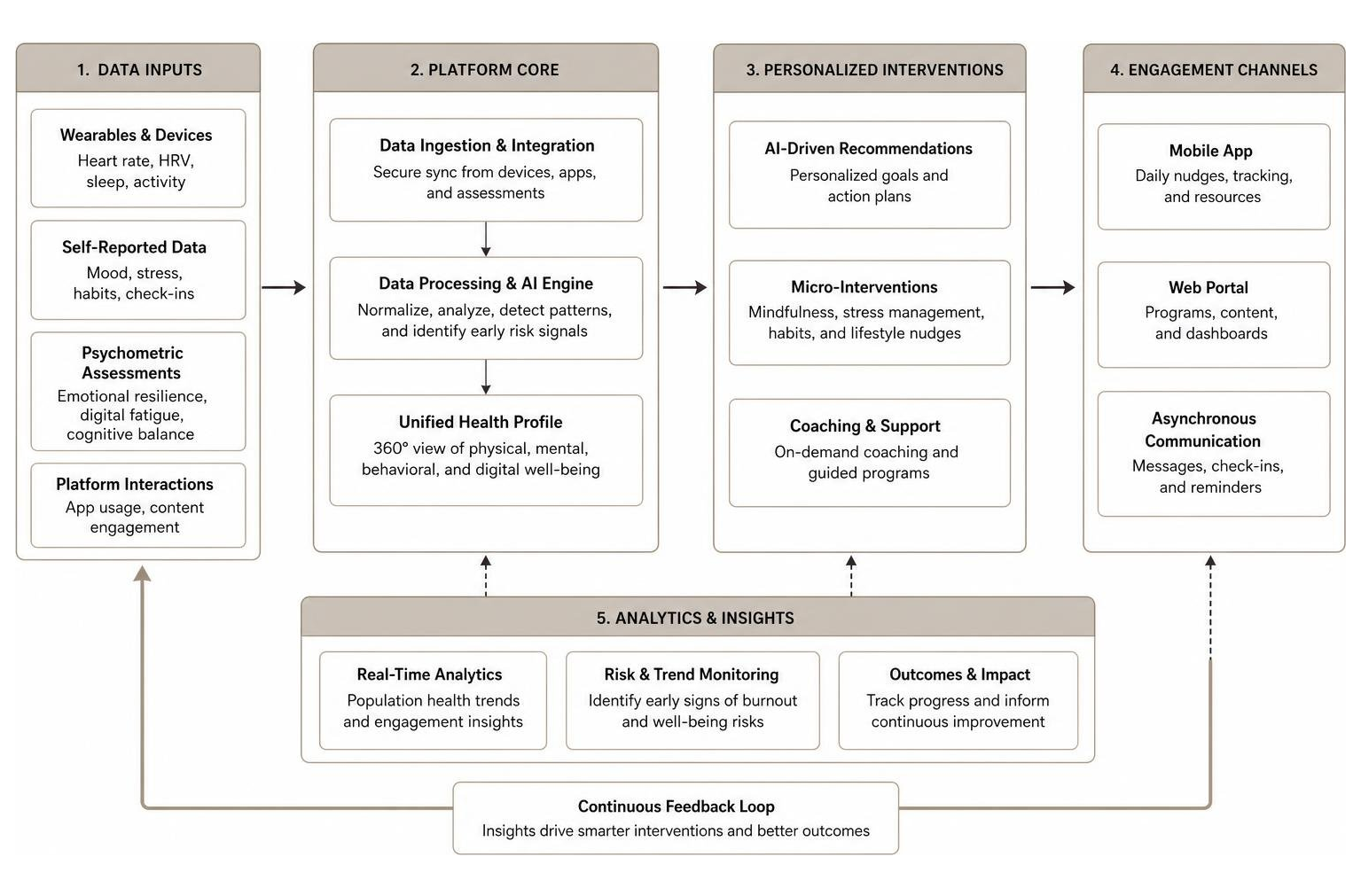
These platforms integrate continuous biometric tracking—such as heart rate variability (HRV), resting heart rate, and sleep architecture—with automated daily nudges grounded in behavioral economics. By pairing psychometric profiling with structured micro-interventions, the software identifies early signs of burnout and delivers context-sensitive recommendations before health risks manifest clinically.
Traditional Workplace Wellness vs. Digital-First Interventions
The modern workplace demands a fundamental shift in how we approach preventative health. For years, employers struggled to demonstrate the value of well-being in the workplace because traditional programs failed to address the modern workplace reality: digital overload and continuous connectivity.
Research from Harvard Medical School and the American Psychological Association demonstrates that employees who frequently check emails and digital notifications report significantly higher stress levels than those who disconnect periodically. Technology can be a double-edged sword; unmanaged notifications and excessive screen time induce cognitive fatigue and disrupt circadian cycles. Digital-first wellness interventions address this paradox directly by introducing structured notification management, tech-free focus blocks, and ergonomic awareness into daily workflows, turning technology from a source of strain into an instrument of recovery.
Clinical Efficacy and Evidence Across Key Health Domains
Understanding the measurable impact of digital health interventions requires a rigorous examination of peer-reviewed clinical data. Comprehensive synthesis of randomized controlled trials shows that well-designed digital wellness platforms yield measurable improvements across physical and psychological health markers (Amirabdolahian et al., 2025). Research from clinical institutions including Harvard and Stanford underscores that even modest improvements in daily health routines produce compounding long-term health benefits, lowering the risk of metabolic syndrome and chronic disease.
Mental Health, Stress, and Anxiety Reduction
Workplace stress and generalized anxiety represent significant drivers of disability and lost productivity. Digital interventions targeting mental well-being demonstrate consistent clinical validity. Meta-analytic data reveals that digital wellness programs produce a small but statistically significant reduction in employee stress levels (effect size g = 0.25 to 0.54) and anxiety symptoms (g = 0.26 to 0.34) (Amirabdolahian et al., 2025).
These interventions typically incorporate cognitive behavioral therapy (CBT) principles, guided breathwork, and structured mindfulness modules. By incorporating community mental health digital resources, organizations establish safe, stigma-free environments where employees can access preventative mental health support whenever acute stressors arise.
Physical Activity and Metabolic Health Outcomes
Sedentary office environments significantly elevate risks for cardiovascular disease and metabolic dysregulation. Practical corporate wellness tips emphasize integrating frequent, low-intensity movement throughout the workday to counteract these risks.
In clinical meta-reviews, digital interventions targeting physical activity demonstrated a statistically significant increase in total movement and step counts (effect size g = 0.22) (Amirabdolahian et al., 2025). This is critical for organizational health economics: clinical literature from institutions such as the Harvard T.H. Chan School of Public Health indicates that healthcare and operational costs for employees with overweight and obesity are 11% and 45% higher, respectively, than for employees within healthy weight ranges. Digital platforms that combine nutrition tracking, strength training guidance, and metabolic education bridge the gap between clinical intent and daily execution.
Sleep Hygiene and Habit Formation
Restorative sleep is foundational to cognitive clarity, metabolic regulation, and emotional balance. Prominent neurobiology researchers, such as those at the Stanford School of Medicine and the Huberman Lab, emphasize that circadian alignment directly governs endocrine balance and daytime focus. Digital wellness tools support these biological mechanisms by providing:
- Nocturnal prompts that encourage digital wind-down routines.
- Passive wearable sleep tracking to analyze REM, deep, and light sleep phases.
- Personalized sleep hygiene education, including light exposure and temperature protocols.
- Habit-building modules that replace late-night screen consumption with restorative relaxation techniques.
Driving Employee Engagement and Overcoming Adoption Barriers

While the clinical promise of digital health platforms is clear, their real-world success hinges on sustained human engagement. Even the most advanced behavioral health engine fails if employees abandon the software after a single week. Designing for adoption requires addressing user friction, digital fatigue, and individual motivational triggers.
Factors Influencing Platform Uptake and Attrition
Systematic reviews reveal that the average baseline uptake rate for mental health digital wellness programs is approximately 11% (Amirabdolahian et al., 2025). In physical activity programs, the average attrition rate hovers around 18%, though poorly designed interventions report attrition rates reaching up to 74% (Amirabdolahian et al., 2025).
Organizations looking to maximize adoption can draw inspiration from established public frameworks, such as New Jersey digital wellbeing frameworks, which emphasize structured onboarding, digital literacy, and community-wide norms. Successful adoption requires intuitive user experience design, transparent data handling, and leadership endorsement that actively normalizes prioritizing well-being during business hours.
Personalization, Nudges, and Behavioral Science Techniques
To sustain engagement beyond the initial onboarding window, digital wellness platforms deploy behavioral economics principles. Research featured in the Harvard Business Review and insights from thought leaders like Dr. Judith Joseph highlight the necessity of micro-interventions—actionable habits that require minimal activation energy.
Effective platforms utilize:
- Behavioral Cueing: Context-aware push notifications sent during transition periods (e.g., between scheduled meetings).
- Habit Loops: Pairing an existing routine (such as opening an email client) with an immediate micro-action (a two-minute posture check or breathing exercise).
- Loss-Aversion and Milestone Rewards: Gamified progress tracking, group milestones, and tangible rewards that validate incremental progress.
Key Architectural Technologies in Modern Well-Being
Behind user-friendly interfaces lies a complex technical architecture designed to ensure continuous performance, interoperability, and stringent regulatory compliance. Public initiatives, including digital wellness and statewide mental health initiatives, highlight the growing requirement for secure, around-the-clock digital health infrastructure across educational and corporate landscapes.
Key Technologies Powering an Effective Digital Wellness Platform
Modern wellness ecosystems integrate hardware and software components into a seamless operational loop:
- Wearable Integration & Smart Sensors: Direct API connections with smartwatches and continuous monitors pull real-time biometric telemetry, including resting heart rate, step count, and sleep architecture.
- Algorithmic Personalization Engines: Intelligent recommendation engines analyze physiological data alongside self-reported assessments to dynamically adjust daily wellness tasks.
- Asynchronous Communication Protocols: Secure messaging conduits allow employees to consult with health coaches, nutrition specialists, and peer communities without requiring synchronous appointments.
Asynchronous Coaching and Digital Community Support
Human connection remains irreplaceable in behavioral change. Technology should amplify human empathy rather than replace it. Integrating certified holistic health coaching into a digital platform provides employees with individualized guidance, external accountability, and empathetic support.
Digital community channels, moderated group challenges, and shared team goals foster social accountability. When employees observe peers prioritizing physical activity, mindfulness, and boundary setting, positive cultural norms take root across the entire enterprise.
Enterprise Deployment: Scaling Health Solutions for Measurable ROI
For enterprise leaders, chief human resources officers, and benefits directors, deploying a health solution requires a clear business case grounded in cost mitigation and performance enhancement.
Healthcare Cost Savings and Absenteeism Reductions
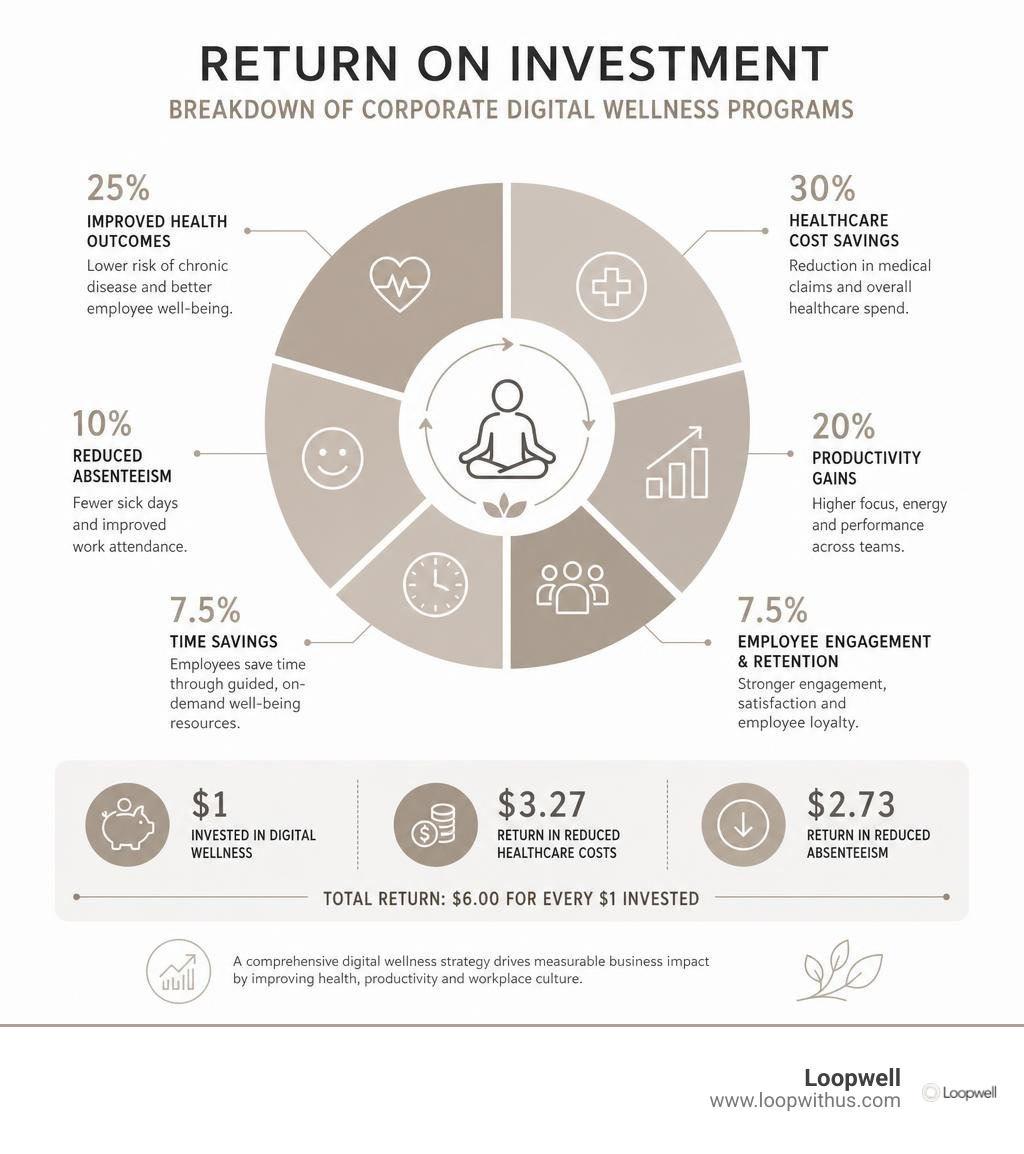
Extensive health economics research demonstrates a compelling financial return on corporate wellness investments. Independent meta-analyses conducted by Harvard researchers calculate that for every single US dollar invested in corporate wellness initiatives, organizations save US $3.27 in reduced healthcare expenditures and an additional US $2.73 through decreased absenteeism (Amirabdolahian et al., 2025).
A detailed look into the return on investment for corporate wellness programs shows that modern digital platforms bend the corporate cost curve by:
- Identifying subclinical health risks before they require costly emergency or inpatient care.
- Providing proactive musculoskeletal and ergonomic education that reduces high-cost claims.
- Mitigating presenteeism by addressing chronic digital fatigue, burnout, and mental distress.
Architectural Features of an Effective Digital Wellness Platform
To deploy effectively at enterprise scale, platforms must satisfy strict organizational and compliance criteria:
- White-Label and Co-Branded Portals: Flexible deployment options that embed seamlessly into existing enterprise intranet and benefits ecosystems.
- Robust Compliance Standards: Strict adherence to HIPAA, GDPR, and SOC-2 guidelines to guarantee the absolute confidentiality of employee health data.
- Advanced Administrative Analytics: Privacy-compliant reporting suites that provide executive leadership with aggregated population trends, engagement metrics, and risk stratification without compromising individual anonymity.
Frequently Asked Questions About Digital Wellness
What is the primary purpose of a digital wellness platform?
The primary purpose is to empower individuals to build, track, and maintain sustainable health habits across physical, mental, and nutritional domains. By combining biometric tracking, behavioral nudges, and expert coaching, these platforms transform sporadic health goals into manageable daily actions.
How do digital wellness tools support remote and hybrid employees?
Digital platforms provide location-agnostic health resources accessible from any smartphone, tablet, or desktop. Distributed team members can participate in asynchronous well-being challenges, access on-demand mindfulness and fitness content, and connect with health coaches regardless of their physical location or time zone.
What return on investment can organizations expect from digital wellness?
Organizations typically achieve measurable returns through two primary mechanisms: medical cost reduction and decreased absenteeism. Peer-reviewed economic models led by Harvard researchers show average savings of $3.27 in direct medical claims and $2.73 in reduced absenteeism for every $1 invested in comprehensive wellness programs (Amirabdolahian et al., 2025).
Conclusion
Digital wellness platforms provide the measurement tools, daily frameworks, and data-driven insights necessary to support modern workforce health. However, long-term human transformation requires more than software alone. Sustainable well-being flourishes when science-backed digital tools are paired with meaningful human connection, inspiring environments, and expert-led experiential learning.
At Loopwell, we bridge the gap between digital innovation and physical community. Whether you are hosting a leadership summit, organizing a team retreat, or exploring transformative corporate wellness solutions, our premier spaces in Montclair, New Jersey provide the ideal setting to disconnect from digital noise and reconnect with what matters most. From full-wall multimedia installations and high-end catering to holistic workshops led by renowned thought leaders, we create experiences that turn healthy habits into lasting organizational culture.
References
Amirabdolahian S, Pare G, Tams S. "Digital Wellness Programs in the Workplace: Meta-Review.." Journal of medical Internet research, 2025. PMCID PMC11953596.