
Beginner's Guide to a Science-Backed Digital Detox Retreat
Core Pillars of an Immersive Digital Detox Retreat

Stepping away from modern connectivity requires far more than willpower. In our experience, lasting mental clarity begins when you step into an environment specifically engineered to support deep psychological safety and unplugged living.
When we look at behavioral modification, structure creates genuine freedom. A well-designed retreat establishes explicit guidelines so you do not spend cognitive energy deciding whether to check a notification. Surrendering your devices upon arrival removes the friction of temptation, replacing algorithmic alerts with restorative presence.
| Approach | Protocol | Primary Strengths | Best Suited For |
|---|---|---|---|
| Complete Digital Abstinence | 100% surrender of smartphones, laptops, and smartwatches for 3–7 days | Rapid nervous system downshift; eliminates micro-decisions and constant context switching | Chronic burnout, acute executive fatigue, mental exhaustion |
| Intentional Reduction Strategy | Designated device access windows (e.g., 30 mins daily) with screen-free programming | Allows urgent operational coverage while teaching conscious boundaries | Corporate offsites, parents, professionals managing critical care |
Defining the Modern Tech Fast
A modern tech fast is not an anti-technology crusade; it is an intentional pause designed to reset your baseline screen time and sensory processing. The average person spends an entire day each week online, and 62% of polled adults openly state that they dislike how much time they devote to their phones.
By engaging in The Power of the Pause, we allow our overstimulated senses to recalibrate. A true fast creates an analog container where your nervous system can downshift, replacing artificial blue light and endless scrolling with natural circadian cues, restorative stillness, and face-to-face dialogue.
Identifying the Red Flags of Digital Burnout
Constant digital availability extracts a severe physiological toll. According to research from Deloitte, 77% of professionals report experiencing burnout in their current role. Among senior executives navigating decision cycles, that figure is even more pronounced.
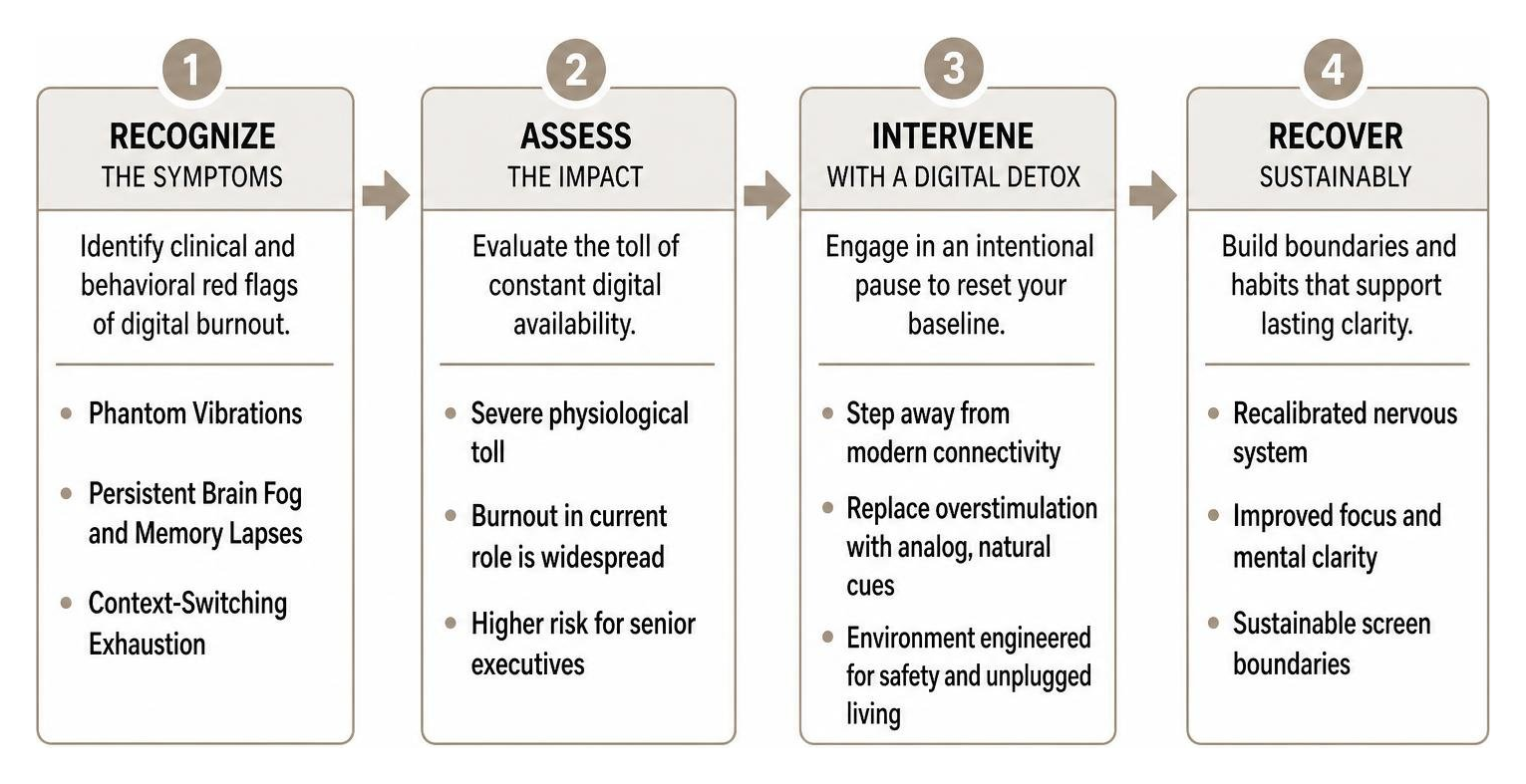
When evaluating whether you or your team requires an intervention like The 5 Resets, watch for these clinical and behavioral indicators:
- Phantom Vibrations: Sensation of phone vibrations in your pocket or bag when no alert occurred—a hallmark sign of sensory hypervigilance.
- Persistent Brain Fog and Memory Lapses: Inability to synthesize complex ideas due to fragmented attention spans.
- Context-Switching Exhaustion: Research shows knowledge workers switch between applications hundreds of times a day; each switch costs more than 20 minutes of cognitive recovery time according to UC Irvine data.
- Compulsive Checking Loops: Reaching for devices immediately upon waking or during brief moments of solitude.
Proven Health and Cognitive Benefits of Disconnecting
Stepping into an analog retreat environment provides immediate, measurable physiological improvements. When screens disappear, your brain shifts from reactive scanning to deep, reflective equilibrium.
Cognitive Restoration and Enhanced Problem-Solving
Our prefrontal cortex—the command center for decision-making, emotional regulation, and strategic synthesis—is relentlessly depleted by digital inputs. Cognitive research from Stanford University and studies in environmental psychology reveal that immersion in tech-free natural settings produces a 47% to 50% improvement in creative problem-solving performance.
By stepping away from screens and engaging in deep rest modalities like a Rest Reboot, we reactivate the brain's Default Mode Network (DMN). The DMN is responsible for self-reflection, creative consolidation, and big-picture problem solving, allowing leaders and creatives to unlock novel insights that remain hidden during day-to-day triage.
Mental Well-Being, Mood Elevation, and Stress Alleviation
Perpetual digital connection keeps the autonomic nervous system locked in a low-grade fight-or-flight state. Constant notifications stimulate rapid dopamine spikes followed by steep drops, creating an exhausting cycle of craving and distraction.
Disconnecting halts upward social comparison and information fatigue. Clinical research from institutions like Harvard Medical School demonstrates that tech fasts lower systemic cortisol, improve heart rate variability, and enhance vagal tone. As experts like Dr. Judith Joseph point out, eliminating algorithmic comparisons gives our emotional baseline room to stabilize, lifting mood and relieving chronic tension.
The Decompression Timeline: From Withdrawal to the Three-Day Effect
Adjusting to an unplugged environment follows a distinct biological curve. Knowing what to expect during each stage makes the transition smoother and more rewarding.
Managing the First 24–48 Hours of Screen Withdrawal
The initial 24 to 48 hours of any screen-free journey bring common withdrawal symptoms. Without constant digital stimulation, guests often experience dopamine dips, physical restlessness, or sudden spikes in emotional sensitivity.
To navigate this adjustment smoothly:
- Acknowledge the Sensations: Recognize that phantom phone checks and minor irritability are completely normal signs of neural recalibration.
- Anchor in the Breath: Somatic grounding through Healing Through Breathwork helps regulate the vagus nerve and eases the early instinct to check your phone.
- Engage in Gentle Analog Movement: Light walking, stretching, or sensory exploration channels restless energy into restorative physical awareness.
Why the Three-Day Effect Defines the Ideal Digital Detox Retreat
In neurobiological research highlighted by Stanford University, 72 hours without digital interruptions is considered the gold standard for full physiological decompression. Known widely as the "Three-Day Effect," this 72-hour window allows elevated cortisol levels to clear, aligns circadian melatonin production, and frees the prefrontal cortex from constant alertness. By day three, participants consistently report deeper sleep, effortless conversational flow, and a profound sense of inner calm.
Restorative Analog Practices to Replace Screen Time
Removing screens creates open space that is best filled with nourishing, hands-on practices. We replace digital noise with experiences that awaken your senses and nurture genuine community.
Somatic Grounding, Breathwork, and Restorative Sound
When you take away screens, the nervous system needs alternative ways to release physical stress. Immersive sound therapy—such as a Mindful Reset Gong Bath or The Deep Rest Experience—uses acoustic vibrations to guide brainwaves from active beta states into restorative alpha and theta patterns. Pairing sound immersion with restorative yoga and mindfulness gently releases tension stored in your muscles and fascia.
Designing a Structured Group or Corporate Digital Detox Retreat
For organizations navigating rapid change and AI adoption, building human-to-human trust requires device-free collaboration. Studies from Harvard Business Review and McKinsey emphasize that authentic leadership in automated environments relies entirely on emotional intelligence and focused human connection.

At Loopwell, we host corporate leadership gatherings, executive wellness offsites, and premier events—ranging from strategic innovation summits to luxury watch parties featuring expansive full-wall displays, curated artisanal catering, and private on-site parking. Diverse leadership voices, such as executive coach Amina AlTai and wellness author Michelle Maros, highlight that setting clear technology boundaries during offsites creates an open environment where teams build lasting psychological trust.
When designing a corporate retreat agenda, we architect the day around natural energy curves:
- Morning Focus (8:00 AM – 12:00 PM): Analog strategic planning using whiteboards and paper journals during peak cognitive hours.
- Afternoon Restoration (1:00 PM – 5:00 PM): Nature trail walks, hands-on creative workshops, and guided somatic recovery.
- Evening Connection (6:00 PM – 9:00 PM): Organic, farm-to-table dining and unstructured storytelling around the fire.
Sustaining Long-Term Digital Wellness and Preventing the Rebound Effect
The true success of an unplugged reset is measured by what happens when you return home. Without an intentional transition, many people experience a "rebound effect"—getting flooded by unread emails and slipping straight back into old scrolling habits within two weeks.
Establishing Tech-Free Sanctuaries at Home and Work
Sustaining your mental clarity begins by creating physical boundaries for your devices:
- Analog Bedrooms: Remove smartphones, tablets, and televisions from the bedroom entirely. Use a simple analog alarm clock to protect your evening wind-down and morning wake-up routines.
- Digital Sunsets: Establish a firm cutoff for screens 60 to 90 minutes before bed to allow natural melatonin production to rise, as recommended by sleep researchers at Stanford and the Huberman Lab.
- Mindful Morning Rituals: Replace immediate inbox checking with The Morning Movement and Meditation Ritual to start your day with intention and calm focus.
Long-Term Cognitive and Behavioral Maintenance
To maintain your results over time, follow the 80/20 rule of digital intentionality. You do not need to live completely off the grid; simply make sure that 80% of your device usage serves a clear purpose, while containing mindless browsing to small, designated windows. Pairing these daily habits with a weekly device-free morning or a monthly tech-free day keeps your attention sharp and your nervous system balanced all year long.
Frequently Asked Questions About Tech Unplugging
How long does a digital detox retreat need to be for measurable cognitive results?
While a 24-hour break provides quick relief, neuroscientific research from institutions like Stanford and Harvard indicates that 72 hours (the "Three-Day Effect") is the ideal minimum for deep cognitive restoration. This timeframe gives your prefrontal cortex time to step out of high-alert mode, stabilizes your circadian rhythms, and reactivates the brain's creative default mode network.
What are the most common withdrawal symptoms during a digital detox?
During the first 24 to 48 hours, it is common to notice phantom vibrations, a restless urge to check your pockets, mild irritability, or brief spikes of boredom. These are normal responses as your dopamine pathways adjust away from constant digital stimulation. Somatic grounding, breathwork, and time outdoors help ease this transition quickly.
What is the rebound effect and how can it be avoided after a retreat?
The rebound effect happens when someone returns from an unplugged experience and immediately dives into hundreds of accumulated emails and notifications, wiping out their newfound calm within days. You can avoid this by using an autoresponder for an extra 24 hours after you return, sorting your inbox in short, scheduled windows, and keeping your bedroom completely screen-free.
Conclusion
Reclaiming your focus and vitality in a hyperconnected world is not about turning your back on modern technology. It is about building a conscious, healthy relationship with your devices. A structured tech fast gives your nervous system the breathing room it needs to rest, renew, and reconnect with what truly matters.
By stepping away from digital noise and leaning into science-backed recovery, somatic grounding, and genuine community, you restore your baseline cognitive clarity and emotional well-being. Whether you join us for a restorative wellness retreat in Montclair, New Jersey, or design your own analog weekend, giving yourself permission to pause is the ultimate investment in your long-term health and focus.