
Ayurvedic Wellness: A Whole-Person Approach to Health

Ayurvedic wellness is a traditional Indian approach to health that aims to support balance across the body, mind, daily habits, and environment. Rather than focusing only on symptoms, it encourages personalized routines around food, sleep, movement, stress, and seasonal change.
At its most practical, Ayurvedic wellness can start with a few low-risk habits:
- Keep regular meal and sleep times.
- Choose nourishing foods that work for your body and the season.
- Use yoga, breathing, meditation, or walking to manage stress.
- Seek qualified medical advice before taking herbs, supplements, or detox treatments.
Ayurveda has developed over thousands of years and centers on concepts such as doshas, digestion, and individual constitution. Some practices, including mindful breathing and meditation, also align with modern stress-management research; Harvard Health notes that breath-based relaxation techniques can help calm the body's stress response. Still, Ayurveda should complement, not replace, evidence-based medical diagnosis and treatment.
I'm Debbie Looney, and next we'll unpack the core ideas that shape Ayurvedic wellness and how to approach them safely.

What is Ayurvedic Wellness? Core Principles and Philosophy
Ayurveda originated in India more than 3,000 years ago as an extensive science of life (derived from the Sanskrit words ayus, meaning life, and veda, meaning knowledge). At its foundation, Ayurvedic philosophy views human biology as an inseparable part of the natural universe. This framework asserts that all matter in the cosmos—including the human body—is composed of five fundamental building blocks known as the Panchamahabhutas:
- Akash (Space/Ether): The container of all form and sound.
- Vayu (Air): The principle of movement, breath, and kinetic energy.
- Agni/Tejas (Fire): The principle of transformation, heat, and metabolic activity.
- Jala (Water): The principle of cohesion, fluidity, and nourishment.
- Prithvi (Earth): The principle of mass, stability, and structure.
In classical literature, health is defined not merely as the absence of illness, but as Swastha—a dynamic state where one's physiological humors, digestive fire, tissues, and natural excretions are in equilibrium, accompanied by a joyful mind, steady senses, and spiritual clarity. As detailed in this academic review on the Ayurvedic concept of wellness, optimal living requires ethical living (Sadvritta) and avoiding Prajnaparadha (crimes against one's own inner wisdom, such as ignoring fatigue or chronic stress).
The Body Matrix: Tridosha, Dhatus, and Malas
In Ayurvedic physiology, the body operates through a three-part matrix:
- Tridosha: The three regulatory bio-energies (Vata, Pitta, and Kapha) that manage physiological function.
- Sapta Dhatus: The seven progressive bodily tissues that sustain vitality—Rasa (lymph and plasma), Rakta (blood), Mansa (muscle), Meda (adipose tissue), Asthi (bone), Majja (bone marrow and nervous tissue), and Shukra (reproductive fluids).
- Malas: The three primary metabolic waste products—Purisha (feces), Mutra (urine), and Sveda (sweat).
When food is properly digested by our internal bio-fire, it successively nourishes each tissue layer over roughly 30 days. The ultimate refined essence of this tissue transformation is Ojas—the subtle biological fluid that governs immune resilience, longevity, and radiance. If waste elimination (malas) is sluggish, metabolic debris obstructs the energetic pathways (srotas), impeding the flow of Prana (vital life force) and diminishing mental focus.
Prakriti and Vikruti: What is Ayurvedic Wellness for Unique Constitutions?
Every individual is born with an innate baseline constitution called Prakriti, determined by parental genetics, environmental factors, and the dominant elements at conception. Your Prakriti remains constant throughout your life. However, daily stress, poor diet, shifting seasons, and emotional demands create Vikruti—your current state of imbalance.
Modern scientific inquiry increasingly mirrors this personalized paradigm. Epigenetic and genomic research from Harvard Medical School shows that while our core DNA blueprint is established at birth, environmental choices and lifestyle behaviors directly influence gene expression and metabolic phenotypes. Ayurvedic medicine applies targeted nutritional shifts, botanical remedies, and restorative routines to bring a person's fluctuating Vikruti back into harmony with their native Prakriti.
For women navigating hormonal milestones, addressing these baseline shifts is vital; exploring workshops like Balancing Your Hormones with Ayurveda can help identify how shifts in Vata, Pitta, and Kapha manifest across the endocrine system.
Understanding the Three Doshas and Metabolic Health

The three doshas—Vata, Pitta, and Kapha—govern every physiological and psychological mechanism in the body. When in balance, they sustain health and tissue resilience. When vitiated by lifestyle or environmental stressors, they initiate pathological changes known as Samprapti (disease progression). As highlighted in this Cleveland Clinic overview on Ayurvedic principles, Ayurveda employs the "principle of opposites" to restore equilibrium: introducing cooling qualities to balance excess heat, grounding elements to soothe hyperactivity, or light elements to clear stagnation.
Research in circadian biology from Stanford Medicine underscores that human metabolic efficiency, gene expression, and hormone production operate on predictable 24-hour rhythmic cycles that mirror the doshic clock.
Vata, Pitta, and Kapha Dynamics
| Dosha | Elemental Composition | Primary Functions | Imbalance Signs | Balancing Lifestyle & Diet |
|---|---|---|---|---|
| Vata | Space (Ether) + Air | Movement, breath, nerve impulses, circulation, creativity | Anxiety, insomnia, dry skin, constipation, racing thoughts | Warm cooked meals, root vegetables, grounding routines, slow mindful movement |
| Pitta | Fire + Water | Digestion, cellular metabolism, temperature, intellect | Acid reflux, inflammation, skin eruptions, irritability, anger | Cooling foods, sweet fruits, leafy greens, moderate exercise, calm reflection |
| Kapha | Water + Earth | Structure, stability, lubrication, immunity, compassion | Lethargy, sluggish digestion, congestion, weight gain, brain fog | Light warm foods, pungent spices, vigorous aerobic exercise, stimulating routines |
Understanding which dosha is elevated allows for rapid self-correction. For an in-depth breakdown of practical self-care adjustments for each constitutional type, see our complete guide on How to Balance Doshas.
Agni, Ama, and the Root of Vitality
In Ayurveda, metabolic health is driven by Agni (digestive and metabolic fire). Classical texts state that a person is as old as their Agni. When Agni is robust, food is fully assimilated, cellular energy is optimized, and ojas flourishes. When Agni is weakened or erratic, undigested food ferments in the gastrointestinal tract, transforming into Ama—a sticky, toxic byproduct that clogs microchannels and triggers systemic inflammation.
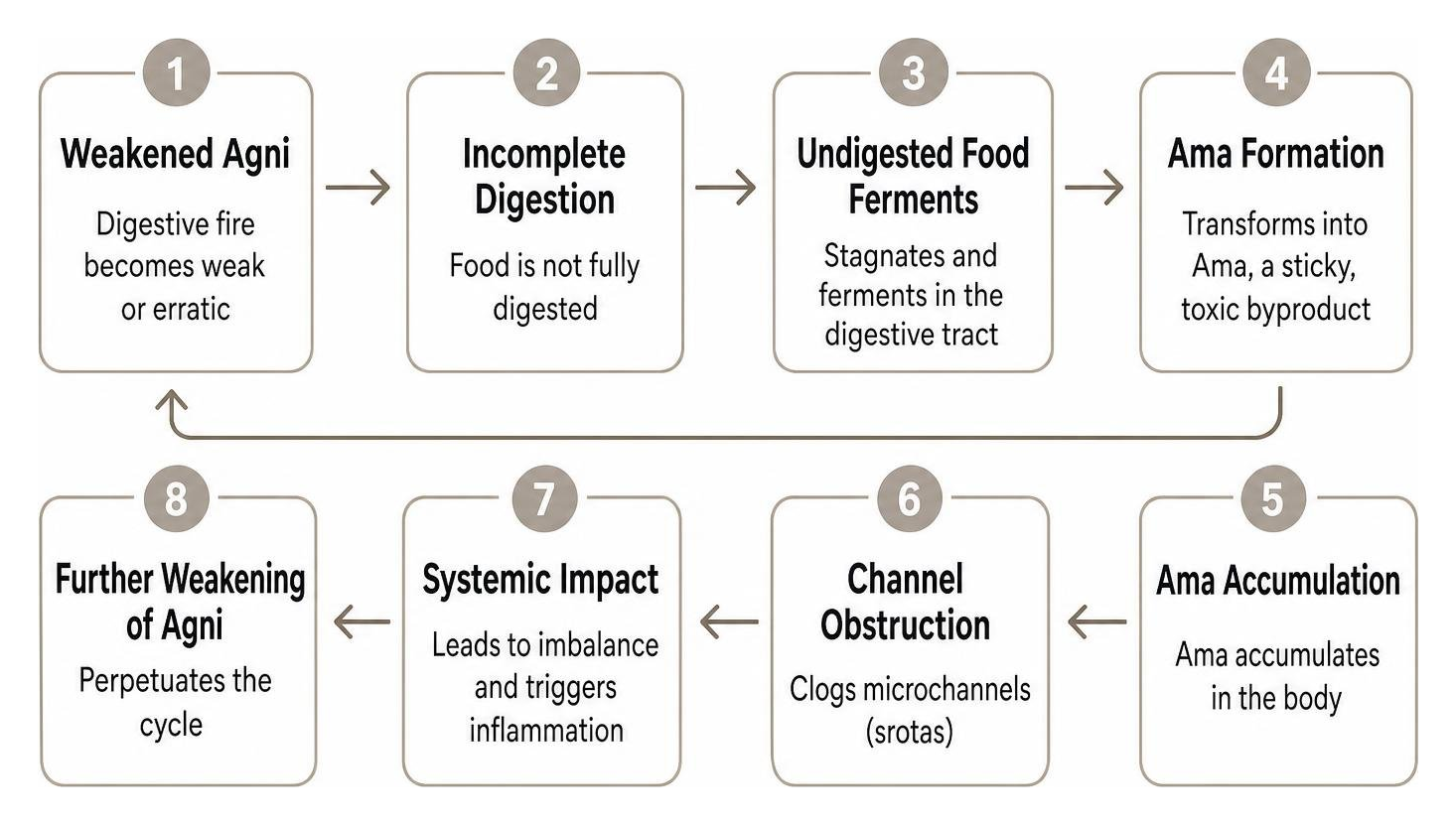
Modern gastroenterological research from Harvard Medical School validates this ancient observation through the gut-brain axis and the microbiome: impaired digestive permeability and dysbiosis trigger low-grade chronic inflammation throughout the body. Well-being pioneers like Dr. Mindy Pelz emphasize that intuitive meal timing and supporting gut integrity are critical for metabolic flexibility and hormone health.
Learning how to cook with digestive spices such as turmeric, ginger, cumin, and black pepper directly strengthens Agni. You can explore culinary therapies through The Ayurvedic Healing Kitchen.
Daily and Seasonal Rhythms: Practical Integration
Human biology is attuned to the natural light-dark cycle of the earth. Ayurveda organizes daily wellness through Dinacharya (daily routine) and seasonal health through Ritucharya (seasonal routine). In corporate wellness research published by the Harvard Business Review and McKinsey, regular circadian routines and intentional micro-breaks significantly enhance cognitive focus, executive decision-making, and emotional resilience in demanding workplace environments.
Circadian Dinacharya: What is Ayurvedic Wellness in Daily Practice?
A traditional Dinacharya aligns personal routines with the biological doshic cycles of the day:
- Brahma Muhurta (Wake Before Dawn): Rising during the Vata period (before 6:00 AM) infuses the nervous system with lightness, clarity, and heightened mental awareness.
- Oral Purification: Using a copper or stainless steel tongue scraper (Jihwa Prakshalana) removes overnight bacterial buildup and ama. Practicing oil pulling (Gandusha) with warm sesame or coconut oil supports oral tissue strength.
- Sensory Cleansing & Hydration: Splashing cool water on the eyes and drinking a glass of warm water stimulates morning gastrointestinal peristalsis.
- Abhyanga (Self-Massage): Applying warm botanical oils to the limbs and joints calms the central nervous system, nourishes the skin, and promotes lymphatic flow.
- Pranayama & Svadhyaya (Breathwork & Reflection): Practicing box breathing (inhale 4, hold 4, exhale 4, hold 4) downregulates sympathetic stress. Neuroscientist Andrew Huberman has frequently highlighted how intentional respiration rapidly shifts autonomic tone from stress to parasympathetic recovery.
Ritucharya and Aharavidhi: Seasonal Nutrition
Ritucharya guides nutritional and behavioral adjustments across the changing seasons:
- Vata Season (Autumn & Early Winter): Cold, dry, windy weather aggravates Vata. Favor warm soups, healthy fats like ghee, roasted root vegetables, and grounding stews.
- Kapha Season (Late Winter & Spring): Damp, heavy, cold elements dominate. Stimulate sluggish metabolism by consuming lighter grains, bitter greens, steamed vegetables, and heating spices like ginger and black pepper.
- Pitta Season (Summer): High environmental heat elevates internal Pitta. Emphasize cooling foods such as cucumbers, coconut water, sweet juicy fruits, fresh cilantro, and mint.
Ayurvedic dietary doctrine (Aharavidhi) prioritizes the six tastes (Shad Rasa): sweet, sour, salty, pungent, bitter, and astringent. Consuming meals containing all six tastes signals complete satisfaction to the brain's satiety centers. To dive deeper into elemental nutrition, read What is an Ayurvedic Diet: A Detailed Scientific Guide to Cooking and Eating According to Ayurveda.
In today's corporate landscapes, high-performing teams require intentional environments to unplug and reset. According to Deloitte workplace insights, cultivating shared somatic wellness rituals and face-to-face human connection counteracts workplace burnout in the AI era.
At Loopwell, we curate premier corporate retreats and executive gatherings across Northern New Jersey and the New York metropolitan area. Whether hosting executive planning sessions or premier events—such as curated FIFA World Cup watch parties—our luxury spaces feature full screen walls, bespoke nourishing catering, and private parking to provide a high-end, restorative backdrop for meaningful connection.
Restorative Therapies, Panchakarma, and Integrative Safety

When accumulated metabolic toxins (ama) overwhelm the body's natural elimination pathways, classical Ayurveda utilizes Panchakarma—a specialized clinical bio-purification and rejuvenation protocol. Panchakarma involves a three-stage clinical process: preparation (Purva Karma), five primary elimination therapies (Pradhana Karma), and post-cleansing rejuvenation (Paschat Karma).
Clinical reviews highlighted in Ayurvedic clinical research from Johns Hopkins Medicine emphasize that while non-invasive therapies support stress reduction and circulation, systemic detoxification procedures should only be performed under the direct supervision of qualified professionals.
Panchakarma and Bodywork Modalities
Key bodywork therapies utilized within Ayurvedic wellness include:
- Shirodhara: A continuous, rhythmic stream of warm medicated herbal oil or herbal buttermilk poured over the center of the forehead (Ajna Chakra). This somatic therapy induces an alpha-brainwave state, downregulates the central nervous system, and helps alleviate chronic insomnia, anxiety, and mental fatigue.
- Abhyanga: Full-body synchronized therapeutic oil massage utilizing dosha-specific medicated botanicals to improve arterial and lymphatic circulation while softening tight fascia.
- Kasti Vasti & Janu Vasti: Localized reservoirs of warm herbalized oils retained over the lower lumbosacral region or knee joints using a ring of herbal dough to relieve localized musculoskeletal inflammation.
- Kizhi / Pinda Sweda: Warm herbal poultices packed with medicinal leaves or medicated grains pressed rhythmically against joints and muscle tissue to reduce stiffness and clear localized lymphatic stagnation.
Thought leaders like Amina AlTai and Michelle Maros frequently emphasize that true somatic healing requires giving the nervous system dedicated, quiet intervals to downregulate from modern hyper-stimulation.
Safety Standards, Herb Quality, and Western Medicine Integration
While Ayurvedic lifestyle, culinary, and breathwork practices are exceptionally safe, botanical and mineral therapies require rigorous consumer safety protocols:
- Heavy Metal Screening: Traditional classical texts describe Rasashastra (mineral and metal preparations known as Bhasmas). Landmark laboratory research conducted by Harvard Medical School researchers indicates that roughly 20% of unverified, over-the-counter Ayurvedic formulations imported online contain potentially hazardous levels of lead, mercury, or arsenic. Consumers should completely avoid unverified herbo-metallic preparations and insist on third-party certificate-of-analysis (COA) testing (e.g., NSF, USP, or ConsumerLab).
- FDA Regulatory Landscape: In the United States, Ayurvedic botanical remedies are categorized and regulated as dietary supplements, meaning they do not undergo pre-market pharmaceutical approval for clinical efficacy.
- Practitioner Vetting: While India has fully regulated university medical degree programs (BAMS - Bachelor of Ayurvedic Medicine and Surgery), the United States does not currently offer state-issued medical licenses specifically for Ayurvedic doctors. Look for practitioners certified through the National Ayurvedic Medical Association (NAMA).
- Integrative Physician Communication: Always inform your primary care physician or integrative medical doctor before taking herbs like Ashwagandha, Guggulu, or Triphala, especially if you are managing autoimmune conditions, taking prescription anticoagulants, or navigating pregnancy.
Frequently Asked Questions About Ayurvedic Wellness
How does Ayurvedic wellness differ from conventional Western medicine?
Conventional Western medicine excels at acute trauma intervention, diagnostic imaging, emergency pharmacology, and advanced surgical care. In contrast, Ayurvedic wellness is a root-cause, health-promotive system focused on chronic lifestyle optimization, individualized metabolic care, circadian synchronization, and disease prevention before clinical pathology manifests. The two frameworks function best when combined integratively.
Are Ayurvedic herbal preparations safe to take daily?
Culinary spices (like turmeric, ginger, cinnamon, and cumin) are safe for daily use. However, concentrated botanical extracts and herbal supplements must be verified by independent third-party testing to ensure they are free from heavy metal contamination, pesticides, and adulterants. Individuals taking prescription medications or managing chronic illness should consult their primary physician before daily supplementation.
How do I determine my Ayurvedic dosha constitution?
Your innate doshic blueprint (Prakriti) and active imbalances (Vikruti) are assessed through a holistic clinical consultation. This includes detailed lifestyle questioning, physical structural analysis, tongue diagnosis (Jihwa Pariksha), and traditional radial pulse assessment (Nadi Pariksha) conducted by a certified Ayurvedic professional.
Conclusion
Ayurvedic wellness offers a dynamic, time-tested framework for thriving in our high-speed modern world. By understanding your unique constitution, rekindling your digestive fire, and aligning your daily habits with the natural rhythms of the earth, you create a sustainable foundation for lifelong vitality and mental clarity. Modern longitudinal studies from institutions like Stanford and Harvard affirm that preventative lifestyle habits, whole-food nutrition, and nervous system regulation are the most reliable predictors of long-term healthspan.
At Loopwell, we bridge these foundational traditions with modern lifestyle design. We invite you to explore our workshops, build human connection, and experience our transformative wellness retreat experiences at our premier centers in Montclair and Northern New Jersey. True wellness is not a one-size-fits-all prescription—it is the art of coming home to your own natural balance.