
Understanding Rental Costs for a New York Event Venue

Budgeting for an event space across New York City requires looking beyond baseline hourly stickers. While citywide rental listings show an average rate of $261 per hour, budget-conscious hosts can secure functional, beautiful settings within the $100 to $300 per hour range. However, total expenditures hinge on several structural pricing mechanics: minimum rental hour commitments, food and beverage (F&B) minimums, and standard city administrative fees.
In prime Manhattan corridors, raw spaces and penthouses often enforce minimum booking commitments ranging between 3 and 16 hours. A seemingly reasonable $450/hr loft in Union Square requiring a 6-hour minimum quickly totals $2,700 before taxes, cleaning, and security deposits. In contrast, full-service culinary spaces may waive basic room rental fees entirely, substituting them with F&B minimums ranging from $2,900 to over $40,000 depending on group size, prime-time seasonality, and day of the week.
Standard New York event invoices also carry an 8.875% state and local sales tax, mandatory gratuity (typically 18% to 22%), and a 3% to 5% administrative surcharge. Factoring in guest-size tiers—where platforms or operators charge incremental per-person fees when attendance exceeds baseline thresholds—ensures your event balance sheet stays strictly on target.
| Borough / Sub-Market | Typical Budget Hourly Spectrum | Average Hourly Rate | Standard Booking Minimums | Common Pricing Model |
|---|---|---|---|---|
| Manhattan (Midtown & Flatiron) | $200 – $650 / hr | $350 / hr | 4 – 10 hours | Flat room fee + strict load-in/out hours |
| Lower Manhattan & SoHo | $150 – $450 / hr | $285 / hr | 3 – 8 hours | Hourly space rental or F&B minimums |
| Brooklyn (Williamsburg & Bushwick) | $100 – $300 / hr | $210 / hr | 3 – 6 hours | Flexible hourly micro-rentals & BYOB |
| Queens (Long Island City) | $90 – $250 / hr | $185 / hr | 2 – 5 hours | Hourly daylight studios & open floor plans |
| Northern NJ / Metro Outskirts | $100 – $275 / hr | $195 / hr | 3 – 6 hours | Bundled packages & full-day off-site rates |
Affordable Neighborhoods for Your New York Event Venue Selection
Selecting the right neighborhood allows planners to cut upfront rental overhead while securing striking architectural character. Rather than competing for congested Midtown footprints, exploring outer-borough creative corridors provides greater square footage per dollar and character-rich backdrops.
- Williamsburg & Bushwick, Brooklyn: Repurposed industrial warehouses, loft conversions, and indie art studios offer soaring ceilings and exposed brick. These neighborhoods are ideal for casual creative summits, evening networking, and BYOB-friendly social parties.
- Long Island City, Queens: Just one subway stop from Grand Central, Long Island City is packed with naturally lit photo studios, former industrial plants, and sweeping rooftop terraces offering unobstructed East River vistas of the Manhattan skyline.
- Lower Manhattan, Chinatown, and the Lower East Side: Historic storefronts, white-box art galleries, and subterranean lounges provide turn-key ambiance, keeping decor costs low while offering easy transit via major MTA hubs like Fulton Street.
Proximity to public transit is essential when hosting outside central commercial zones. Choosing locations within a 5-to-10-minute walk of major subway arteries (such as the L, G, 7, A/C, or F lines) or the NYC Ferry prevents transit headaches, bypasses Manhattan gridlock, and eliminates costly parking garage expenses for attendees.
Key Amenities That Reduce Overhead at a New York Event Venue
Third-party equipment rentals—ranging from stage risers and wireless microphones to cocktail tables and lounge seating—represent the most common source of budget creep. Choosing spaces with extensive built-in amenities lets you redirect funds toward elevated programming and guest hospitality.
Prioritize venues offering integrated, plug-and-play audiovisual infrastructure: high-lumen digital projectors, distributed sound systems, wireless handheld mics, and customizable architectural lighting. Finding a venue with on-site lounge vignettes, banquet chairs, and mobile bar stations eliminates hefty third-party delivery and breakdown surcharges.
A functional catering prep kitchen (featuring commercial refrigeration, prep tables, and dedicated ice makers) enables outside food partners to plate efficiently without renting mobile kitchen setups. Spaces with extensive natural light significantly reduce daytime lighting requirements. When evaluating venues, review dedicated spaces that combine these turn-key production elements under one roof to protect your bottom line.
Top Budget-Friendly Venue Styles Across the Boroughs
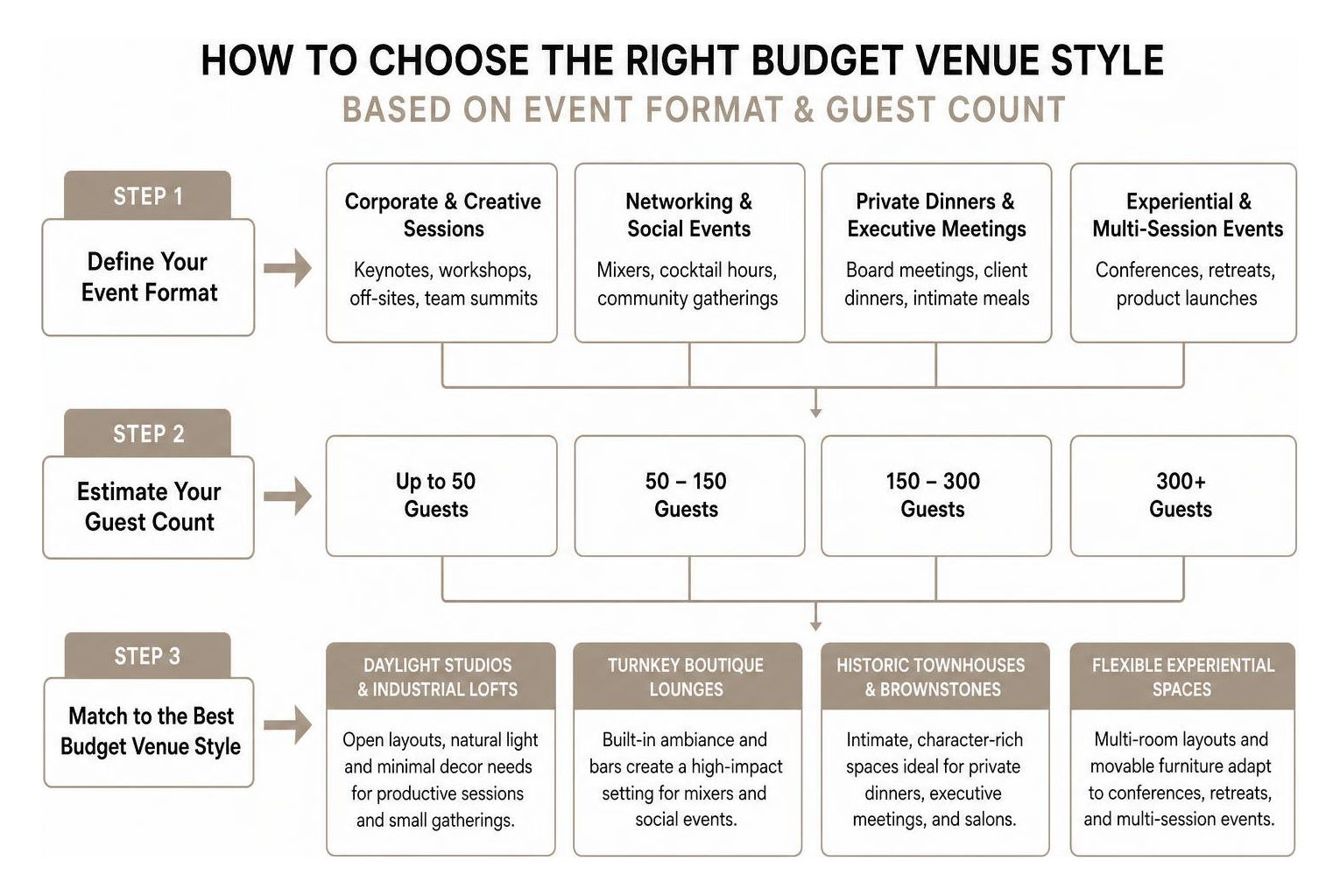
The New York metropolitan area features a rich variety of budget-friendly spaces, each with distinct architectural and logistical advantages:
- Daylight Photo Studios & Industrial Lofts: Featuring white cyclorama walls, oversized warehouse windows, and polished concrete flooring, these spaces offer ready-to-use aesthetic environments that require almost no supplemental decoration.
- Historic Townhouses & Brownstones: Multi-floor pre-war townhouses in Upper Manhattan, Brooklyn Heights, or Greenwich Village provide intimate fireplaces, carved moldings, and private courtyards for salon dinners, fireside chats, and executive board meetings.
- Turnkey Boutique Lounges: Intimate speakeasies and hospitality lounges with existing vintage seating, ambient bar setups, and mood lighting offer high aesthetic value with zero decorative buildout.
- Flexible Experiential Spaces: Modern multi-room venues offering movable furniture, modular gathering halls like The Great Room, and dedicated breakout rooms allow seamless transitions between plenary talks, workshops, and evening receptions.
Daylight Studios and Creative Lofts
Creative photo studios and daylight lofts represent the premier budget option for agile events. Because these spaces are originally built for commercial photography, fashion shoots, and media productions, they naturally offer superior lighting, clean white-box backdrops, and open floor plans.

These spaces maximize architectural efficiency. High timber or steel ceilings, exposed red brick, and north-facing floor-to-ceiling windows provide an elevated atmosphere without thousands of dollars spent on floral installations or backdrops. Many daylight studios operate on flexible micro-rental models, allowing organizers to book focused 4-to-6-hour blocks rather than rigid 12-hour full-day buyouts.
Multi-Functional Experiential and Wellness Spaces
The corporate and social event landscape has evolved. Organizers are moving away from sterile, windowless hotel conference halls in favor of warm, biophilic, human-centered environments. Research from Stanford University on workplace well-being highlights that environments featuring natural daylight, organic greenery, and open air measurably improve psychological safety, focus, and authentic collaboration among participants.
As well-being author Michelle Maros emphasizes, intentional environments that prioritize mental clarity and mindful connection create lasting impacts long after an event wraps up. Leaders like Amina AlTai similarly demonstrate that sustainable professional excellence requires supportive, nourishing physical settings that reduce cognitive overload.
Integrating mindful gathering formats—such as opening meditations, breathwork breaks, or fireside conversations—turns standard gatherings into restorative retreats. Venues designed around holistic health, restorative corporate wellness principles, and private outdoor access like The Courtyard allow companies and private hosts to deliver memorable, high-impact experiences without paying luxury hotel premiums.
Smart Logistics and Cost-Saving Planning Strategies
Flawless execution on a budget requires careful operational timing and proactive logistics management. High-demand metropolitan calendars fill up rapidly, making advance booking essential for securing prime dates at competitive rates.
To secure favorable rates, book your space two to four months in advance. Peak spring (May–June) and autumn (September–November) corporate seasons experience heavy demand, while holiday party dates across December are routinely locked down by early October.
Opting for off-peak days—such as Tuesdays, Wednesdays, or daytime Friday slots—often unlocks venue fee discounts of 15% to 30% compared to peak Thursday and Saturday evenings.
Logistically, ensure your venue has straightforward freight elevator access, clear street-level loading zones, and clear accessibility parameters. In dense urban markets, nearly every commercial venue requires a Certificate of Insurance (COI) reflecting a minimum of $1,000,000 in General Liability and Property Damage coverage, naming the building management and venue owner as additional insureds. Third-party single-day event insurance policies can be easily secured online for $125 to $200, protecting you from unexpected property liability.
When coordinating professional gatherings, lean on dedicated support structures for professional events to streamline vendor management, spatial flow, and digital presentation setups.

Navigating Contracts, Vendor Policies, and Hidden Fees
Before signing any venue contract, conduct a line-by-line audit to uncover hidden operational fees:
- Cleaning and Janitorial Fees: Confirm whether post-event turnover is included in the base hourly rate or billed as a separate $150 to $500 maintenance line item.
- Overtime Penalty Rates: Overtime in NYC event spaces is frequently billed at 1.5x to 2x the standard hourly rate in strict 30-minute increments. Build dedicated 60-minute buffers for both setup load-in and teardown load-out.
- Security & Staffing Requirements: Verify whether the venue mandates on-site security guards, dedicated elevator operators, or building engineers at additional hourly fees.
- Outside Vendor Flexibility: Venues with restrictive exclusive vendor lists often add 10% to 20% catering buy-out surcharges. Choose spaces that allow open catering or BYOB policies to maximize your culinary budget.
Designing High-Impact Experiences Beyond Manhattan
While Manhattan and the outer boroughs offer dynamic energy, forward-thinking planners increasingly host retreats, strategic off-sites, and watch parties in nearby tranquil metro destinations. According to recent research published in Harvard Business Review, immersive off-site environments that pull teams out of high-stimulus urban noise foster deeper strategic problem-solving and stronger human connection.
This human-centric focus is especially critical in our AI-driven business landscape. Insights from McKinsey and Deloitte consistently highlight that as automation accelerates, uniquely human skills—empathy, complex collaboration, and cross-functional trust—serve as an organization's primary competitive edge. Meeting these needs requires gathering spaces designed specifically for authentic human interaction.
For organizations and private groups seeking an elevated luxury experience without Manhattan's logistical friction, Loopwell in nearby Montclair, New Jersey offers a premier alternative. Located just minutes from the city via commuter rail or direct highway access, our thoughtfully curated wellness campus provides state-of-the-art full screen walls for high-impact visual presentations or private sports gatherings, farm-to-table culinary catering, dedicated private parking, and serene multi-functional gathering rooms. Discover how our serene spaces support intentional gatherings by exploring our gallery Hudson Valley retreats and regional offerings.
Frequently Asked Questions About NYC Event Venues
How much does it cost to rent an event venue in New York City on a budget?
Reasonably priced event venues across New York City typically range between $100 and $300 per hour, with the citywide median hovering around $261 per hour. Total booking costs depend heavily on minimum hourly commitments (commonly 3 to 6 hours for budget lofts), cleaning fees ($150–$350), security deposits, and attendee-tier thresholds that apply per-person surcharges when guest counts expand.
How far in advance should you reserve a venue in NYC?
You should secure your venue reservation at least two to four months in advance for typical corporate or private gatherings. For high-demand windows—including peak wedding weekends in May, June, September, and October, or corporate holiday parties in December—spaces should ideally be reserved four to six months ahead to lock in prime dates and competitive rates.
What insurance and permit requirements apply to private rentals?
Most commercial venues in New York require event organizers to supply a Certificate of Insurance (COI) providing at least $1,000,000 in General Liability and Property Damage coverage, naming the venue and building entity as additional insureds. If you plan to sell alcohol rather than host a private BYOB event, an SLA temporary beer and wine permit or a licensed catering bartender is mandatory under New York State regulations. Outdoor residential rooftops and garden terraces are also subject to local NYC noise code curfews, generally requiring amplified sound to end by 10:00 PM on weeknights and 11:00 PM on weekends.
Conclusion
Finding the ideal venue on a realistic budget comes down to creative spatial selection, transparent contract reviews, and choosing spaces that naturally foster human well-being. By selecting character-rich daylight lofts, exploring accessible creative hubs across the boroughs, and taking advantage of built-in AV and furniture amenities, you can craft unforgettable, high-impact gatherings that respect your bottom line.
Science continues to confirm that shared physical connection is vital for personal vitality and organizational resilience. Long-standing neurological and physiological research from Harvard Medical School, Stanford Medicine, and the Huberman Lab reveals that intentional social engagement, supportive group environments, and shared biological focus down-regulate chronic stress pathways while boosting emotional well-being. Expert insights highlighted in The New York Times, alongside clinical guidance from thought leaders like Dr. Judith Joseph and metabolic health researcher Dr. Mindy Pelz, consistently demonstrate that real-world community, supportive gatherings, and nourishing shared spaces are essential pillars for sustained health.
When you're ready to move beyond standard urban meeting rooms and design an extraordinary experience that prioritizes genuine connection, exploration, and hospitality, explore Loopwell’s transformative off-site spaces. We invite you to step into an environment where exceptional design, intentional programming, and restorative community converge to bring your vision to life.