
A Quick Start Guide to Balancing Your Doshas
Understanding the Three Doshas: Elements, Traits, and Imbalances

To understand how to balance doshas, we first need to look at what they are made of. In classical Ayurvedic tradition, everything in the natural world—including the human body—is composed of five fundamental elements, or Panchamahabhutas: space (akasha), air (vayu), fire (agni), water (jala), and earth (prithvi). The three doshas represent unique pairings of these elements that manage physical, mental, and emotional processes:
- Vata Dosha (Air + Space): Governs all movement, respiration, nerve impulses, and circulation.
- Pitta Dosha (Fire + Water): Governs transformation, digestion, metabolic heat, and mental focus.
- Kapha Dosha (Earth + Water): Governs structure, stability, fluid balance, lubrication, and immune resilience.
While modern clinical research evaluated by institutions like Stanford Medicine and Harvard Medical School views human physiology through genetics, biochemistry, and endocrinology rather than elemental doshas, many integrative health researchers note that Ayurvedic constitutional care offers valuable frameworks for personalized lifestyle interventions. Understanding how these biological forces operate in your system gives you a practical framework for self-care. For a deeper look at clinical definitions, review the Ayurveda Health Library Overview.
Identifying Your Prakriti Versus Vikriti Baseline
A common source of confusion when learning how to balance doshas is the distinction between your Prakriti and your Vikriti.
- Prakriti: Your inherent, unchanging baseline constitution established at birth. It reflects your natural body structure, baseline metabolism, and innate personality traits.
- Vikriti: Your present state of balance or imbalance, which shifts constantly based on stress, environment, diet, age, and lifestyle habits.
When taking steps to restore harmony, we always treat the current imbalance (vikriti) rather than trying to alter our genetic foundation (prakriti). Traditional practitioners often use subtle diagnostic tools like pulse reading (Nadi Pariksha) to evaluate both states. However, you can assess your current needs simply by paying attention to your daily physical and emotional signals.
Physical and Emotional Indicators of Doshic Imbalance
Recognizing early warning signs allows you to make gentle shifts before mild discomfort turns into chronic dysfunction.
| Dosha | Physical Signs of Imbalance | Emotional Signs of Imbalance |
|---|---|---|
| Vata | Dry skin and hair, cold hands/feet, gas, bloating, constipation, light sleep | Anxiety, restlessness, racing thoughts, difficulty focusing |
| Pitta | Acid reflux, skin redness/rashes, inflammatory flare-ups, excessive body heat | Irritability, impatience, anger, hyper-competitiveness |
| Kapha | Sluggish digestion, sinus congestion, fluid retention, heaviness, weight gain | Lethargy, brain fog, attachment, resistance to change |
How to Balance Doshas: Core Principles and Daily Strategies
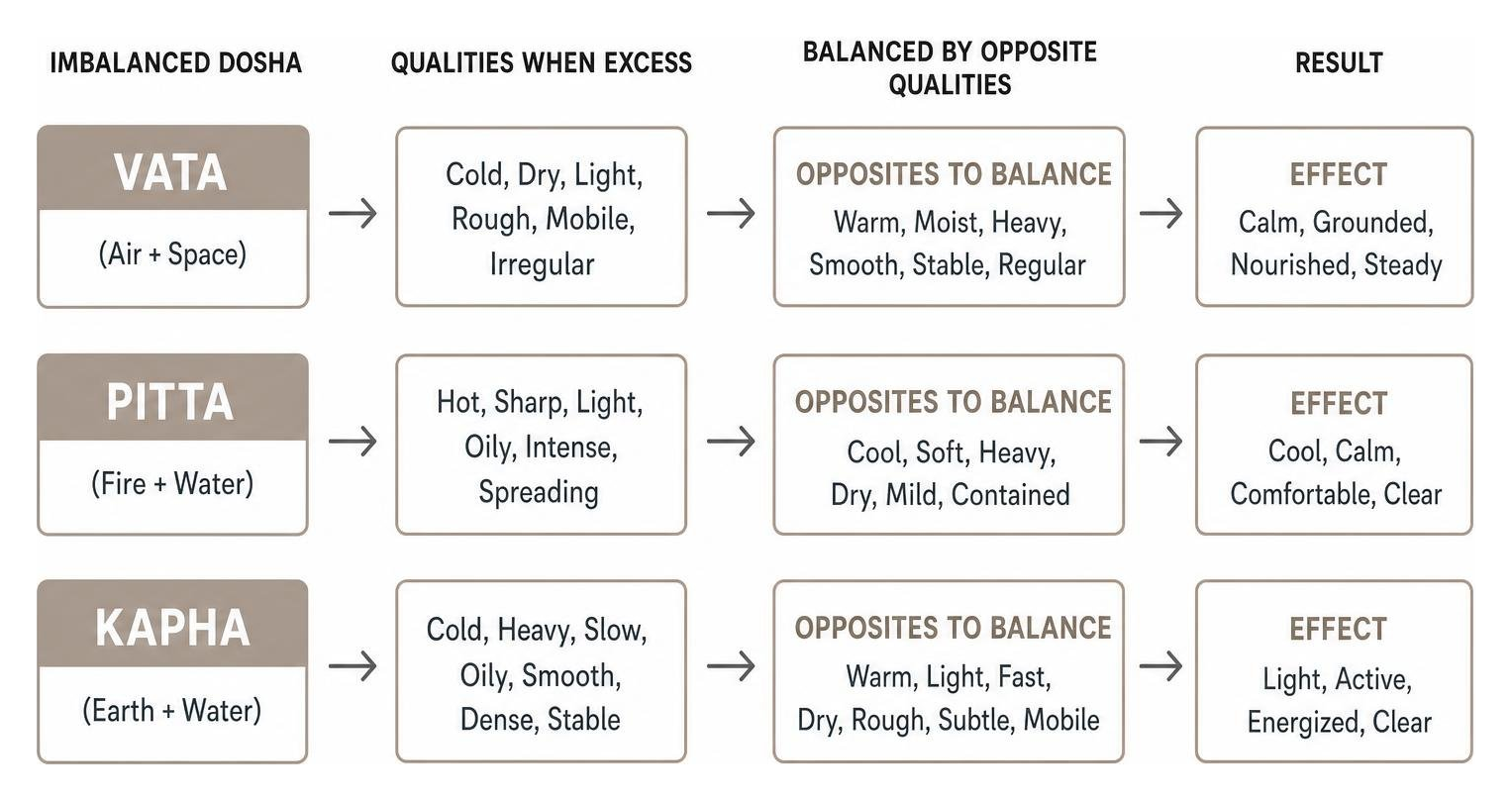
The fundamental rule for balancing the three doshas is straightforward: like increases like, and opposites create balance. If a specific energy in your mind or body is feeling elevated, you counter it by introducing activities, foods, and environmental factors that carry the opposite qualities.
A cornerstone of this approach is maintaining a structured daily routine (Dinacharya). Aligning your habits with the natural biological clock stabilizes internal rhythms and protects your Agni (digestive fire), a concept aligned with Harvard Medical School research on circadian biology and metabolic timing. In Ayurveda, robust digestive strength is considered essential for preventing Ama (metabolic toxins). To maintain digestive health, practice the classic 80/20 rule: eat until your stomach is 80% full, leaving 20% empty to give your digestive system the space required to process meals efficiently. For local insights into daily routines, explore Ayurvedic Principles for Everyday Living.
How to Balance Doshas with Vata-Pacifying Foods and Daily Habits
Because Vata is cold, light, dry, and erratic, pacifying excess Vata requires warmth, grounding, moisture, and consistent structure.
- Nourishing Diet: Prioritize warm, well-cooked meals such as root vegetable stews, hearty soups, oatmeal, basmati rice, and kitchari. Incorporate healthy fats like ghee, warm sesame oil, and avocados. Favor sweet, sour, and salty tastes while minimizing raw, cold salads and dry crackers. For step-by-step guidance on meal creation, see What is an Ayurvedic Diet: A Detailed Scientific Guide.
- Daily Routine: Vata types thrive on predictability. Eat meals at regular hours each day and keep a strict sleep schedule, aiming to rest between 10 PM and 6 AM.
- Self-Care: Perform a warm sesame oil self-massage (Abhyanga) before taking a warm bath or shower to calm the nervous system and nourish dry skin.
Cooling Pitta and Energizing Kapha Through Targeted Nutrition
Pitta and Kapha require distinctly different dietary approaches due to their opposing underlying qualities:
- Pacifying Pitta (Hot, Sharp, Intense): Focus on cooling, hydrating, and mildly spiced whole foods. Enjoy cucumbers, sweet melons, leafy greens, coconut water, mint, and basmati rice. Minimize hot spices, fried items, citrus fruits, and nightshades (like tomatoes and peppers). Drinking CCF tea (a warm brew of equal parts cumin, coriander, and fennel seeds) helps soothe digestive acidity and clear heat.
- Pacifying Kapha (Heavy, Cold, Sluggish): Focus on light, warm, dry, and invigorating meals. Emphasize steamed vegetables, legumes, quinoa, and ancient grains. Use warm, pungent spices like ginger, black pepper, cinnamon, and turmeric to stimulate digestion. Avoid heavy dairy, fried foods, iced drinks, and refined sugars. Raw honey, used in moderation, is one of the few sweet foods that helps balance Kapha energy without adding heaviness.
To dive deeper into cooking for your unique constitution, explore culinary techniques presented in The Ayurvedic Healing Kitchen.
Targeted Lifestyle Practices: Exercise, Self-Massage, and Seasonality

Physical movement, body therapies, and lifestyle adjustments work hand-in-hand with nutrition to bring your system into equilibrium. For additional lifestyle strategies, read Dosha Balancing: Align Diet, Yoga, and Lifestyle.
How to Balance Doshas Through Seasonal Adjustments and Ritucharya
In Ayurveda, the year is divided into distinct seasonal periods (Ritucharya), during which environmental changes naturally elevate specific doshas in everyone:
- Autumn & Early Winter (Vata Season): Characterized by cool temperatures, dry winds, and crisp air. Focus on warming, grounding stews, rich body oils, and slow, stabilizing movement.
- Late Winter & Spring (Kapha Season): Characterized by dampness, cold rain, and lingering heaviness as snow melts. Focus on lighter foods, dry brushing (Garshana), and energetic exercise routines.
- Summer (Pitta Season): Characterized by rising environmental heat and intensity. Focus on cooling coconut oil massages, swimming, shade resting, and hydrating foods.
Movement, Yoga, and Mindfulness by Dosha Type
Tailoring movement velocity and mindfulness techniques prevents overexertion or stagnation:
- For Vata: Practice grounding, slow-flowing yoga asana, gentle walking, and balancing breathwork like Nadi Shodhana (alternate nostril breathing). Keep exercise sessions under 45 minutes to prevent depletion.
- For Pitta: Choose non-competitive, moderate exercises such as swimming, cycling under shade, or relaxing Hatha yoga. Use cooling breathwork like Sheetali or Sitkari (curled-tongue intake) to dissipate internal heat and reduce stress-induced irritability.
- For Kapha: Practice vigorous, high-energy movement like cardio workouts, Vinyasa flows, or cycling. Use stimulating breathwork like Kapalabhati (breath of fire) to lift mental lethargy.
Female hormone fluctuations also interact closely with energetic balance. To explore how eastern practices align with endocrine care, review insights from leaders like Amina AlTai and Michelle Maros at Balancing Your Hormones with Ayurveda.
Creating Your Personalized Dosha-Balancing Plan

Building a practical routine doesn't mean changing your entire life overnight. To create a sustainable plan, follow this roadmap step by step, using guidance from the Personalized Dosha Balancing Plan Guide:
- Assess Your Immediate Imbalance (Vikriti): Identify which physical or emotional symptoms are most active today.
- Adjust Your Nutrition: Incorporate tastes and thermal qualities that directly oppose your primary symptoms.
- Establish Morning Habits: Wake up around sunrise, drink warm water, scrape your tongue, and do light movement.
- Incorporate Herbs and Body Therapies: Select targeted botanicals and massage techniques to support your goals.
- Track and Refine: Record your energy levels, digestion, and sleep patterns to make subtle adjustments as seasons shift.
Integrating Herbal Remedies and Body Therapies
Herbal supplements and self-care body therapies provide valuable support when restoring balance:
- For Vata: Ashwagandha supports nerve resilience, sleep quality, and stress responses, with adaptogenic benefits backed by clinical evaluations at Stanford Medicine. Combine it with Abhyanga (warm sesame oil self-massage) and soothing warm bath rituals.
- For Pitta: Amla (Indian gooseberry) and Shatavari offer cooling, antioxidant support to soothe acidity and skin inflammation. Pair them with self-massage using cooling coconut oil.
- For Kapha: Triphala supports digestion and elimination, while Turmeric aids inflammation and metabolic strength—a botanical widely studied by researchers at Harvard Medical School for its active anti-inflammatory compounds. Combine these with Garshana (dry silk brushing) to stimulate lymphatic flow.
Tracking Your Health Blueprint and Adjusting Over Time
Because your internal state shifts with the weather, stress levels, and life transitions, your routine should remain adaptable. Keep a journal to monitor digestion, sleep quality, mental clarity, and joint comfort.
When navigating complex health shifts or dual-dosha imbalances (such as a Vata-Pitta pattern), professional guidance ensures safety and precision. To connect with experienced instructors and personalized wellness sessions, visit Ayurveda with Kanan.
Frequently Asked Questions About Dosha Balancing
Can your dominant dosha (Prakriti) change over time?
No. Your baseline constitution (Prakriti) is established at conception and remains constant throughout your lifetime. However, your state of balance or imbalance (Vikriti) shifts continuously due to aging, life stages, climate changes, dietary habits, and emotional stress.
How quickly can you notice improvements when balancing doshas?
Many people report noticeable shifts in digestion, energy, and sleep within 3 to 7 days of adopting consistent meal times, adequate hydration, and warm, cooked foods. Deeper tissue imbalances and chronic stress patterns generally take 4 to 12 weeks of consistent lifestyle practice to stabilize.
What is the most important daily habit for maintaining dosha balance?
Maintaining a regular daily rhythm (Dinacharya) is widely considered the single most effective habit. Eating meals at consistent times—and enjoying your largest meal around midday when digestive fire is strongest—provides a stable foundation for all three doshas.
Conclusion
Learning how to balance doshas is an ongoing practice of self-awareness rather than a rigid set of rules. By listening to early signals, adjusting your choices to match environmental changes, and honoring your unique constitution, you can cultivate long-term vitality, mental clarity, and physical ease.
Whether you are looking to revitalize your personal routines or bring transformative wellness practices to your corporate team, Loopwell delivers premier experiences led by world-class experts. From luxury off-site retreats and FIFA watch parties featuring full screen walls and private parking to tailored well-being workshops in Montclair, New Jersey, and the broader New York City metropolitan area, we blend meaningful human connection with top-tier hosting.
Ready to take your next step toward holistic well-being? Explore our curated events and immersive programs at Loopwell Wellness Retreats.