
Ally Boothroyd Yoga Nidra: A Simple Way to Start
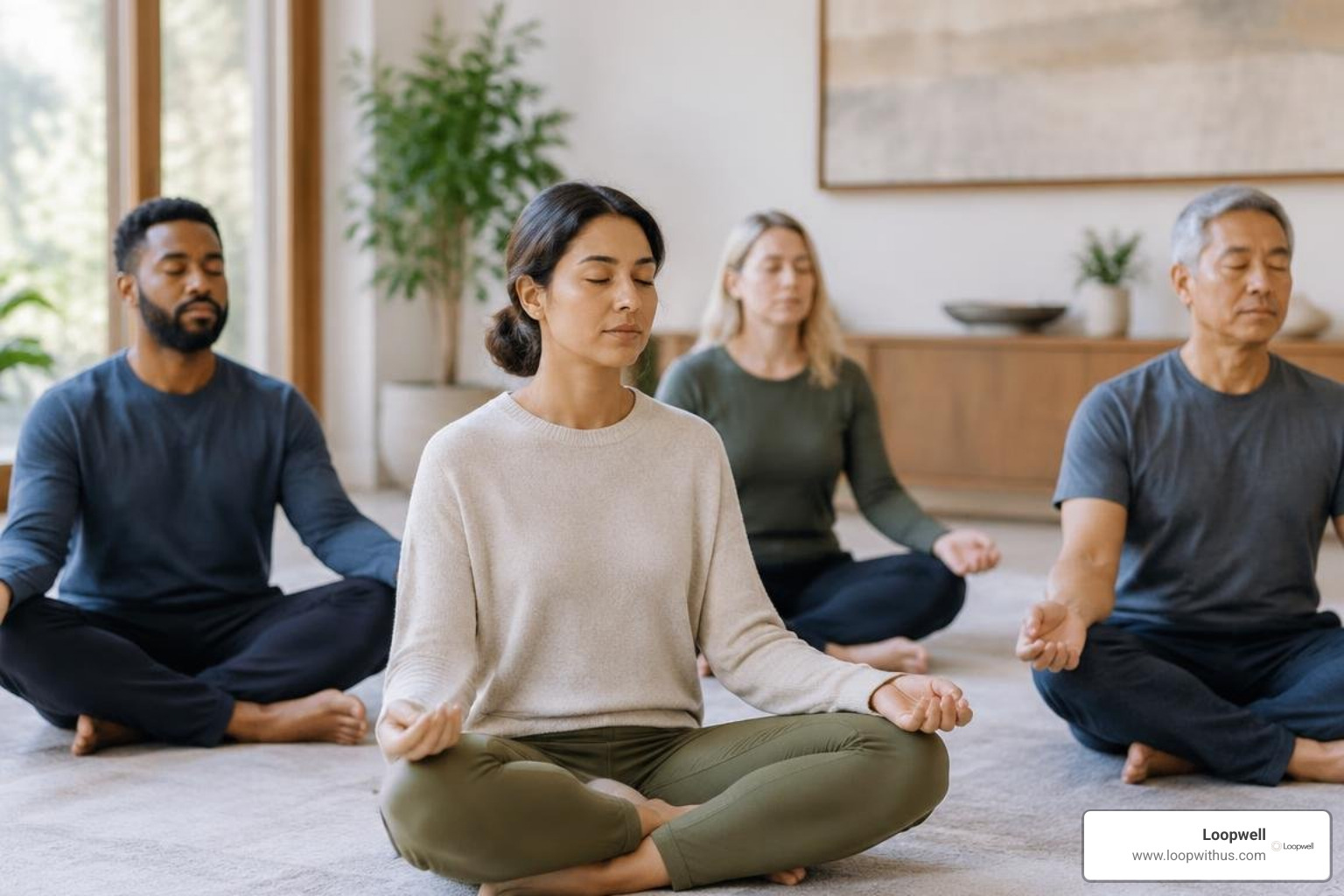
Ally Boothroyd's yoga nidra is guided rest you can practice lying down. Her sessions use body scans, breath cues, and sometimes nature sounds or music. For a first try, choose a short session, get comfortable, and follow her voice. You do not need to clear your mind or stay awake the whole time.
You can pick a brief daytime reset or a longer practice before bed. These sessions may help you relax, but they are not a treatment for insomnia. Stanford research on structured breathing found improvements in mood; it did not test Boothroyd's recordings.
I'm Debbie Looney, and I'll walk you through what to expect and how to choose a session.
Ally Boothroyd yoga nidra: what the practice is and who teaches it
What is Ally Boothroyd yoga nidra, and how does it differ from other meditation?
Yoga Nidra is often translated as “yogic sleep.” It is a guided practice in which you lie down and follow instructions that may bring attention to the body, breath, sensations, emotions, or visualizations. The aim is to rest deeply while maintaining some awareness. You might drift toward sleep, but there is no requirement to remain fully alert.
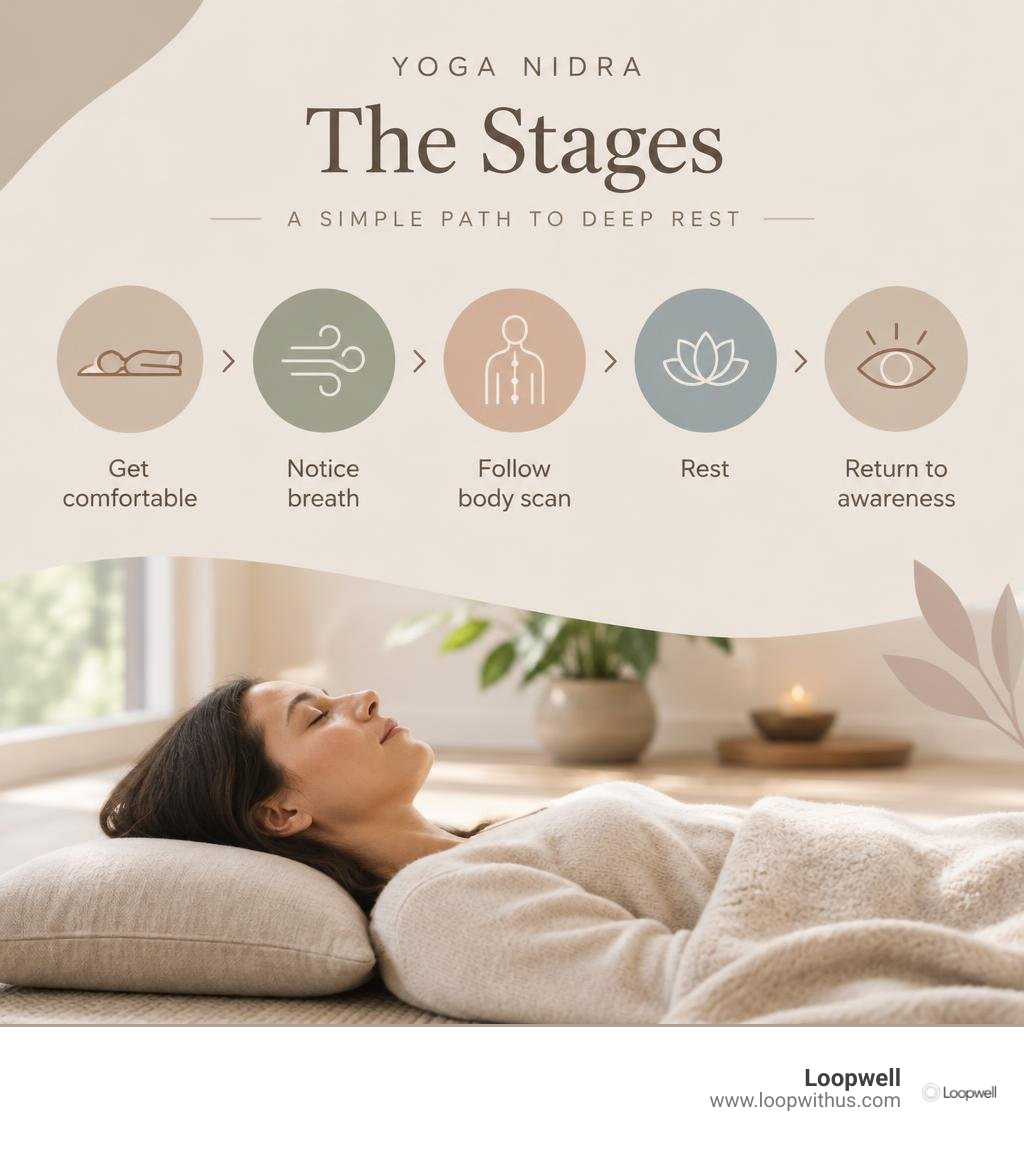
Many sessions use a structured sequence: settle into a comfortable position, notice the breath, move attention through parts of the body, and then rest with a chosen intention or image. In yoga traditions, an intention may be called a sankalpa. It can be a simple, personally meaningful phrase rather than a goal you have to force.
Unlike seated mindfulness meditation, Yoga Nidra usually does not ask you to sit upright and repeatedly focus on the breath or observe thoughts. You are guided through the experience, often while lying down. The formats can overlap, but the position, verbal guidance, and systematic relaxation are common features of Yoga Nidra. Our guide to what Yoga Nidra is explains the practice in more detail.
| Yoga Nidra | Seated mindfulness meditation |
|---|---|
| Usually practiced lying down or in a supported position | Often practiced seated, though other postures are possible |
| A guide may lead a body scan, breath awareness, or visualization | Attention often returns to the breath, body, or present-moment experience |
| Commonly follows a sequence for relaxation | May use a simpler focus without a set sequence |
| Sleepiness is common and not necessarily a problem | The intention is often to remain awake and observe experience |
Who is Ally Boothroyd?
Ally Boothroyd is a Yoga Nidra educator and meditation teacher, and the founder of Sarovara Yoga. She leads teacher trainings and retreats and shares guided practices online. Her approach draws on yoga and conscious-rest traditions, with sessions designed for both people exploring the practice for themselves and those interested in learning to teach it.
Her Insight Timer profile features guided meditations and Yoga Nidra tracks. She also shares practices through the Sarovara Yoga YouTube channel and sells audio recordings through her guided Yoga Nidra and meditation store.

What makes Ally Boothroyd yoga nidra sessions distinctive?
Boothroyd offers a range of guided practices with different lengths, themes, and sound choices. A session may focus on a body scan, grounding, self-compassion, sleep, or a visualization. Some recordings use only her voice; others incorporate natural sound or music.
She also describes her teaching as accessible and trauma-informed. In practice, that can mean being invited to adjust your position, keep your eyes open, or shift attention if an exercise does not feel comfortable. These options matter: deep rest should not feel like a test of whether you can lie perfectly still or follow every instruction.
Ally Boothroyd’s sessions, soundscapes, and teacher training
Short resets, longer practices, and signature themes
There is no single ideal Yoga Nidra length. A shorter track can fit into a work break, while a longer one may suit a wind-down routine. Boothroyd’s offerings include short guided sessions and extended recordings for sleep and deep relaxation. Durations and availability may change, so check the linked page for the current version.
- About 10 minutes: A brief grounding practice for a short pause or a stressful moment.
- About 14 minutes: A compact guided practice, including options such as a rainforest immersion.
- About 20 minutes: A nervous-system reset or body-scan session. Try her 20-minute Yoga Nidra for a nervous-system reboot.
- About 30 minutes: A longer relaxation practice, sometimes described as a cosmic or nature-inspired visualization. The page for her 30-minute deep-relaxation practice describes an experience of roughly 32 minutes.
- About 45 minutes: Longer sessions may explore rapid deep rest, the heart, or self-compassion.
- About 60 minutes: Extended body scans and sleep-focused practices.
- Up to 90 minutes: A longer recording is listed for people seeking an extended insomnia-focused rest practice.
Themes can help you choose: try grounding when you want to feel settled, self-compassion when you want a gentler inward focus, or a sleep-oriented session when winding down. The title is a guide, not a promise of a particular result. You may relax without falling asleep, or you may not find a certain visualization or voice style comfortable.
Voice, breath, nature sounds, and sound baths
The teacher’s voice is often the main guide. Some sessions are voice-only, which can suit listeners who prefer fewer sound layers. Others weave in nature sounds such as birdsong, forest ambience, ocean waves, or a mountain stream. Longer recordings and special sessions may include crystal bowls, binaural-beat music, or chimes.
Breath cues can also be part of a session. One brief practice begins with a physiological sigh: a comfortable inhale, a second small inhale, then a longer exhale. You can skip or soften the breath cue if it feels uncomfortable. There is no need to take unusually deep breaths or hold your breath.
Soundscapes are a matter of personal preference. Nature sounds may help some people settle, while others find them distracting. If you use headphones, keep the volume comfortable and choose a position where you can hear what is happening around you if needed.
Transformational Sleep Yoga Nidra Teacher Training
Boothroyd’s Transformational Sleep Yoga Nidra Teacher Training is described as a 100-hour online program. It is intended for yoga teachers, therapists, coaches, and yoga students who want to deepen their own practice or learn to guide others.
The training materials include self-paced lessons, scripts and worksheets, and opportunities for live Zoom sessions. The curriculum covers Yoga Nidra practice, writing and guiding sessions, and approaches to creating a supportive experience. Trauma-informed teaching is one of the stated areas of emphasis. The program also offers lifetime access to its online materials.
If you are considering the course, review its current information package for details about the application, schedule, faculty, and fees. The training is an educational program, not a clinical qualification; people using Yoga Nidra in a professional setting should work within their existing training and scope of practice.
Benefits, personal journey, reviews, and what research can—and can’t—say
How Ally’s experience with anxiety and insomnia shapes her teaching
Boothroyd has described her personal path as involving anxiety, panic attacks, and insomnia, and says that yoga and conscious rest have been part of her healing. That personal experience informs the way she presents Yoga Nidra: as a practice for pausing, noticing the body, and allowing rest without demanding that the mind become perfectly quiet.
Her story may resonate with people who find it difficult to wind down. Still, one person’s experience does not establish that a practice will have the same effect for everyone. We can treat personal stories as context for a teacher’s approach, not as proof that a recording will resolve a health condition.
What listeners and trainees say
Boothroyd’s Insight Timer profile lists 56.7k followers, and her Yoga Nidra meditations have an average rating of 4.9 out of 5 in the supplied profile information. Listeners commonly praise the calm voice, pacing, and restorative feel of the practices. Some reviews mention enjoying the body-scan sequence or finding that a sound bath helped mask background noise.
Her Transformational Sleep Yoga Nidra Podcast is listed with a rating of 5 out of 5 based on three reviews. That is a small number of ratings, so it offers only a limited snapshot of listener opinion. Reviews reflect individual experiences rather than clinical evidence, and a highly rated session may still not be the right fit for every listener.
Possible benefits and physiological mechanisms
Yoga Nidra may provide a structured opportunity to pause, reduce external demands, and direct attention toward the body and breath. Many people use it to relax, manage everyday stress, or support a bedtime routine. Some may feel calmer afterward; others may feel neutral, distracted, or sleepy. These are all possible responses, not measures of whether you practiced “correctly.”
A Stanford-affiliated study published in Cell Reports Medicine compared brief daily breathwork practices with mindfulness meditation and found that structured breathing, particularly cyclic sighing, improved mood and reduced respiratory rate. It did not study Yoga Nidra or Boothroyd’s recordings, so it should not be treated as direct evidence for either.
The Stanford research cited here does not establish that Yoga Nidra improves relaxation, sleep, or other health outcomes. Claims that a recording can treat insomnia, anxiety, PTSD, or other conditions go beyond what listener ratings or a single study can establish. If symptoms are persistent or affect daily life, professional care is important.
How to start Ally Boothroyd yoga nidra as a beginner
A simple first-session plan
- Choose a short track. A 10- or 20-minute practice is an easy way to see whether the format suits you.
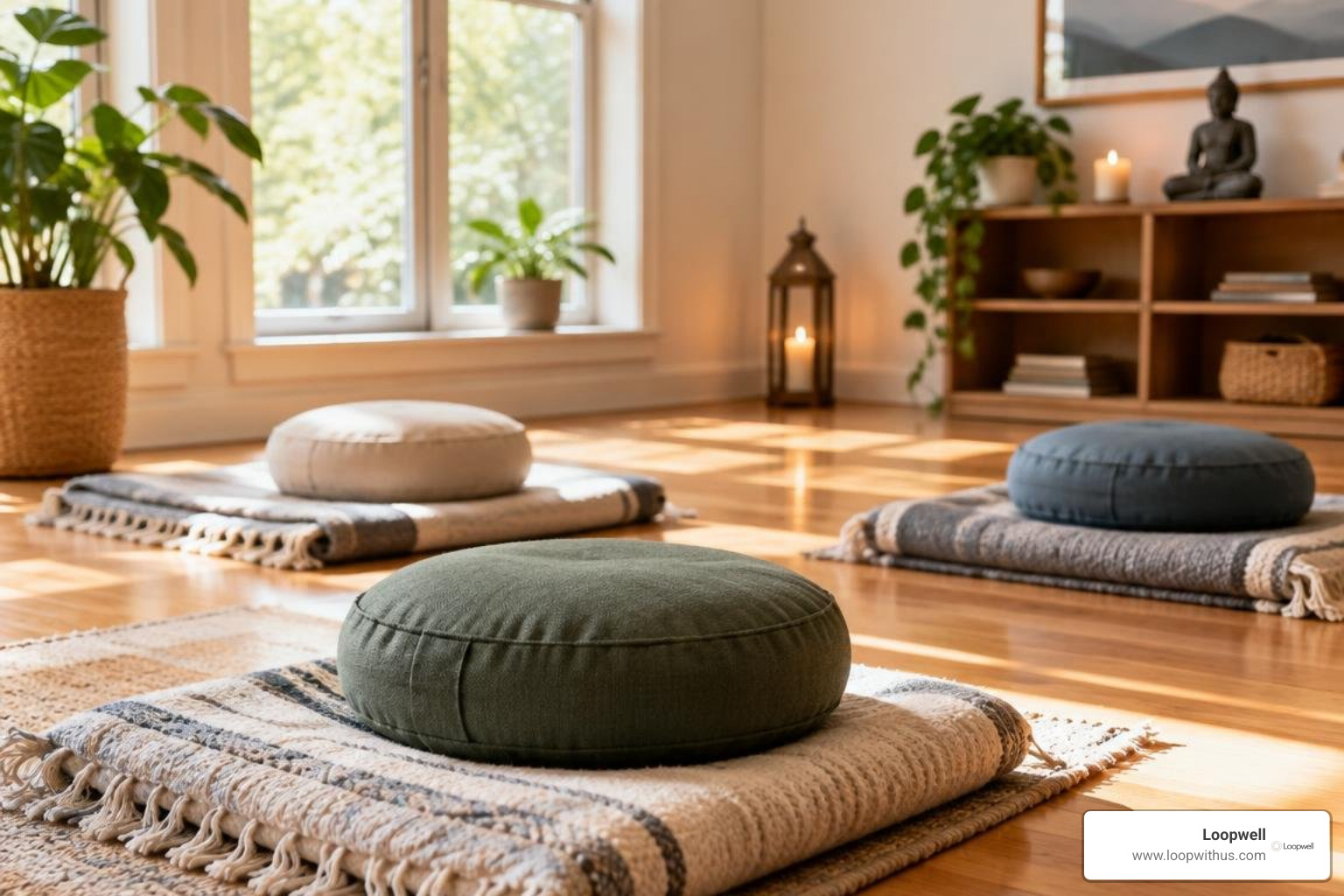
- Find a comfortable, quiet-enough space. Lie down or sit supported. Use a blanket or pillow if it helps you stay comfortable.
- Decide about headphones. They are optional. Keep the volume at a level that feels easy to hear.
- Follow the guidance without trying to perform. If your attention wanders, notice that and return to the voice or the next instruction.
- Give yourself permission to adjust. Shift position, open your eyes, or pause the audio if you need to.
- Take a moment afterward. Notice how you feel rather than expecting a specific result.
If you want to try a guided practice in a shared setting, we offer Yoga Nidra with Kanan. It can be another way to experience guided rest and learn what style of instruction feels supportive.
Practice choices and safety considerations
A daytime session can be a pause between activities, while a sleep-focused track may fit into an evening routine. Choose the timing based on your needs: some people feel refreshed after a daytime practice, while others become drowsy.
You can keep your eyes open, change the position, or stop if a prompt or sensation feels distressing. Yoga Nidra is not a requirement to revisit difficult memories or remain still. If you have a trauma history or find internal body-focused attention unsettling, consider a shorter practice, keep your attention on neutral external sounds, or seek guidance from a qualified professional.
For ongoing insomnia, a guided relaxation track can be one part of a broader wind-down routine, but it should not replace evaluation or treatment. If sleep problems persist, discuss them with a healthcare professional.
Frequently asked questions
How often should a beginner practice?
Start with a short session when it fits your day, then repeat it if it feels helpful. A regular, flexible routine can make the format familiar, but you do not need to practice daily or complete a set number of sessions. Consistency should support your well-being, not become another source of pressure.
Can Yoga Nidra replace sleep or insomnia treatment?
No. Yoga Nidra is a guided relaxation practice, not a substitute for sleep or professional treatment. It may help you rest or settle, but it cannot guarantee sleep and should not be relied on to treat persistent insomnia. Seek medical guidance if sleep difficulties continue or affect your health and daily functioning.
Who is the teacher training for?
The 100-hour program is presented for yoga teachers, therapists, coaches, and students who want to develop their own practice or learn how to guide Yoga Nidra. Applicants should review the current course information and application steps to decide whether the training matches their goals and professional scope.
Conclusion
Ally Boothroyd’s sessions offer several ways to explore conscious relaxation, from brief resets to longer sleep-oriented practices, with options for voice-only guidance, nature sounds, and sound baths. We recommend beginning with a short session, keeping expectations realistic, and choosing the format that feels comfortable. Yoga Nidra may support rest, but it is not a guaranteed sleep solution or a substitute for professional care.
At Loopwell, we bring people together through guided well-being experiences and expert-led classes. Explore our well-being classes to find a practice that fits your needs and schedule.