
What Is Yoga Nidra? A Simple Guide to Conscious Rest
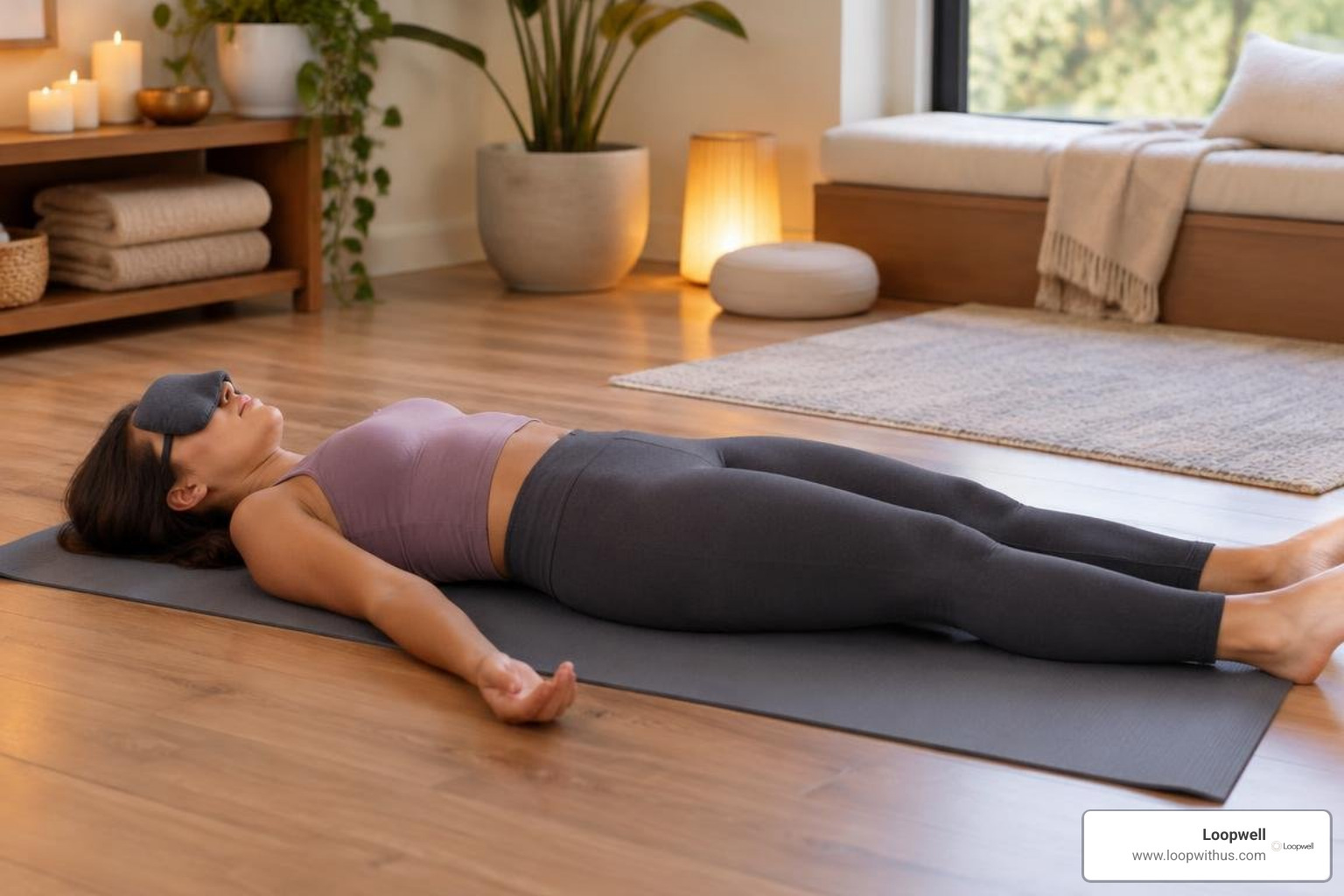
What is Yoga Nidra? It is a guided practice that helps you rest deeply while staying aware. Often called yogic sleep, it usually involves lying down and following prompts to notice your body, breath, and thoughts. Unlike sleep, the aim is to remain aware, though it is fine if you drift off.
Yoga Nidra is also a form of non-sleep deep rest, or NSDR. Research on Yoga Nidra suggests it may help reduce stress and anxiety, but it does not replace sleep or medical care. You need no yoga poses or special skills to try it.
I'm Debbie Looney, and I'll walk you through how the practice works and how to begin.
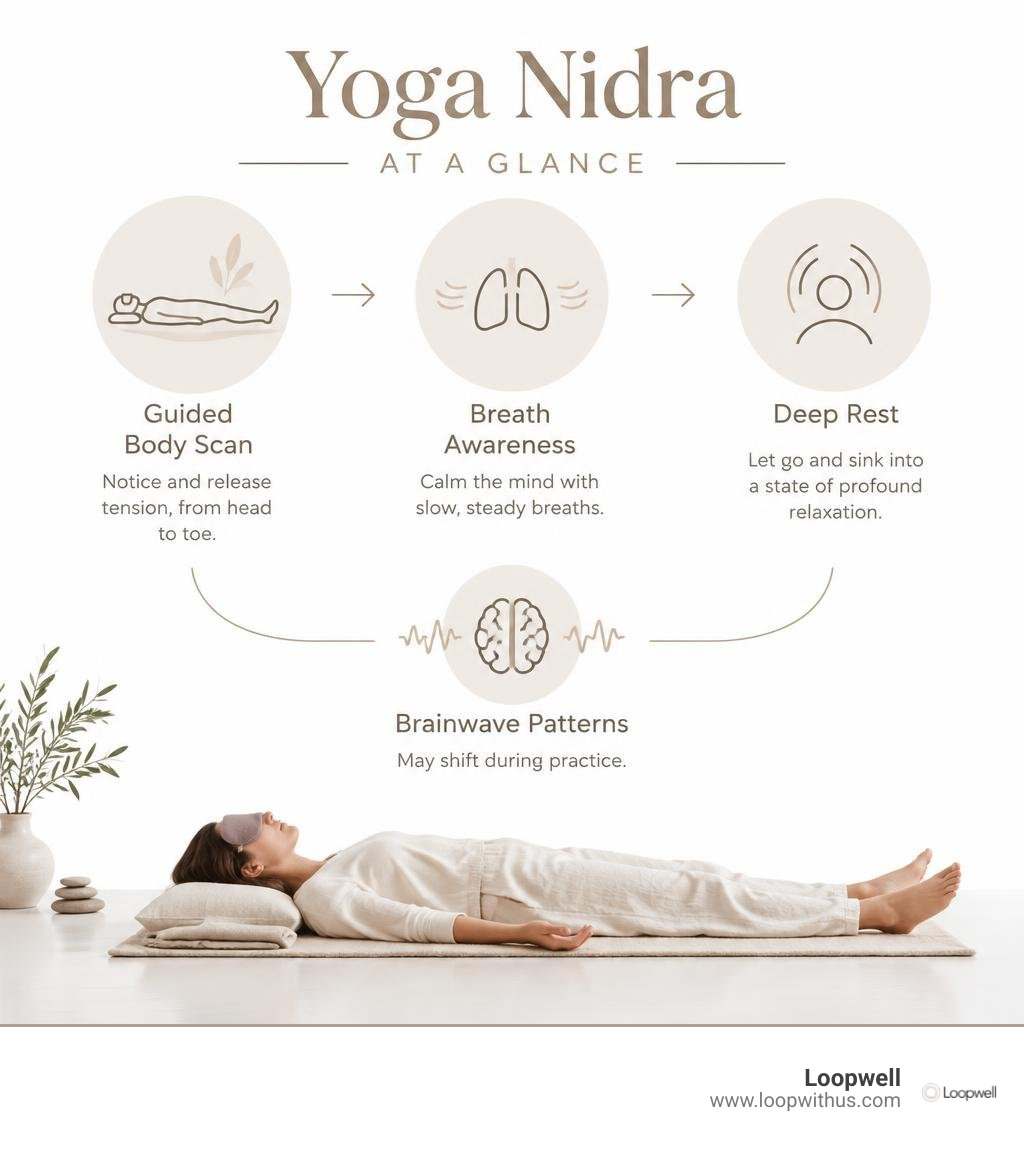
What is Yoga Nidra? Understanding Yogic Sleep and Modern NSDR
Modern life constantly demands our active attention. Between workplace deadlines, personal commitments, and endless digital notifications, our nervous systems rarely drop below a state of low-grade alert. Yoga Nidra offers a direct, structured antidote to this chronic activation.
At its core, Yoga Nidra translates to "yogic sleep." It is an ancient systematic relaxation technique designed to guide awareness through sensory withdrawal into a liminal space between waking consciousness and deep slumber. You lie down, let go of physical exertion, and allow a spoken guide to steer your mind through somatic awareness, breath synchronization, and guided visualization.
In contemporary neuroscience, this practice has gained mainstream recognition as Non-Sleep Deep Rest (NSDR). Popularized by the Huberman Lab at Stanford University School of Medicine, NSDR strips away esoteric jargon while preserving the fundamental mechanics of conscious rest. Whether framed through classical philosophy or contemporary neuroscience, the goal remains identical: allowing your body to access deep restorative states while your mind stays awake.
What is Yoga Nidra? The Core Philosophy of Conscious Sleep
To understand why this practice feels so deeply rejuvenating, we look at the classical model of human experience known as the Panchakosha (the five energetic sheaths or layers of being):
- Annamaya Kosha (Physical Body): Grounded through progressive body scanning and relaxation.
- Pranamaya Kosha (Energy/Breath Body): Balanced by tuning into subtle, natural respiration patterns.
- Manomaya Kosha (Mental/Emotional Body): Calmed by welcoming sensations, feelings, and opposites without judgment.
- Vijnanamaya Kosha (Wisdom/Intellect Body): Accessed through imagery, archetypes, and subconscious witness awareness.
- Anandamaya Kosha (Bliss Body): Experienced as profound stillness, wholeness, and connection.
By systematically moving through these layers, the practice transitions you into a hypnagogic state—the natural threshold between wakefulness and dreaming. According to clinical evaluations of Yoga Nidra, this state allows you to remain metacognitively aware while your physiology experiences the restorative markers of sleep.
Historical Foundations: Tantric Nyasa and Modern Systematization
While the concept of yogic sleep is mentioned in foundational texts like the Upanishads, the Mahabharata, and the Devi Mahatmya, the modern guided method has specific roots. In classical traditions, yoganidra described a philosophical state of supreme meditation and divine rest, connected closely with Pratyahara (sensory withdrawal), the fifth limb of Patanjali’s classical yoga system.
In the mid-20th century, Swami Satyananda Saraswati, founder of the Bihar School of Yoga, adapted ancient tantric rituals known as Nyasa—a practice of placing consciousness and sacred sounds onto distinct body points—into a secular, structured meditation script. Later teachers and Western researchers, including Richard Miller (who developed the trauma-informed Integrative Restoration or iRest protocol), further refined the methodology into clinical and wellness environments.
The Neuroscience of Yogic Sleep and NSDR Protocols
What happens to your brain and body when you practice conscious rest? Clinical research from premier institutions like Stanford University and Harvard Medical School provides clear physiological explanations for why practitioners emerge feeling renewed, supported by electroencephalography (EEG), functional MRI (fMRI), and positron emission tomography (PET).
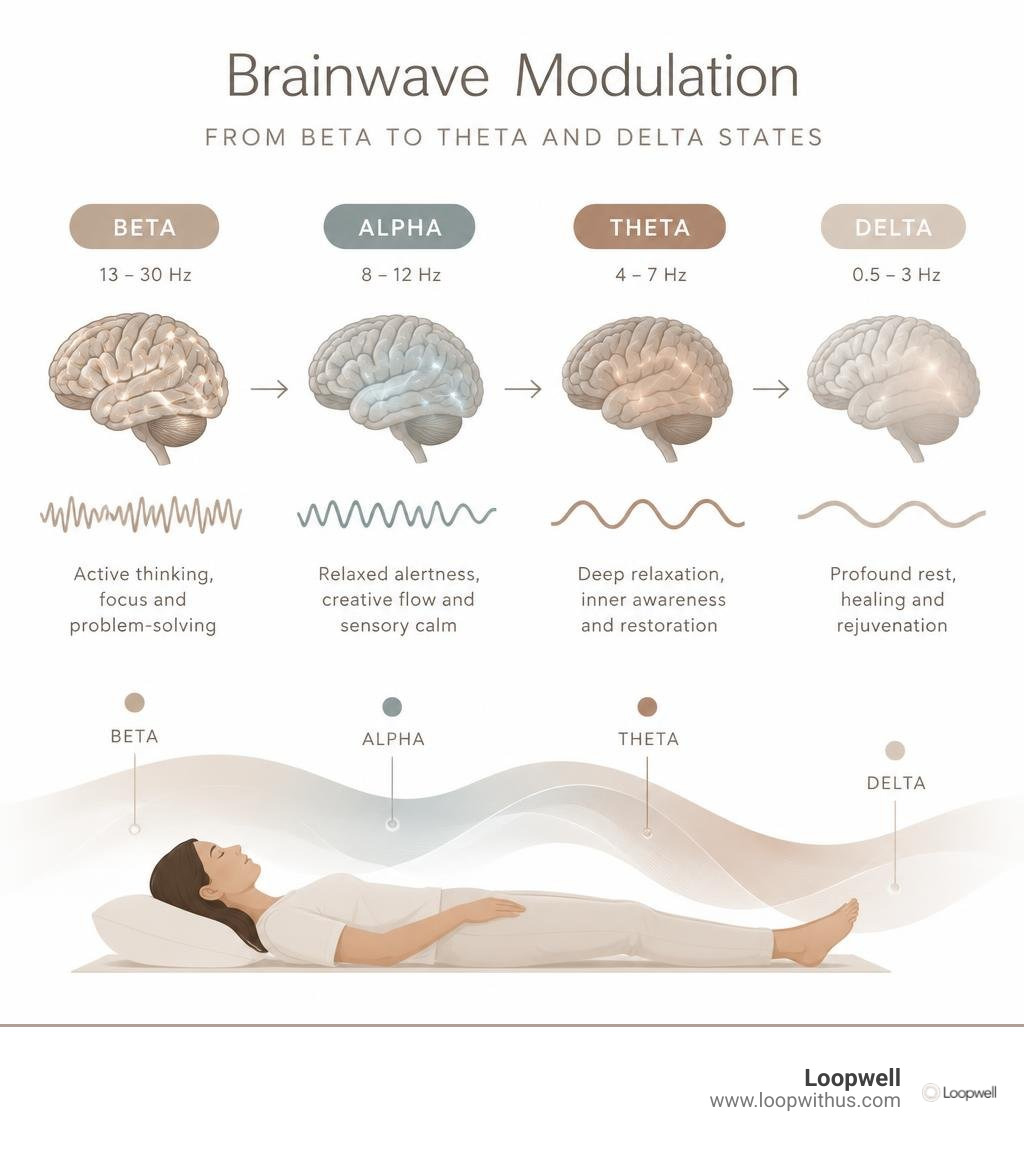
Brainwave Modulation and Neurochemical Shifts
During everyday waking life, your brain primarily operates in high-frequency Beta waves (13–30 Hz), reflecting active thought, problem-solving, and external focus. As you begin a guided session and close your eyes, your brain activity downshifts:
- Alpha Waves (8–12 Hz): Signify relaxed alertness, creative flow, and sensory calm.
- Theta Waves (4–8 Hz): Mark the hypnagogic border between waking and sleeping, where deep emotional processing and memory consolidation take place.
- Delta Waves (0.5–4 Hz): Typically found in dreamless deep sleep, supporting cellular repair, immune health, and physical rejuvenation.
In tandem with these shifts, neuroimaging research demonstrates that conscious relaxation alters neurotransmitter activity. Neuroimaging studies documented by Stanford and peer research institutions show that structured conscious rest leads to up to a 65% increase in endogenous dopamine release within the ventral striatum, a brain region tied to reward, positive mood, and motor control.
Concurrently, Harvard-studied mechanisms of the relaxation response show that the Default Mode Network (DMN)—the neural network responsible for mind-wandering, self-criticism, and repetitive rumination—quiets down. Practitioners also experience optimized melatonin regulation and autonomic balance, highlighting why this technique serves as an effective foundation alongside evidence-based sleep improvement strategies.
Therapeutic and Clinical Health Outcomes
Clinical research backed by institutions including Harvard and Stanford highlights measurable improvements across cardiovascular, metabolic, and emotional health:
- Cardiovascular & Autonomic Regulation: Studies evaluating conscious rest show a significant increase in heart rate variability (HRV), shifting autonomic balance away from sympathetic "fight-or-flight" and toward parasympathetic "rest-and-digest." In clinical evaluations of hypertensive patients, regular 30-minute sessions led to measurable reductions in systolic and diastolic blood pressure, pulse rate, and respiration rate.
- Glycemic & Metabolic Support: Clinical trials examining metabolic health reveal that regular guided relaxation combined with standard medical protocols supports lower fasting blood glucose levels and reduces stress-induced cortisol spikes that interfere with insulin sensitivity.
- Endocrine & Hormonal Balance: In studies of women experiencing menstrual irregularities and chronic stress, consistent practice resulted in marked reductions in anxiety and depression scores, reinforcing insights on endocrine equilibrium emphasized by experts like Dr. Mindy Pelz.
- Trauma Recovery & Emotional Resilience: Stanford-supported investigations into NSDR and somatic relaxation indicate that structured sensory rest relieves autonomic hypervigilance. As explored in modern clinical reviews of Yoga Nidra, the practice provides a "bottom-up" somatic path to emotional regulation without triggering the anxiety that traditional, silent seated meditation can sometimes provoke.
The Architecture and Key Stages of a Yoga Nidra Practice
A typical session follows a deliberate, step-by-step psychological framework designed to settle the nervous system systematically.
Setting a Sankalpa and the Multi-Stage Journey
- Initial Settling and Positioning: Finding absolute comfort in Shavasana (corpse pose) using props to eliminate physical distraction.
- Formulating the Sankalpa (Personal Intention): A concise, positive affirmation stated in the present tense (e.g., "I am grounded, resilient, and at ease"). Stated at the threshold of relaxation, it plants a positive seed into the subconscious mind to transform habitual mental patterns (samskaras).
- Rotation of Consciousness (Body Scan): Moving rapid, non-judgmental attention through 30 to 60 distinct body parts—starting with the right hand thumb, moving through the right side, left side, back, and front.
- Breath Awareness: Tracking natural respiration without controlling it, often counting breaths backward to sharpen focus.
- Opposite Sensations: Evoking contrasting physical and emotional states—such as heaviness and lightness, heat and cold, or sorrow and joy—to build emotional flexibility and detach from reactive patterns.
- Creative Visualization (Chidakasha): Visualizing archetypal images, nature scenes, or sacred spaces in the inner mental screen (Chidakasha), releasing held subconscious tension.
- Revisiting the Sankalpa: Repeating your intention in a receptive state of consciousness.
- Externalization and Return: Gradually reawakening sensory awareness to sounds, gentle movement, and a grounded return to everyday reality.
If you are eager to experience this structured sequence firsthand, you can explore guided Yoga Nidra sessions designed to nurture somatic balance and clear mental fatigue.
What is Yoga Nidra Compared to Meditation and PMR?
Many people wonder how yogic sleep contrasts with seated mindfulness or Progressive Muscle Relaxation (PMR).
| Practice Dimension | Yoga Nidra (NSDR) | Traditional Seated Meditation | Progressive Muscle Relaxation (PMR) |
|---|---|---|---|
| Primary Posture | Supine (lying down in Shavasana) | Seated upright on cushion/chair | Lying down or seated |
| Mental Effort | Effortless, receptive, guided listening | Focused attention or open monitoring | Active focus on physical tensing/releasing |
| Brainwave Dominance | Alpha, Theta, and occasional Delta | High Alpha and focused Theta | Alpha and low Beta |
| Somatic Mechanism | Bottom-up nervous system regulation | Top-down cognitive awareness | Active neuromuscular tension release |
| Primary Goal | Deep conscious rest and hypnagogic awareness | Mindfulness, focus, and non-attachment | Somatic muscle tension relief |
How to Set Up an Accessible Home Practice
You do not need years of meditation experience or flexible joints to practice. You simply need a quiet, comfortable space.
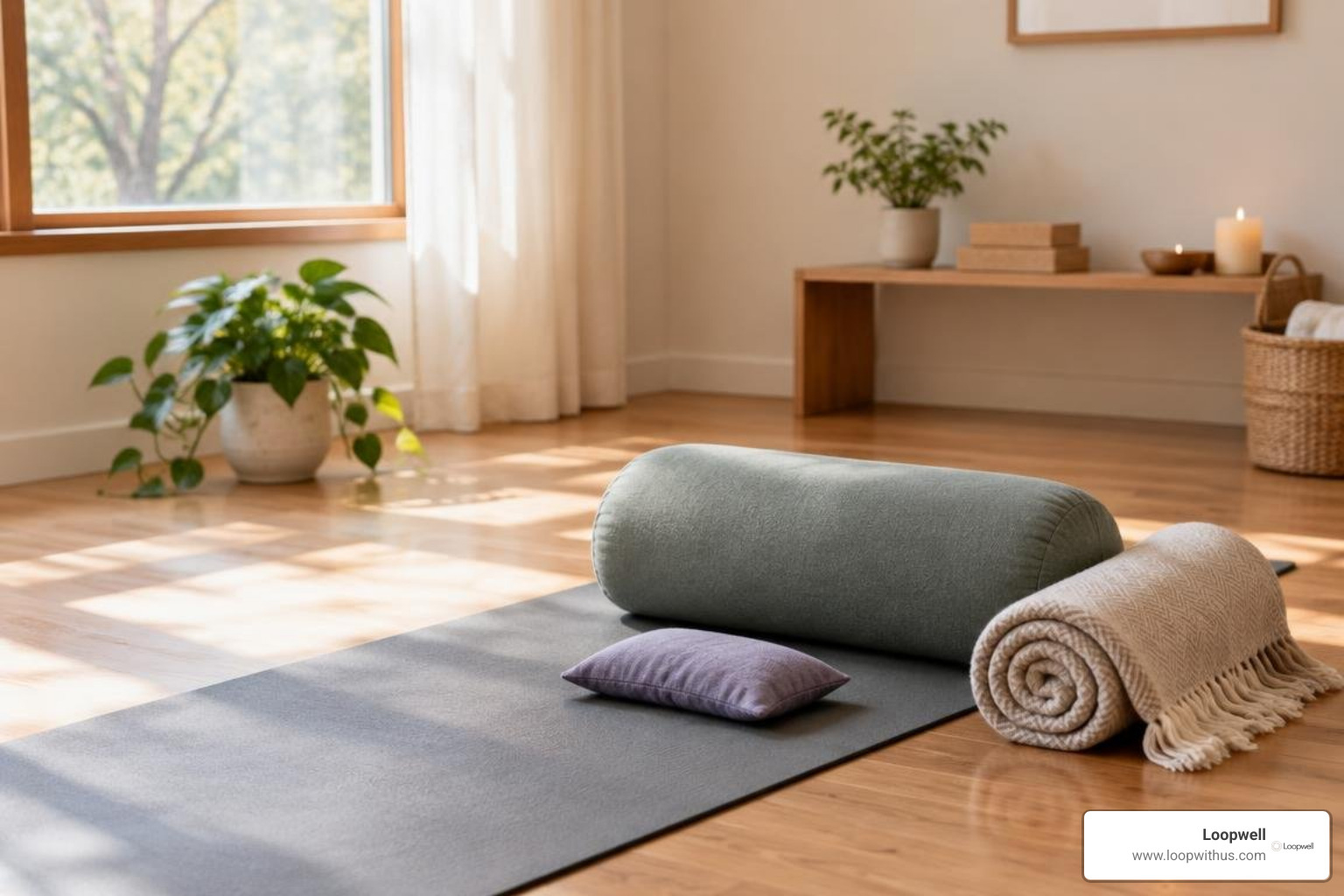
Posture, Props, and Environment Setup
- Support Your Spine: Lie flat on a mat or firm mattress. Place a bolster or rolled blanket under your knees to release lower back pressure.
- Warmth & Darkness: Your core body temperature drops as your metabolism slows during deep rest. Use a light, breathable blanket and an eye pillow or soft cloth to block out ambient light.
- Neutral Alignment: Let your legs fall open naturally and rest your arms alongside your torso, palms turned upward to minimize tactile stimulation.
- Environment: Choose a quiet, dimly lit room. Dedicated sanctuary spaces, like The Yoga Room, demonstrate how intentional, calming design accelerates your ability to unplug.
Trauma-Sensitive Guidelines and Broad Accessibility
Traditional seated meditation can feel overwhelming for individuals managing hypervigilance, chronic pain, or burnout. The requirement to sit rigidly still with eyes closed can inadvertently trigger threat responses in a dysregulated nervous system.
Yoga Nidra works through gentle, guided, "bottom-up" regulation. If closing your eyes feels unsafe, keep them softly open with a lowered gaze. If lying flat causes discomfort, practice seated in a supportive armchair or slightly reclined. You are always in control of your practice; if any visualization feels uncomfortable, simply redirect your focus back to the physical support beneath your body.
Cultivating Deeper Well-Being and Connection
In our professional culture, intentional rest is an essential pillar of health and leadership resilience. Publications like The New York Times and leading wellness experts like Dr. Judith Joseph consistently emphasize that recovery practices protect against workplace burnout and emotional exhaustion.
Simultaneously, workplace analyses from McKinsey, Deloitte, and the Harvard Business Review point out that in an era increasingly dominated by AI and digital tools, genuine human connection, empathy, and nervous system regulation are vital leadership skills. Leaders like Amina AlTai and Michelle Maros remind us that when we cultivate grounded self-awareness, we show up more authentically for our teams and communities.
At Loopwell, we bring this balance to life. Located in Montclair, New Jersey, our premiere luxury event space combines world-class well-being programming with state-of-the-art gathering spaces. Whether hosting executive retreats, wellness workshops, corporate off-sites, or premier private gatherings—such as FIFA watch parties complete with our full media wall of screens, high-end catering, and private parking—we create spaces where people gather, recharge, and connect meaningfully.
Frequently Asked Questions About Yoga Nidra
Can Yoga Nidra Replace Regular Sleep?
While practitioners often describe a 45-minute session as feeling as rejuvenating as a multiple-hour nap, it does not replace physiological nightly sleep. Sleep is required for deep cellular detoxification, glymphatic brain clearance, and hormonal cycles. However, regular practice helps clear accumulated sleep debt and significantly improves your overall sleep efficiency.
What Should I Do If I Fall Asleep During Practice?
Falling asleep is entirely normal, especially when you are sleep-deprived. Your subconscious mind continues to absorb the auditory guidance, and your body receives the physical rest it needs. Over time, as your nervous system stabilizes, you will naturally maintain conscious awareness across the entire session.
How Often Should Beginners Practice Yoga Nidra?
Beginners can start with 10- to 20-minute guided sessions 2 to 4 times per week. Experienced practitioners often enjoy daily 30- to 45-minute sessions, either during the mid-afternoon energy dip or in the evening to unwind before bed.
Conclusion
Conscious rest is not an indulgence—it is a vital physiological reset for your mind and body. By bridging ancient meditative wisdom with Stanford-backed neuroscience, Yoga Nidra and NSDR offer a simple, accessible way to release chronic stress, restore emotional balance, and optimize physical health.
Whether you practice at home or join us for interactive workshops and transformative wellness retreats, carving out space for deep restoration allows you to live, work, and lead with clarity and vitality.