
How to Compare Employee Engagement Workshops

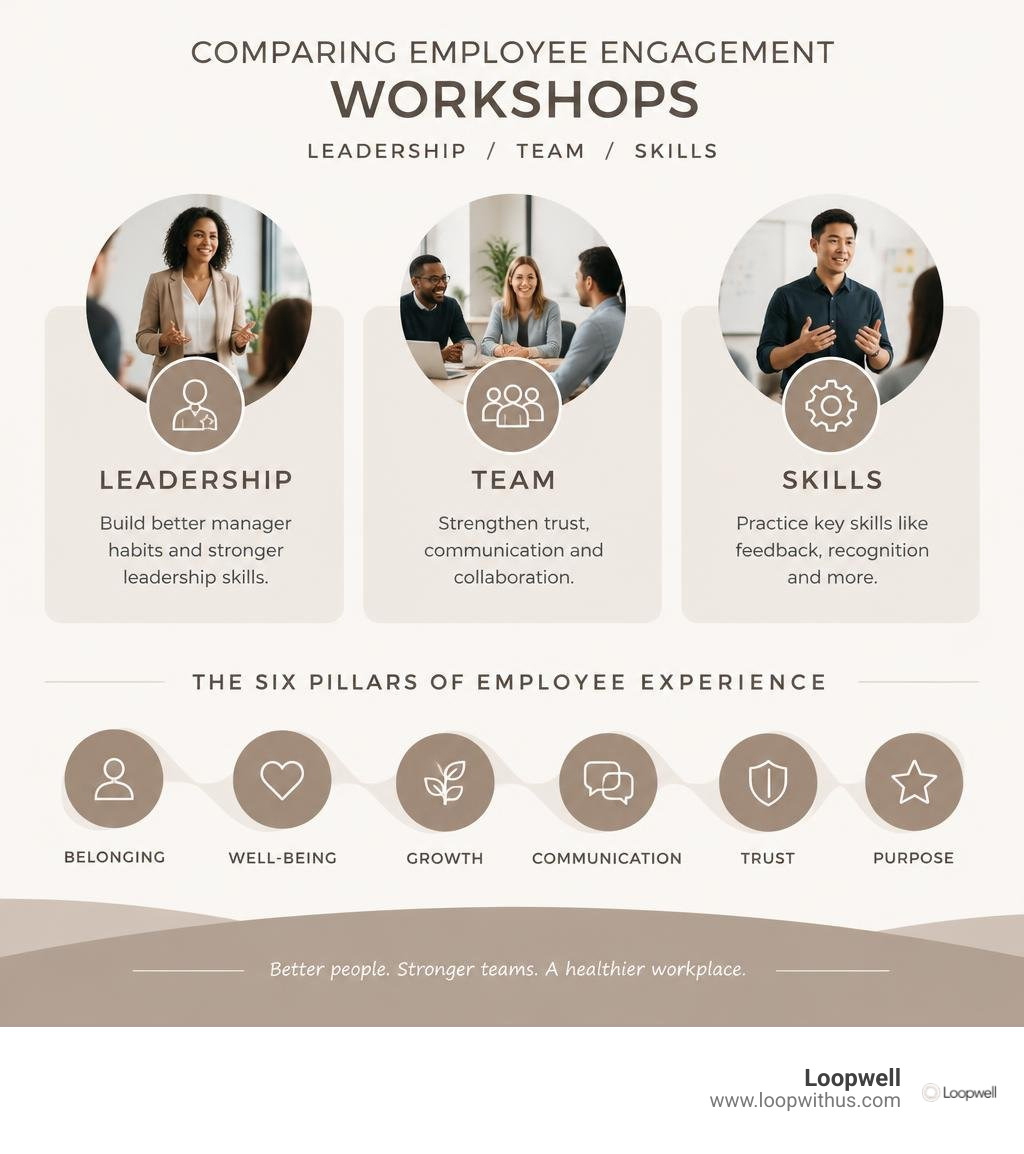
Employee engagement workshops are interactive sessions that help people improve how they lead, work together, and experience their jobs. To compare providers, start with the problem you need to solve: choose leadership training for manager habits, team-focused sessions for trust and communication, or skills-based workshops for practices such as feedback and recognition. Then compare the format, total cost, and follow-up plan.
The stakes are real in 2026. Research from Harvard's Study of Adult Development links strong relationships with better well-being, while global estimates put the productivity cost of low engagement near $10 trillion a year. A workshop cannot fix every workplace issue, but it can give teams a place to practice change.
I'm Debbie Looney, and I'll help you find the right fit for your team.
The Evolution of Employee Engagement Workshops in 2026
Workplace dynamics have shifted permanently. Today, only 20% of employees worldwide report feeling engaged at work, and Gallup data shows that in the United States, 31% of workers are engaged while 17% are actively disengaged. That leaves over half of our workforce simply going through the motions. At the same time, research from Stanford University underscores that persistent workplace alienation and chronic stress directly undermine cognitive performance, team cohesion, and physical health.
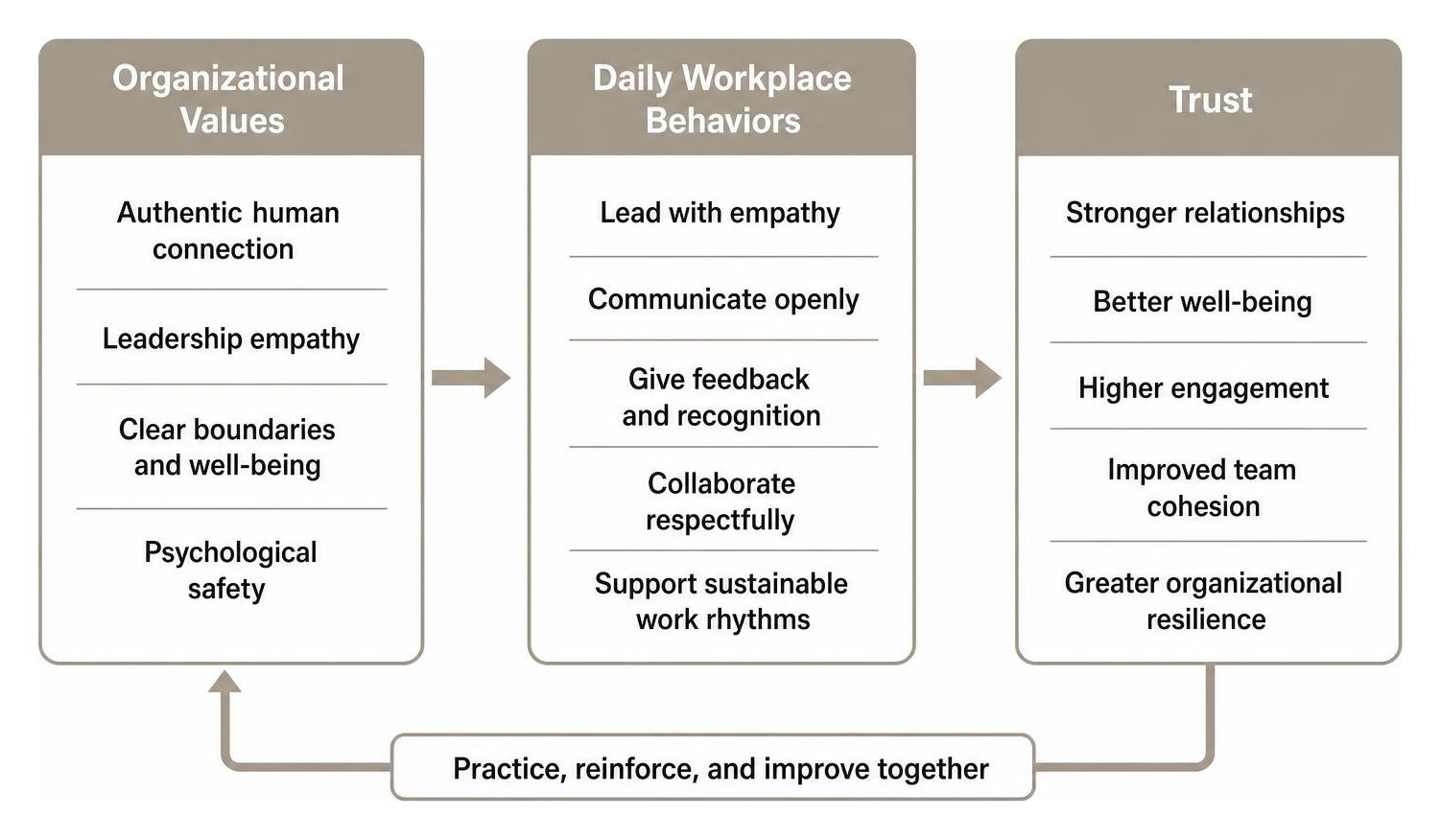
Employees are no longer willing to sacrifice personal health for a paycheck. In fact, 53% of employees report prioritizing well-being over work far more than they did in previous decades. Recent human capital reports from Deloitte highlight that in an era dominated by rapid artificial intelligence adoption, human connection and psychological safety have become the primary currency of organizational resilience. When workers establish clear boundaries—a trend once labeled "quiet quitting"—they are often asking for sustainable work rhythms rather than looking to abandon their responsibilities.
Modern organizations cannot rely on surface perks like catered lunches or superficial pep talks. Creating an energized workplace requires comprehensive workplace well-being solutions that blend authentic human connection, leadership empathy, and structured behavioral systems. Furthermore, organizations seeking professional alignment often look to programs that follow established continuing education accreditation guidelines to ensure their leaders earn verifiable credentials while transforming organizational culture.
Core Formats of Employee Engagement Workshops
Selecting the ideal workshop begins with understanding delivery formats. No two organizational cultures are identical, and how your team learns determines how well they retain core concepts.
- Single-Day Executive Intensives: Focused 4- to 8-hour sessions designed for leadership teams to unpack organizational hurdles, evaluate culture metrics, and align executive vision.
- Multi-Week Cohort Learning: Spaced learning journeys meeting weekly or bi-weekly for 90 to 120 minutes. These allow managers to practice new behaviors in real time, debrief their experiences, and adjust interpersonal strategies.
- Interactive Virtual Breakouts: Modular, digital sessions built for distributed and hybrid teams that leverage digital whiteboards, small group breakout rooms, and practical toolkits.
- Immersive In-Person Retreats: Off-site experiential workshops that remove teams from daily fire drills to foster vulnerability, strategic creativity, and deep relational trust.
Experiential learning methodology is critical across every format. When participants actively practice difficult conversations, conduct live role-playing, and workshop real workplace friction, retention rates increase significantly compared to passive lecture formats.
Leadership-Driven vs. Team-Centric Engagement Models
When evaluating programs, determine whether your organization needs a top-down leadership intervention or a bottom-up team alignment.
Leadership-driven models focus on first-line supervisors and department heads. Research consistently confirms that managers account for the majority of variance in team engagement. Equipping supervisors with emotional intelligence competencies—such as active listening, empathetic feedback, and stress-trigger awareness—directly stabilizes team retention. Training supervisors in structured behavioral frameworks helps them navigate team development phases, moving groups smoothly from initial storming to high-performing collaboration.
Team-centric models, by contrast, focus on peer-to-peer dynamics, shared accountability, and mutual appreciation. Gallup-Workhuman research demonstrates that employees who receive regular, meaningful recognition are 45% less likely to leave their organization within two years. Integrating peer recognition programs alongside dedicated employee engagement and wellness initiatives cultivates an environment where appreciation flows organically across every department.
Evaluating Key Features and Delivery Methods
Choosing the right workshop requires balancing organizational size, budget realities, and strategic development goals. Small businesses may benefit from targeted, modular skill sessions, while enterprise organizations often require scalable frameworks with certified internal facilitators.
Below is an overview comparing typical workshop formats, pricing structures, cohort sizes, and professional credentials:
| Workshop Format | Target Audience | Typical Duration | Price Range (Per Person / Team) | Professional Credits (SHRM/HRCI) | Ideal Organizational Need |
|---|---|---|---|---|---|
| Virtual Skills Intensive | Emerging Leaders & HR | 4 Hours (Single Session) | $495 – $795 per seat | 4 PDCs / Credit Hours | Targeted upskilling on feedback, recognition, and communication |
| Multi-Day Leadership Cohort | Mid-Level to Senior Managers | 2–3 Days (or 4–6 Weeks) | $1,500 – $3,000 per seat | 12–24 PDCs / Credit Hours | Comprehensive behavioral leadership, empathy, and coaching mastery |
| Enterprise Cultural Transformation | Intact Cross-Functional Teams | 1–2 Days (On-Site/Off-Site) | $5,000 – $15,000+ per team | Custom Accredited Hours | Overhauling team dynamics, values alignment, and retention strategy |
| Experiential Wellness & Off-Site | Full Teams & Department Units | Half-Day to Full-Day | Custom packages based on venue & catering | Elective CEUs available | Rebuilding trust, nervous system regulation, and preventing burnout |
When evaluating these programs, organizations frequently combine targeted workshops with comprehensive corporate wellness programs. Additionally, reviewing frameworks from public sector team dynamics research provides valuable perspectives on structured communication and conflict resolution across large, diverse talent pools.
Comparing Delivery Formats, Costs, and Accreditations

Pricing structures for professional engagement workshops range widely. Entry-level modular virtual courses often start around $495 to $795 per participant, providing concise toolkits and immediate recertification credits. Comprehensive executive programs hosted by elite business institutions can reach $2,950 to $3,000 per attendee, offering immersive leadership theory and high-level networking.
For intact teams, flat-rate group workshops generally offer greater return on investment. Rather than training an isolated leader who must return and attempt to change team culture alone, group retreats immerse entire departments in shared communication protocols. Ensuring programs provide Society for Human Resource Management (SHRM) Professional Development Credits (PDCs) and Human Resource Certification Institute (HRCI) credits guarantees that your HR and people leaders gain verifiable continuing education while advancing company culture.
Essential Curricula for Modern Employee Engagement Workshops
A truly impactful workshop goes far beyond generic team-building games. Research from McKinsey on organizational health indicates that aligning daily operational behaviors with shared purpose directly accelerates financial performance and employee retention.
Modern workshop curricula should center around essential behavioral foundations:
- Values-to-Behavior Translation: Moving beyond abstract mission statements by identifying specific, observable behaviors that define everyday excellence and decision-making.
- Burnout Mitigation and Mental Health: Drawing from clinical research at Harvard Medical School and insights from experts like Dr. Judith Joseph, workshops must address the subtle signs of high-functioning burnout, emotional exhaustion, and cognitive fatigue.
- Holistic Career Alignment: Incorporating perspectives from thought leaders like Amina AlTai, who champions aligning personal purpose, strengths, and holistic well-being with professional roles.
- Psychological Safety and Conflict Hygiene: Equipping teams to voice dissenting opinions, address toxic phrases, and resolve disagreements without fear of retribution, reinforcing the value of well-being in the workplace.
Integrating Well-Being and Connection in Employee Engagement Workshops
True engagement is an outcome of nervous system regulation, emotional health, and genuine human connection. As neurobiological research from Stanford University and the Huberman Lab demonstrates, cognitive clarity, stress resilience, and interpersonal empathy depend heavily on autonomic regulation, physical recovery, and structured mindfulness.
Health experts like Dr. Mindy Pelz and mindfulness authors like Michelle Maros emphasize that when individuals cultivate personal self-awareness and physiological balance, they communicate more thoughtfully and navigate organizational friction with greater grace. Workshops that weave breathwork, intentional pauses, and mindful communication exercises into business strategy discussions create deeper bonds among team members. Rather than treating well-being as a separate initiative, world-class workshops position physical, emotional, and social wellness as the bedrock of high performance.
Post-Workshop Action Plans and Sustaining Long-Term ROI
The greatest risk of any corporate training is post-workshop skill decay. Without structured reinforcement, teams often revert to legacy habits within weeks. Replacing an employee costs anywhere from 50% to 200% of their annual salary when accounting for recruiting fees, onboarding downtime, and lost organizational knowledge. Protecting your workshop investment requires sustained operational integration.
Organizations can protect their investment through concrete reinforcement strategies:
- 30-60-90 Day Accountability Cadences: Establishing bi-weekly check-ins where managers share how they have applied workshop tools, such as new 1-on-1 feedback frameworks or recognition routines.
- Pulse Sentiment Tracking: Deploying targeted, quarterly pulse surveys to measure specific behavioral shifts—such as psychological safety, clarity of expectations, and managerial empathy.
- Fractional HR and Leadership Coaching: Partnering with experienced talent advisors to embed workshop principles directly into performance management systems and promotion criteria.
Frequently Asked Questions About Corporate Engagement Workshops
How do engagement workshops differ from standard team-building activities?
Standard team-building activities—such as escape rooms, bowling outings, or social happy hours—provide temporary social connection but rarely alter day-to-day work habits. In contrast, employee engagement workshops utilize science-backed behavioral frameworks, emotional intelligence training, and structured communication tools designed to resolve underlying workplace friction and establish sustainable cultural norms.
What professional development credits (SHRM, HRCI) do participants earn?
Most accredited professional workshops provide recertification credits for HR practitioners and business leaders. Typical 4-hour intensive sessions award 4 SHRM PDCs and 4 HRCI General recertification credit hours, while multi-day executive leadership seminars can provide 12 to 24 continuing education units (CEUs).
How can leadership measure the tangible ROI of workshop programs?
Tangible return on investment is measured through both leading and lagging indicators. Leading indicators include increased pulse survey participation, improved manager feedback ratings, and lower daily absenteeism. Lagging indicators include decreased voluntary turnover, reduced onboarding replacement costs, and noticeable increases in cross-functional productivity.
Conclusion
Workforce engagement is not a soft human resources initiative; it is a vital competitive differentiator that dictates innovation, customer satisfaction, and long-term profitability. Equipping leaders with emotional intelligence and providing teams with safe, interactive environments to practice meaningful collaboration builds a resilient organizational culture.
At Loopwell, we deliver transformative, interactive well-being experiences by connecting world-class thought leaders with expert local practitioners. Located in Montclair, New Jersey—and serving organizations across New York City and the Northern New Jersey metropolitan area—Loopwell provides a luxury alternative for corporate retreats, leadership off-sites, and executive gatherings. Our premier event space features state-of-the-art interactive full-screen walls, curated farm-to-table catering, dedicated breakout gathering spaces, and convenient private parking. Whether you are hosting a strategic executive session or a high-energy corporate gathering like a private FIFA watch party, our space seamlessly integrates custom corporate well-being with world-class hospitality.
Discover how our tailored off-site environments can energize your people by exploring our custom corporate off-site and event experiences today.