
A Practical Guide to Washington DC Health Services
Where to start with Washington DC health services

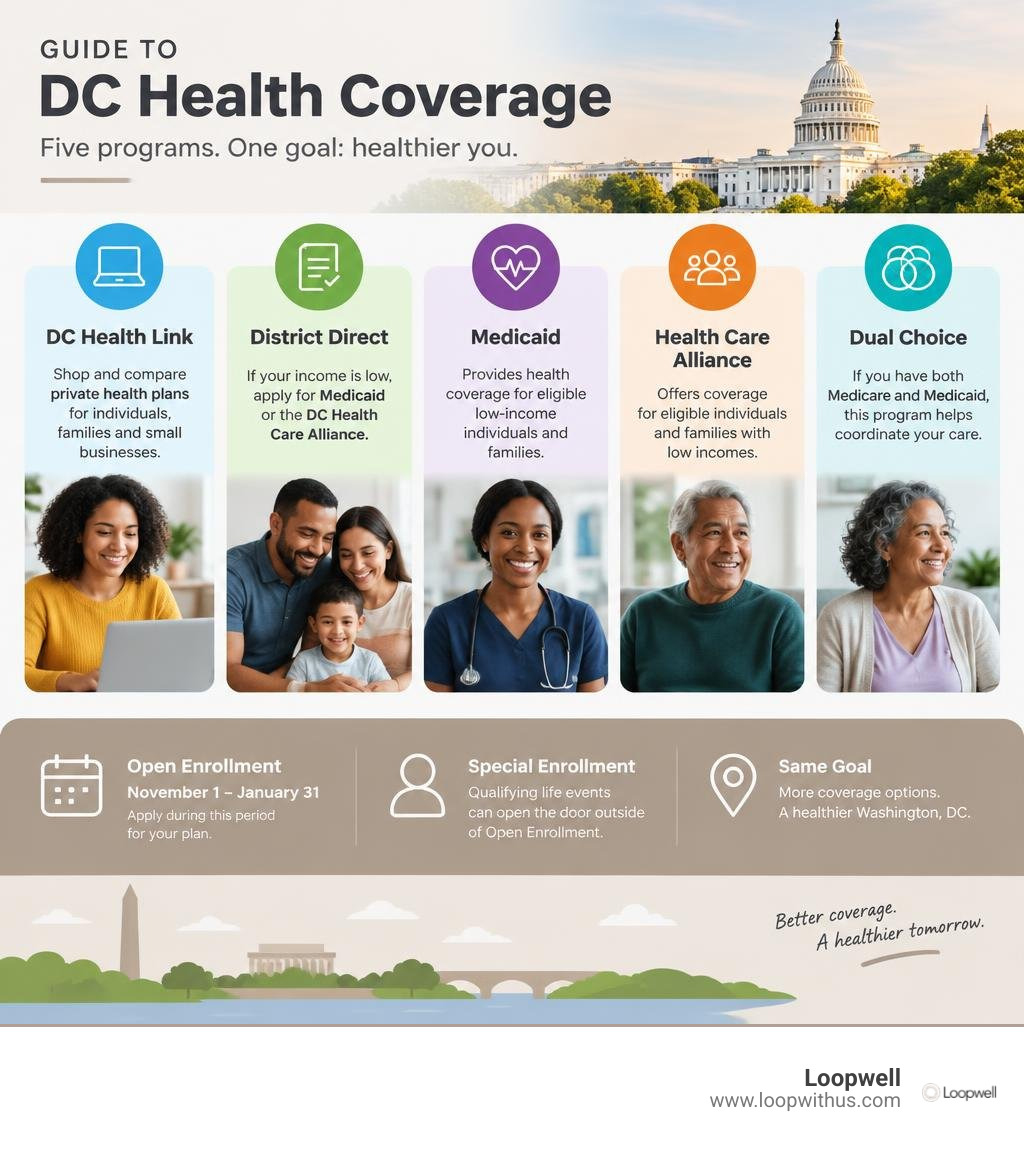
Need health coverage in DC? Compare private plans and check for financial help at DC Health Link. If your income is low, use District Direct to apply for Medicaid or the DC Health Care Alliance. If you already have Medicare and Medicaid, ask about District Dual Choice, which helps coordinate both types of care.
These are different routes into the same goal: getting care you can use. Washington DC sits within the same Northeast corridor that connects Loopwell's well-being communities in New York City, Northern New Jersey, and Montclair, so residents and visitors moving between these hubs often need to understand DC's healthcare landscape alongside their everyday wellness routines. Whether you are a local resident, managing regional care across the Mid-Atlantic and Northeast corridor, or relocating from nearby metropolitan hubs like New York and Northern New Jersey, navigating Washington DC health services effectively is essential. DC Health Link has helped the District reach a reported 97% insured rate, but finding the right program can still take work. Coverage is a starting point; Harvard's healthy living guidance also points to everyday habits that support long-term health, the same whole-person approach Loopwell brings to its own well-being experiences.
I'm Debbie Looney, and this guide will help you find the right place to start.
Navigating Washington DC Health Coverage: DC Health Link and Essential Plans
Managing individual and family healthcare starts with the District’s state-based marketplace. Established under the Affordable Care Act and overseen by the Health Benefit Exchange Authority, DC Health Link operates as an online exchange that unites private insurers, small businesses, and individual residents under one transparent purchasing umbrella.
Since its launch, the marketplace has reduced the uninsured population across the District by more than 50%, saving residents millions of dollars in out-of-pocket medical expenses. The standard individual Open Enrollment period runs annually from November 1 through January 31. Outside of this window, residents experiencing qualifying life events—such as marriage, the birth of a child, loss of employer coverage, or moving into the District—can apply via Special Enrollment Periods.
Through enhanced federal and local subsidies, quality coverage remains accessible, with benchmark premiums starting as low as $13 per month for eligible applicants. Small business owners can also leverage the platform to access group purchasing power that mirrors large-scale corporate enterprise plans.
Individual and family consumers can choose between 27 private health plan options provided by major regional carriers: CareFirst BlueCross BlueShield and Kaiser Permanente.
| Plan Category | CareFirst BlueCross BlueShield | Kaiser Permanente | Key Standard Essential Benefits |
|---|---|---|---|
| Essential Standard Plans | HMO & PPO network tiers | Integrated HMO facilities | Zero-dollar copays for primary preventive visits |
| Chronic Disease Management | Dedicated cardiology & endocrinology networks | Integrated multispecialty care teams | $0 copays for designated diabetes & heart medications |
| Pediatric Coverage | Comprehensive local provider access | Integrated pediatric centers | Full preventive dental, vision, and hearing screenings |
| Prescription Tiers | Tiered copay pharmacy access | Integrated mail-order & on-site pharmacies | $0 out-of-pocket costs for essential insulin supplies |
Health Equity and Chronic Disease Prevention
A major breakthrough in District healthcare policy is the elimination of cost barriers for chronic disease management. In Washington, DC, heart disease remains the leading cause of death. Significant health disparities persist across regional zip codes: the mortality rate from cardiovascular conditions among Black residents is approximately 2.5 times higher than that of white residents. Furthermore, nearly 8% of District adults live with Type 2 diabetes, with roughly 3,300 new diagnoses reported annually.
To address these disparities directly, DC Health Link’s Essential Plans provide zero-copay, deductible-free care for cardiovascular disease, hypertension, stroke prevention, and Type 2 diabetes. Enrollees pay nothing out-of-pocket for vital doctor visits, maintenance medications, and life-sustaining insulin.
Clinical research from Harvard Medical School and cardiovascular prevention trials at Stanford University emphasize that eliminating financial friction for preventative screenings and chronic condition upkeep dramatically reduces preventable hospitalizations. Removing economic barriers also helps counteract broader diagnostic gaps; as research from Harvard Medical School highlights, women are misdiagnosed or underdiagnosed in healthcare settings when symptoms are dismissed or cost prevents follow-up visits. Expanding direct access to continuous specialist consultations directly advances regional health equity.

Public Health Programs, Medicaid, and District Safety Nets

For residents who do not purchase coverage through the commercial marketplace, the District maintains an expansive public safety net administered by the Department of Health Care Finance (DHCF). DHCF manages DC Medicaid, DC Healthy Families (serving children, parents, and pregnant individuals), and the locally funded DC Health Care Alliance.
The DC Health Care Alliance provides comprehensive healthcare services to low-income District residents who are ineligible for Medicaid or Medicare. Detailed guidelines in the Health Care Alliance Fee-for-Service Member Handbook outline access to vital medical, behavioral, and restorative therapies without direct enrollee copayments.
Alliance benefits include:
- Complete primary and preventive outpatient medical care
- Prescription drug coverage and specialized diabetic supplies
- Routine adult dental services (including two annual checkups and preventive fluoride treatments, up to a $1,000 yearly standard benefit)
- Mental health and substance abuse outpatient therapies
- Subsidized medical transportation via WMATA reduced-fare transit and Transport DC $5 taxicab rides to certified appointments
Historical legal frameworks, such as the Salazar Settlement Agreement, continue to safeguard access for eligible children and families, mandating seamless care delivery and rigorous service tracking across all District clinics.
Accessing Washington DC Health Services Through Medicaid and Alliance
Low-income residents can determine eligibility and submit applications through the unified District Direct online portal, via mobile applications, or in person at Economic Security Administration (ESA) Service Centers.
Qualifying household income limits for Medicaid and Alliance coverage depend on family size relative to the Federal Poverty Level. Preventive health research from Stanford Medicine underscores that sustaining physical vitality extends beyond the checkup: building a living model of wellness through consistent primary care relationships, restorative nutrition, and routine screenings.
Specialty procedures and certain diagnostic screenings under fee-for-service programs may require prior clinical authorization submitted by your primary provider. For questions regarding benefit integrity, waste, or suspicious billing practices, DHCF maintains an active program integrity reporting line at 1-877-632-2873.
Coordinated Care Under District Dual Choice (D-SNPs)
Navigating multiple insurance programs can be complicated for dual-eligible beneficiaries—individuals aged 21 and older who qualify for both Medicare (Parts A, B, and D) and full or partial DC Medicaid. In Washington, DC, approximately 37,000 residents meet these criteria.
To eliminate fragmented healthcare, the District operates the District Dual Choice (D-SNPs) program. Managed in partnership with UnitedHealthcare Community Plan, this Dual Eligible Special Needs Plan integrates both Medicare and Medicaid benefits under a single administrative umbrella:
- Single Health Card: Beneficiaries carry one card listing both their Medicare and Medicaid identification numbers.
- Dedicated Case Management: A single care coordinator manages medical visits, specialist referrals, home care assistance, and prescription regimens.
- EPD Waiver Alignment: Individuals enrolled in the Elderly and Persons with Physical Disabilities (EPD) waiver maintain their home-based supports while coordinating with medical specialists through a unified management plan.
- Behavioral Health Parity: In accordance with federal guidelines (42 CFR § 438.3(n)), mental health and substance use disorder services are coordinated alongside general medical care without separate deductibles.
Enrollment in District Dual Choice is voluntary; participants may opt in, switch, or disenroll quarterly during designated election periods by calling UnitedHealthcare Enrollee Services at 1-855-801-7175 or consulting the DC State Health Insurance Assistance Program (SHIP).
District Public Health Initiatives and Emergency Response

Beyond personal insurance programs, DC Health leads population-level wellness, epidemiological monitoring, environmental hygiene, and disease containment initiatives.
DC Health actively tracks seasonal and emerging infectious diseases. Epidemiologists monitor local respiratory patterns and international travel networks, including active surveillance protocols like the rapid containment measures deployed during the cruise ship Andes virus hantavirus alerts. DC Health provides clear symptom guidance and 42-day monitoring frameworks alongside targeted containment protocols for measles and seasonal influenza, drawing on containment frameworks validated by infectious disease research from Harvard and Stanford.
Centralized digital registries managed by DC Health, such as the digital COVID-19 vaccination and verification portal, connect frontline medical workers and residents with community vaccination sites across Bread for the City, Community of Hope, and Unity Health Care clinics.
Maternal and infant wellness is another critical priority. In alignment with clinical research from the Harvard T.H. Chan School of Public Health and Stanford Medicine emphasizing that proactive prenatal screenings and early childhood interventions significantly improve lifelong health outcomes, the District operates targeted initiatives through the Family Health Bureau:
- Preterm Birth Reduction Initiative: Targets high-need communities in Wards 5, 7, and 8 by equipping Federally Qualified Health Centers with specialized prenatal risk screening, progesterone therapy, and maternal care coordination.
- DC Safe Sleep Program: Provides safe-sleep educational workshops and distributes free portable cribs to expectant and new parents across the District.
- Help Me Grow DC & Newborn Screening: Connects families with early developmental screenings, metabolic tests, hearing checks, and coordinated early childhood interventions.
Support Services, In-Person Enrollment, and Community Assistance
Understanding application paperwork and digital portals can feel overwhelming. To ensure equitable access, the Health Benefit Exchange Authority funds the In-Person Assister Program and the Virtual One Touch Enrollment Center.
Residents can receive free, confidential enrollment help from certified, culturally competent navigators. Services include:
- In-person enrollment sessions at community anchor points, including the Martin Luther King Jr. Memorial Library and neighborhood health centers
- Multilingual translation services covering Spanish, Amharic, French, Mandarin, and Korean
- Specialized outreach days with American Sign Language (ASL) interpreters for Deaf and hard-of-hearing residents
- Grassroots outreach partnerships with faith-based organizations, neighborhood barbershops, beauty salons, and community gatherings
Epidemiological findings from the Harvard T.H. Chan School of Public Health indicate that community-driven healthcare access reinforces overall social well-being, demonstrating that clinical protection thrives when local institutions work together. For Loopwell members and guests who split time between Washington, DC and the company's home hubs in New York City, Northern New Jersey, and Montclair, the same principle applies: reliable local health services and consistent well-being practices reinforce each other across the Northeast corridor.
Key Contacts and Resources for Washington DC Health Assistance
Keep this reference list of primary District agencies and direct support lines accessible:
- DC Health Link Customer Service: 1-855-532-5465 | dchealthlink.com
- Department of Health Care Finance (DHCF): (202) 442-5988 | dhcf.dc.gov
- District Direct Application Portal: (202) 727-5355 | districtdirect.dc.gov
- DC Health (Department of Health): (202) 442-5955 | dchealth.dc.gov
- State Health Insurance Assistance Program (SHIP): (202) 724-5626
- DC Health Vital Records Division: (202) 442-9301 (Birth, Death, and Domestic Partnership Certificates)
- District Dual Choice (UnitedHealthcare Enrollee Support): 1-855-801-7175
- Medicaid Program Integrity / Fraud Hotline: 1-877-632-2873
- DC Suicide & Crisis Lifeline: Dial 988
Frequently Asked Questions About Washington DC Healthcare
What is DC Health Link and when does open enrollment occur?
DC Health Link is the District’s official online health insurance marketplace, connecting individuals, families, and small business employees with private insurance options. The annual individual Open Enrollment period runs from November 1 through January 31. Eligible residents can qualify for federal and local subsidies that lower monthly premiums to as low as $13 per month. Outside the standard open enrollment window, individuals who experience qualifying life events—such as moving, marriage, or job loss—can enroll through a Special Enrollment Period.
What services are covered by the DC Health Care Alliance?
The DC Health Care Alliance is a locally funded safety-net program for low-income District residents who do not qualify for Medicaid or Medicare. Alliance coverage includes zero-copay primary outpatient medical care, prescription drugs, specialized diabetic medical supplies, mental health and substance abuse counseling, restorative dental services (up to $1,000 annually for adults), and subsidized transportation assistance for medical visits.
How does District Dual Choice work for dual-eligible residents?
District Dual Choice is a specialized Dual Eligible Special Needs Plan (D-SNP) designed for Washingtonians enrolled in both Medicare and Medicaid. It consolidates both programs under a single plan administered by UnitedHealthcare. Members receive one unified insurance card, access a coordinated provider network, and work with a dedicated care manager who oversees medical treatments, specialist appointments, prescription drugs, and behavioral health needs.
Conclusion
The District of Columbia has built one of the nation's most comprehensive public health ecosystems, reaching an exceptional 97% insured rate through DC Health Link, expansive Medicaid coverage, and targeted community safety nets. Whether you need an affordable commercial plan with zero-copay heart and diabetes care, community health support through the Family Health Bureau, or coordinated dual-eligible management, clear resources are available to keep you and your family supported.
True health begins with reliable clinical coverage and flourishes through continuous daily wellness practices, community connection, and balanced living. For Loopwell members and guests who live in the District, travel along the Northeast corridor, or connect with the company's regional wellness communities across New York City, Northern New Jersey, and Montclair, this guide offers a practical starting point for navigating Washington DC health services. You can also explore proactive ways to support your personal journey and explore holistic membership options with Loopwell to cultivate lifelong vitality. For those who split time between Washington DC and the New York City or Northern New Jersey area, pairing solid healthcare coverage with Loopwell's local, expert-led well-being experiences offers a fuller, more connected approach to lasting health.