
Wim Hof Breathing Exercise: The Steps and the Safety Basics
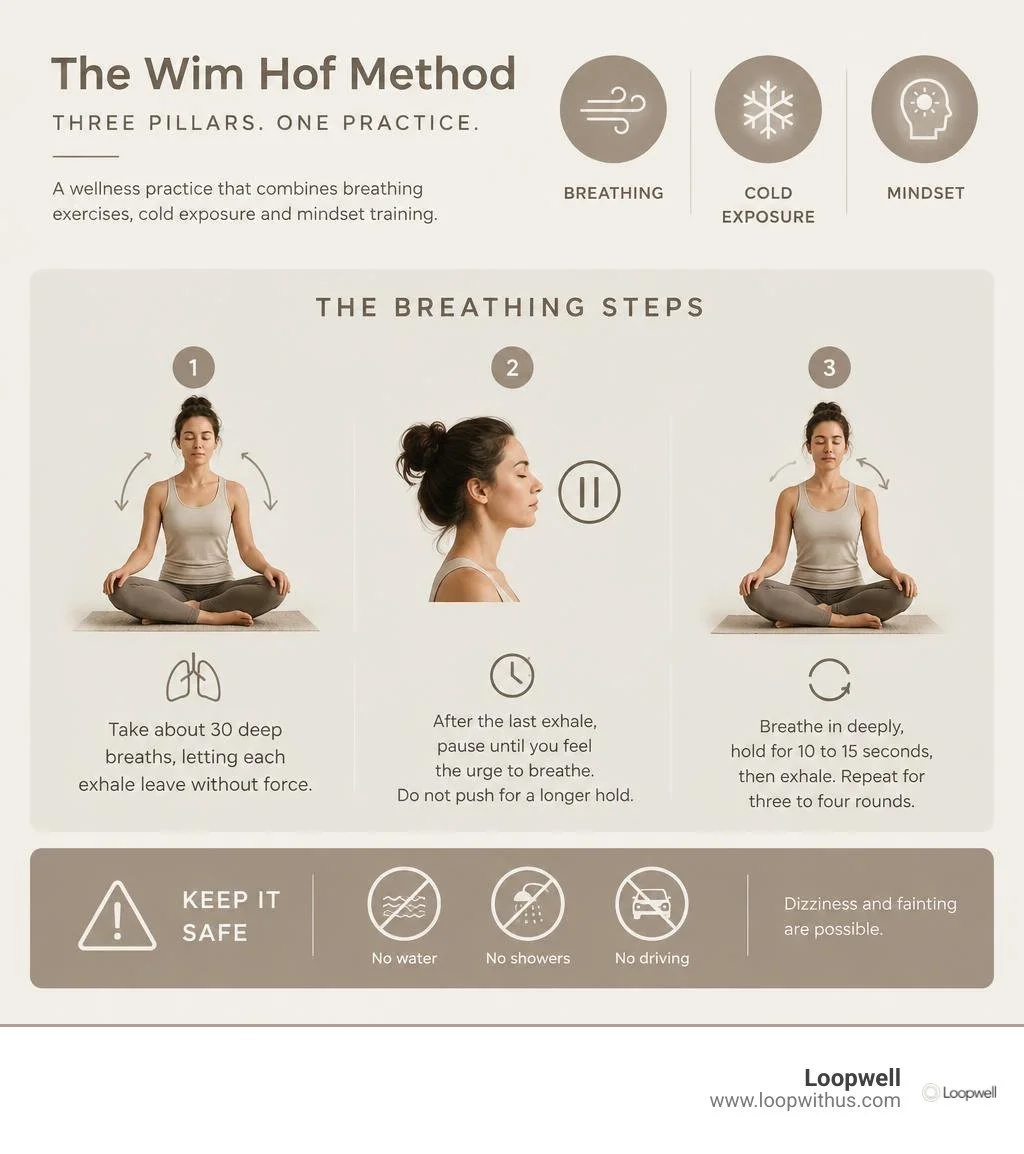
To try the Wim Hof breathing exercise, sit or lie down on dry ground:
Take about 30 deep breaths, letting each exhale leave without force.
After the last exhale, pause until you feel the urge to breathe. Do not push for a longer hold.
Breathe in deeply, hold for 10 to 15 seconds, then exhale. Repeat for three to four rounds.
Never practice in water, in the shower, or while driving. Dizziness and fainting are possible. Research indexed in PubMed Central (National Institutes of Health) has reported short-term effects in some small studies, but Harvard- or Stanford-led research has not established broad health benefits for the Wim Hof Method. For example, a four-week study of adolescent runners found no improvement in breathing patterns during exercise.
I'm Debbie Looney, and I'll walk you through what the method involves, what the evidence shows, and how to put safety first.
What Is the Wim Hof Method—and What Does the Breathing Exercise Do?
The Wim Hof Method is a wellness practice developed by Dutch athlete Wim Hof, also known as “The Iceman.” It combines three elements: breathing exercises, gradual cold exposure, and commitment or mindset training. The breathing technique is one part of the method, not the whole practice.
A typical breathing round involves a series of deep, relatively quick breaths followed by a pause after exhaling and a recovery breath. People report sensations such as tingling or light-headedness during practice. Stanford-led breathing research indexed in PubMed Central has shown that other controlled-breathing practices can change breathing rate and mood in the short term, but it did not test the Wim Hof Method, and no Harvard or Stanford study has established that Wim Hof breathing treats a health condition or provides a lasting supply of extra oxygen.
The sensations during a session are different from proven long-term health effects. We can experience an immediate shift in how we feel, while evidence for lasting benefits remains limited. For the method’s basic practice guidance, see the official Wim Hof Method practice guide.
What to Expect During a Wim Hof Breathing Exercise
People may notice tingling in the hands, feet, or face; light-headedness; or changes in how their body feels. Some people also experience emotional responses. These effects are reported experiences, not proof that the exercise is working or that a health benefit has occurred, and they are not established by Harvard or Stanford research on the Wim Hof Method.
Fainting is possible, especially if breathing becomes intense or a breath hold is forced. Stop if you feel distressed, unusually weak, or close to fainting. Do not try to push through symptoms to finish a round.
How Cold Exposure and Commitment Fit Into the Method
Cold exposure and mindset are separate parts of the broader method. People may begin with a brief cool or cold finish to a shower and build gradually if it feels safe and comfortable. Extreme cold is not a beginner challenge, and cold exposure carries its own risks.
The breathing exercise and cold exposure should not be combined in risky settings. In particular, never use the breathing technique in a bath, pool, or other place where fainting could lead to drowning. Commitment means practicing attention and patience; it does not mean ignoring discomfort or overriding safety signals.
How to Do the Wim Hof Breathing Exercise Step by Step
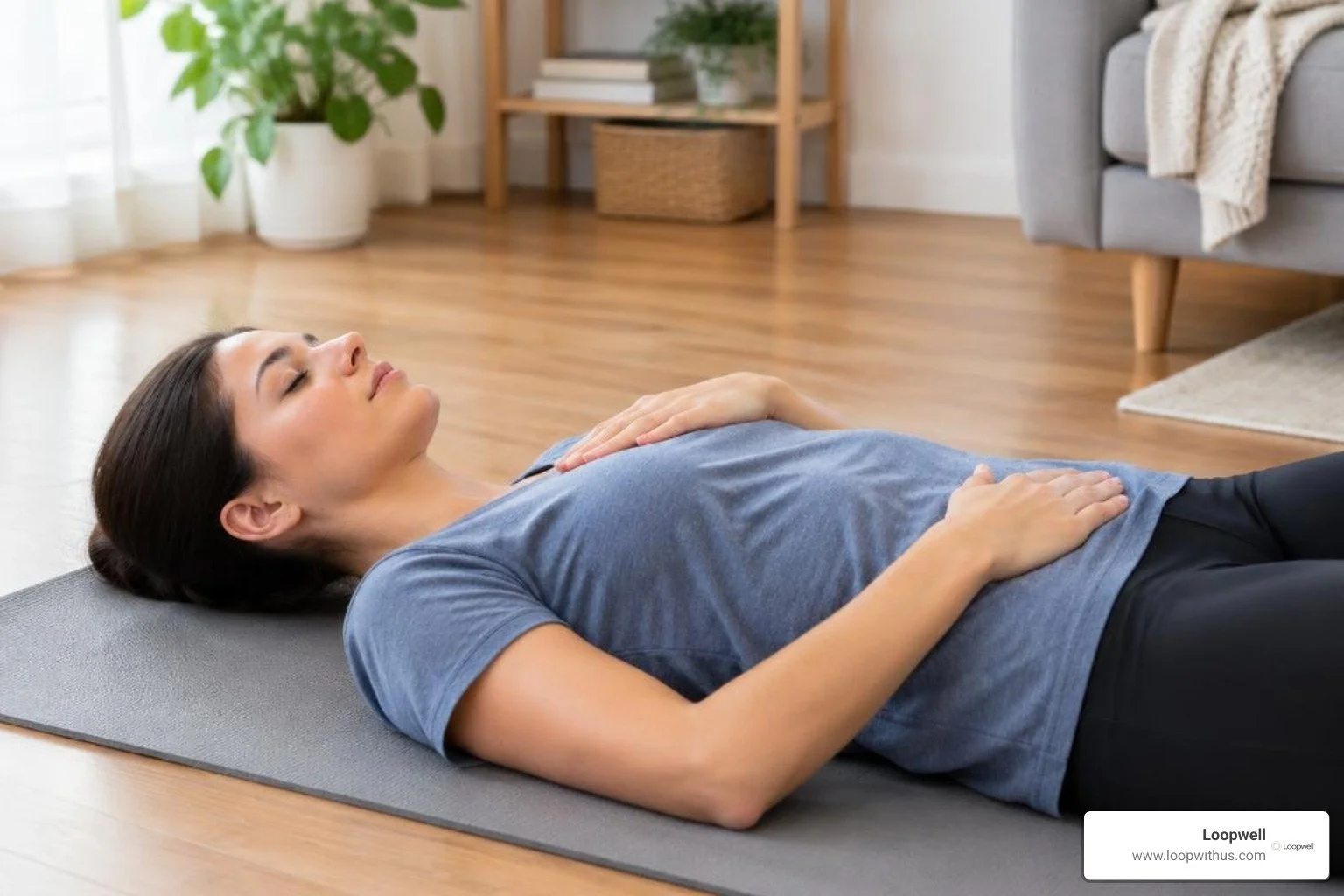
A common beginner session uses about 30 deep breaths per round, followed by a comfortable exhale hold and a short recovery breath. The number is a guide, not a target to force. If you are new to the technique, consider starting with a guided session and keeping your effort gentle.
For the official instructions, visit Wim Hof breathing exercises.
Breathing Exercise Wim Hof: Set Up Safely Before You Begin
Choose a quiet place where you can sit or lie down on a stable, dry surface. Wear loose clothing that allows your abdomen to expand. Some people prefer practicing before a meal or after waking, but the most important factors are comfort and safety.
Do not practice in or near water, in the shower, while driving, or anywhere a fall could be dangerous.
Do not practice standing up.
If you are worried about fainting, have someone nearby the first time.
Stop if you feel unwell rather than trying to complete a set number of breaths.
Wim Hof Breathing Exercise: Follow the Four-Step Sequence
Settle into position. Sit or lie down and let your shoulders, jaw, and abdomen relax.
Breathe deeply, without straining. Inhale through your nose or mouth, allowing the breath to expand your belly and then your chest. Let the exhale fall out gently rather than pushing it out. Repeat for about 30 breaths at a steady pace.
Pause after the final exhale. Let the air out comfortably and wait until you feel a clear urge to breathe. Do not brace, strain, or compete for a longer hold. Breathe in sooner if you need to.
Take a recovery breath. Inhale deeply and comfortably, hold for about 10 to 15 seconds, then release. That completes one round.
Repeat for three to four rounds only if you feel well. Afterward, remain seated or lying down for a few minutes before getting up.
How Often to Practice the Wim Hof Breathing Exercise
If you choose to practice, begin with a guided session and a modest routine. There is no established schedule that guarantees a particular benefit, and you do not need to increase the number of rounds or the length of breath holds over time.
Some people practice in the morning or before eating. Because the breathing can feel energizing, it may not suit you close to bedtime. Pay attention to your own response, and pause practice if it repeatedly causes discomfort.
What Research Says About Wim Hof Breathing Benefits
Research on the Wim Hof Method is still developing. Some small studies have measured short-term changes in inflammation, mood, or physiology. These findings can help researchers ask better questions, but they do not show that the method prevents illness or works the same way for everyone. Study size, participant selection, and whether researchers tested breathing alone or the full method all affect what we can conclude.
There is also research on other kinds of controlled breathing. A Stanford-led study of cyclic sighing reported changes in mood and breathing rate. That is relevant to breathwork more broadly, but it was not a trial of the Wim Hof Method.
Stress, Mood, and Immune Function: Promising Findings, Not Proof of a Cure
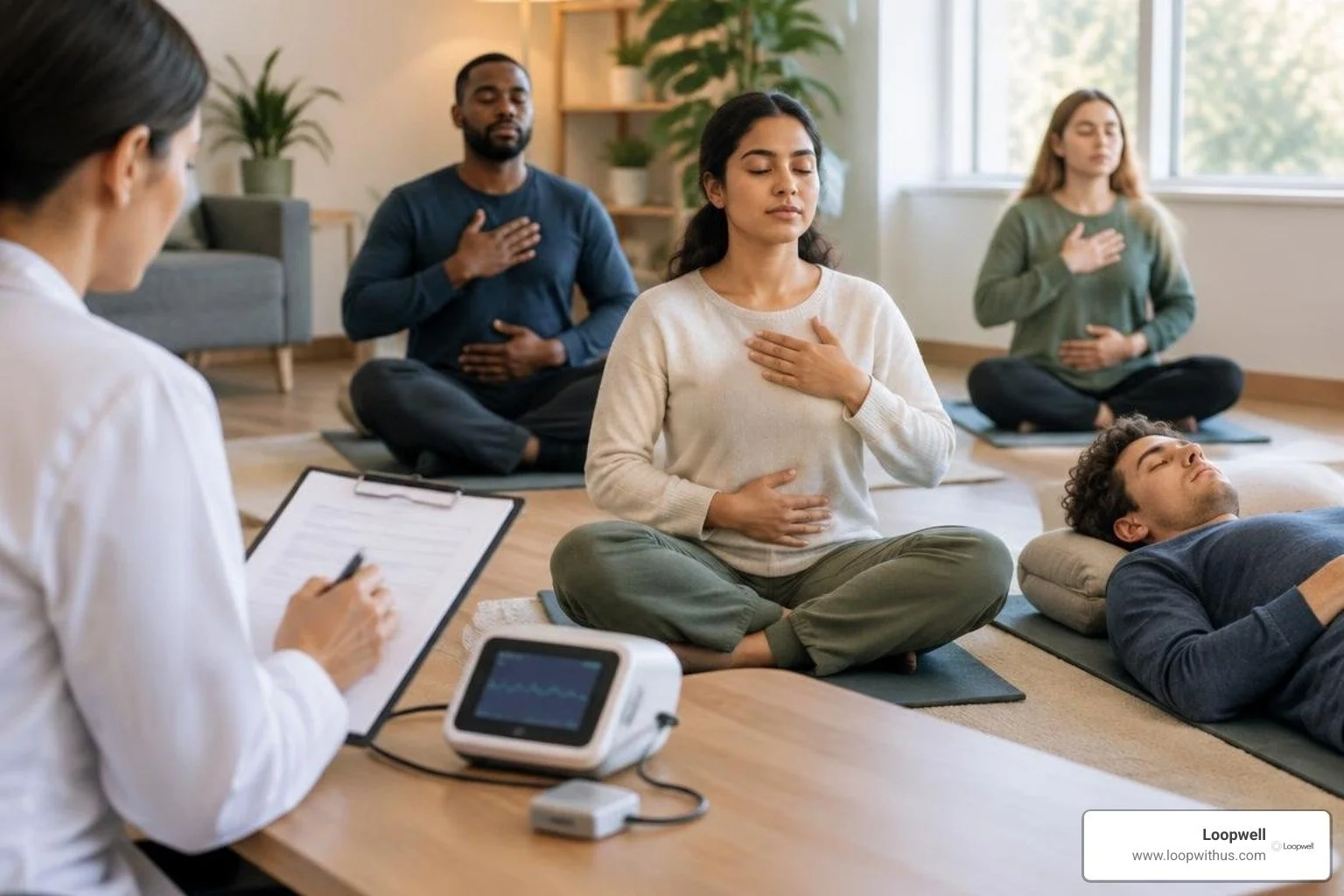
A 2014 endotoxin study examined trained practitioners who received an injection designed to trigger an immune response. During the experiment, the trained group showed increased anti-inflammatory mediators and reduced pro-inflammatory mediators compared with controls. The findings suggest that the training may influence certain acute immune responses under study conditions. They do not prove broad immune protection, prevention of infection, or treatment of inflammatory disease.
Survey research involving more than 3,250 practitioners from different countries found that people reported experiences such as more energy, less stress or anxiety, and improved focus or mood. These are self-reported experiences, not controlled evidence that the method caused the changes. Expectations, other lifestyle changes, and individual differences may play a role.
An eight-week study involving people with axial spondyloarthritis reported no negative side effects, which supports further study in this area. It does not establish that the method is suitable for everyone with an inflammatory condition. For a cautious discussion of the technique and its risks, see this evidence and safety overview of Wim Hof breathing.
Athletic Performance and Endurance: What the Studies Found
Claims that the method boosts athletic performance are not firmly established. Studies have examined different outcomes and groups, with mixed or negative results.
Study type Participants Measured outcome Key limitation 2021 pilot Amateur sprinters Repeated sprint ability after one session No significant improvement; small pilot 2022 intervention Adolescent runners practicing for four weeks Breathing frequency, tidal volume, and minute ventilation during exercise No significant group differences; findings may not apply to other populations 2018 brain imaging Wim Hof during cold exposure Brain activity associated with pain regulation and self-reflection A single-person finding does not show typical effects
The four-week runner study found no significant changes in breathing frequency, tidal volume, or minute ventilation after the intervention. (Marko et al., 2022)
These findings do not prove that no athlete can ever feel a difference. They do mean that we should not present improved endurance or performance as a reliable outcome. Training, recovery, and sport-specific preparation remain essential.
How Long Might It Take to Notice Results?
Some people notice tingling, light-headedness, or a change in mood during or just after their first session. Those are immediate sensations, not evidence of a lasting health benefit. Experiences vary, and there is no established timeline for reliable results.
The four-week runner intervention did not improve the measured breathing patterns, while an eight-week study in people with axial spondyloarthritis focused on different outcomes. Neither establishes how long an individual needs to practice to experience a particular benefit. Consistency alone cannot guarantee an outcome.
Risks, Side Effects, and Who Should Avoid Wim Hof Breathing
The fast breathing and breath holds can cause dizziness, tingling, changes in sensation, or hand cramping. In some cases, a person can faint or lose consciousness. The most important safety rule is to practice only on dry ground, seated or lying down, and never in water or anywhere that fainting could cause serious harm.
Do not practice while driving, bathing, swimming, diving, standing, or at height. The technique may not be appropriate without medical advice if you are pregnant or have epilepsy, a cardiovascular condition, uncontrolled blood pressure, or a history of fainting. If you have a health condition or are unsure whether breath retention is safe for you, speak with a healthcare professional first.
People who find rapid breathing triggering or distressing should stop rather than push through. For a supportive setting centered on breathwork and anxiety, explore breathwork for anxiety support.
When to Stop and When to Get Medical Advice
Stop the exercise if you feel faint, panicky, or unusually uncomfortable. Chest pain, severe shortness of breath, loss of consciousness, or symptoms that persist after returning to normal breathing warrant prompt medical attention.
If you have a relevant medical condition, discuss the technique with a qualified healthcare professional before trying it. A guided first session can help with pacing, but it does not replace medical screening or make an unsafe practice safe.
How Wim Hof Breathing Compares With Slower Breathing Methods
Wim Hof breathing uses a period of faster, deeper breathing followed by an exhale hold. Slower breathing practices generally aim to reduce breathing pace and encourage a calmer rhythm. These approaches are not interchangeable, and different people may prefer different experiences.
Feature Wim Hof breathing Slower breathing practices Breathing pattern Repeated deep, relatively quick breaths Gentle, slower breaths; often through the nose Breath holds Usually a pause after exhaling, then a recovery inhale May use no holds or brief, comfortable pauses Typical aim A focused, energizing experience and practice with discomfort Calm, steady attention and relaxation Safety considerations Dizziness or fainting is possible; dry ground and a seated or lying position are essential Usually gentler, but stop if uncomfortable and avoid forcing the breath
Choose based on your goal and how your body responds. If you are looking for a wind-down routine, slower breathing may feel more comfortable. If the Wim Hof technique causes distress, stop; there is no need to prove anything by continuing.
Frequently Asked Questions About Wim Hof Breathing
Can Wim Hof Breathing Improve Athletic Performance or Lung Capacity?
Evidence is limited. A 2021 pilot found no significant improvement in repeated sprint ability after one session. A 2022 study in adolescent runners found no significant change in breathing frequency, tidal volume, or minute ventilation after four weeks. These studies do not rule out every possible effect, but they do not establish improved athletic performance or lung capacity.
Is Wim Hof Breathing Safe for Beginners?
Some healthy adults may choose to try it, but beginners should take precautions: sit or lie down on dry ground, keep away from water, never practice while driving, and do not force breath holds. People who are pregnant or have epilepsy, cardiovascular conditions, uncontrolled blood pressure, or a history of fainting should seek medical advice first.
Should I Practice Wim Hof Breathing Before Bed?
It may feel energizing for some people, so it may not be the best choice just before sleep. Notice how it affects you. If your goal is to wind down, try a gentler, slower breathing rhythm instead.
Conclusion
Wim Hof breathing combines repeated deep breaths, a comfortable pause after exhaling, and a short recovery breath. Start seated or lying down on dry ground, keep the breath hold gentle, and stop if you feel distressed. Never practice in water, while driving, or anywhere fainting could be dangerous.
Some studies suggest possible short-term effects on the body’s response to stressors, but evidence for broad, lasting health or athletic benefits remains limited. We recommend putting safety ahead of longer holds or more rounds. If you would like to try the practice with guidance, join a guided Wim Hof experience.