What I Learned from Dr. Judith Joseph

Hi friends — Deb here.
There are nights at Loopwell when you can feel the whole room exhale together — like we’ve all been holding something inside for way too long, and finally, someone has the courage to name it. That’s what it was like when we hosted Dr. Judith Joseph, with the brilliant Dr. April Simpkins moderating the conversation.
Dr. Joseph has traveled to over 30 countries researching mental health, and she’s identified something many of us have felt but haven’t had the words for: high-functioning depression.
It doesn’t always look like the depression we imagine. Instead, it looks like being “on.” Overachieving. Staying busy. Checking the boxes. Smiling, while inside, you feel hollow.
Sound familiar? Yeah, me too.
Lesson 1: Credentials Matter — But Compassion Matters More
Before I dive into her lessons, let’s acknowledge just how extraordinary Dr. Joseph is. She earned her bachelor’s in biology and chemistry, cum laude, from Duke. Her medical degree? From Columbia University College of Physicians and Surgeons. Oh, and while she was there, she also grabbed a business degree from Columbia Business School (because why not?). She completed her psychiatry residency at Columbia, followed by a fellowship in Child and Adolescent Psychiatry at NYU Langone and Bellevue.
And now she runs the first-ever lab dedicated to studying high-functioning conditions: depression, ADHD, anxiety, PTSD, bipolar disorder, schizophrenia, postpartum depression, OCD — all the struggles that don’t always show on the outside.
Yet when she speaks, she doesn’t sound like a textbook. She sounds like a friend who “gets it.” That combination of brainpower and heart is exactly what makes her work life-changing.
Lesson 2: The 5 V’s to Reclaim Your Joy
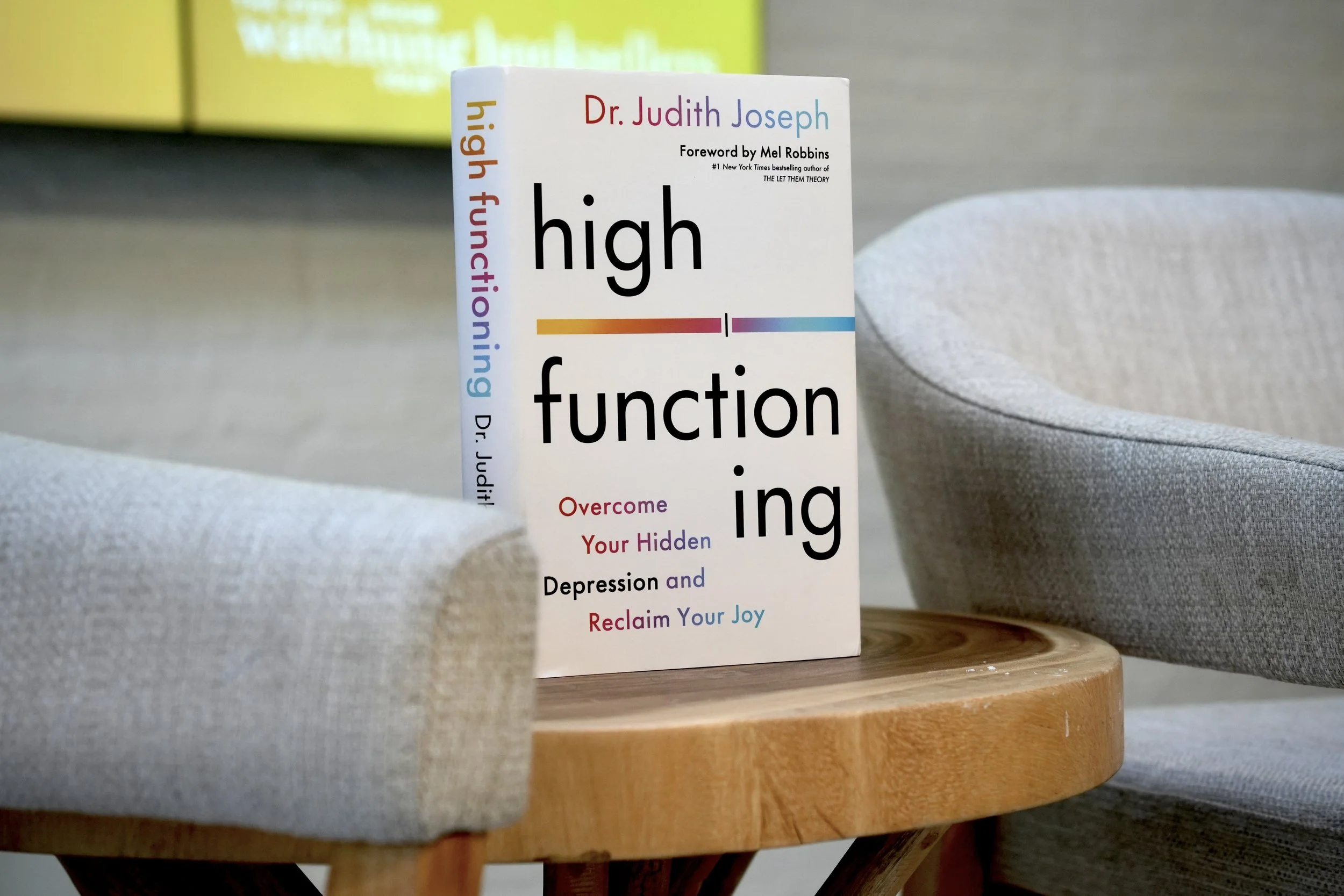
In her book High Functioning: Overcome Your Hidden Depression and Reclaim Your Joy, Dr. Joseph gives us the 5 V’s — a framework for spotting and shifting hidden depression:
Vulnerability – Allow yourself to admit when you’re struggling, instead of hiding behind perfection.
Validation – Honor your feelings instead of dismissing them (“I shouldn’t feel this way” is off the table).
Values – Reconnect to what really matters to you, beyond the endless to-do list.
Vision – Create a hopeful picture of the life you want, not just the one you’re surviving.
Victory – Celebrate small wins along the way. Healing isn’t instant, but progress is powerful.
These aren’t just concepts. They’re tools. And they work.
Lesson 3: Healing is Interactive
At Loopwell, we brought Dr. Joseph’s ideas to life in our own Happiness Lab. People got to:
Practice mirror affirmations to validate their own feelings (awkward at first, powerful once you lean in).
Write what’s priceless to them on stones they could carry home, a tangible reminder to stay grounded.
Learn a simple breathing exercise that actually supports your vitals when stress spikes.
It wasn’t just a lecture. It was a lived experience — exactly what we’re trying to create with our “Tiny Desk for Well-Being” series.
What I’m Taking With Me
Dr. Joseph reminded me that achievement without alignment will always leave you empty. That joy isn’t something you stumble upon — it’s something you cultivate.
And maybe the bravest, most high-functioning thing we can do is stop pretending we’re fine.
Try This at Home
Here’s one you can start today, inspired by Dr. Joseph:
The Rock Ritual. Take a small stone and write one word on it that represents what’s priceless to you (family, freedom, health, creativity). Keep it in your pocket, on your desk, or by your bed. Each time you see it, pause and breathe. It’s a simple anchor to remind you of your values in the middle of life’s chaos.
Because reclaiming joy starts with remembering what really matters.
With gratitude (and a rock on my desk that says “connection”),
Deb