
The Complete Guide to Combining Movement with Mindfulness
Movement and Mindfulness: A Simple Way to Feel More Grounded

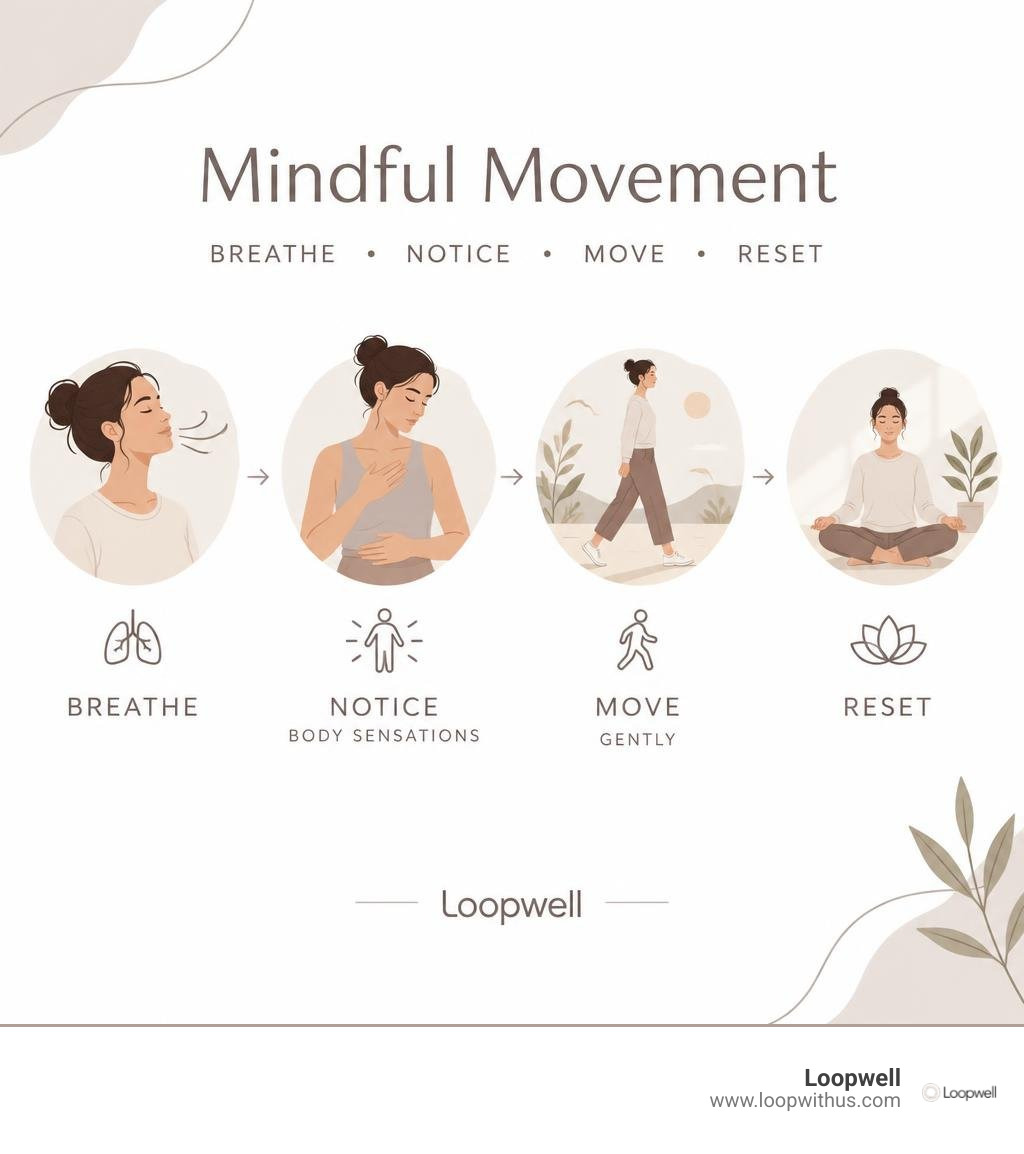
Movement and mindfulness work best when you pair simple physical activity with full attention to your breath, body, and surroundings. Start with five minutes: walk without your phone, notice each foot touching the ground, breathe at a comfortable pace, and gently return your attention whenever it drifts.
This is not about perfect form, burning calories, or pushing harder. It is about noticing what your body is telling you and responding with care.
Research supports this mind-body approach. Harvard Health notes that rhythmic movement, breathing, yoga, tai chi, and mindful walking can help activate the relaxation response and reduce stress. An 8-week study of 38 university students also found meaningful improvements in body awareness, self-regulation, and positive mental health after a mindful movement program.
Whether you choose a slow stretch, a sensory walk, or a few mindful breaths between meetings, small practices can help make well-being feel less fragmented and more doable.
I am Debbie Looney, and this guide will show you practical ways to make mindful movement part of everyday life.
The Science of Movement and Mindfulness: Why Somatic Awareness Matters
For decades, conventional fitness culture treated the body like a machine to be driven, measured, and pushed to exhaustion. Yet emerging neuroscience and physiological research reveal that physical movement performs its most profound healing when paired with conscious, somatic awareness.
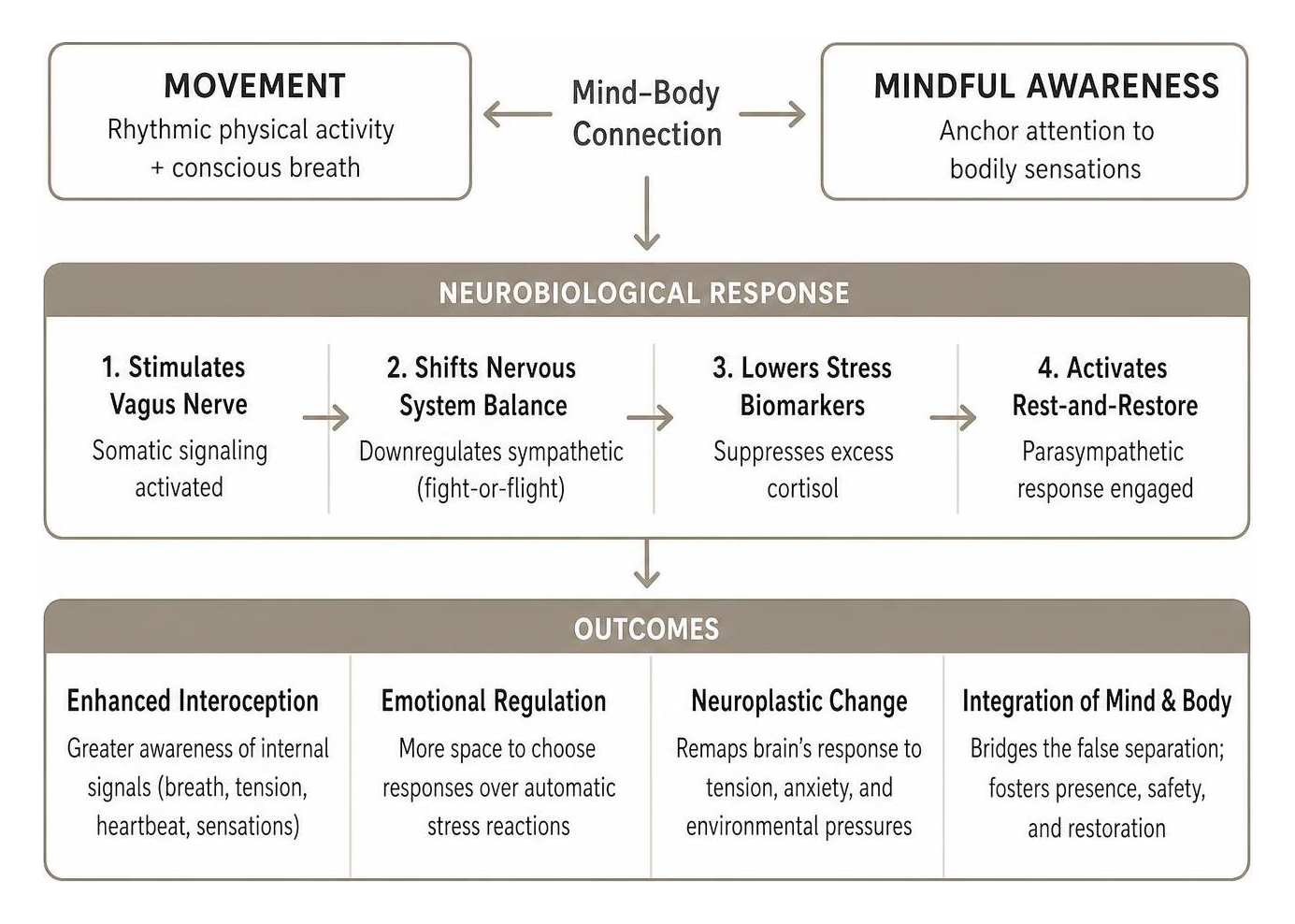
When you intentionally anchor your attention to bodily sensations during physical activity, you shift neural pathways. According to research from Harvard Medical School and neurobiological insights popularized by platforms like the Huberman Lab, pairing rhythmic physical activity with conscious breath stimulates the vagus nerve. This direct somatic signaling downregulates the sympathetic nervous system, suppresses excess cortisol, and activates the parasympathetic "rest-and-restore" state.

Rather than treating the mind and body as separate entities—a biological impossibility long perpetuated by Cartesian dualism—somatic movement bridges the two. By fostering intentional body awareness, you tap into neuroplasticity, allowing your brain to remap its response to tension, anxiety, and environmental pressures.
How Movement and Mindfulness Differ from Conventional Exercise
While traditional exercise is typically defined by external goals—such as caloric burn, heart rate zones, repetitions, and aesthetic outcomes—mindful movement flips the focus inward. It shifts you from "top-down" mental command (forcing the body to comply) to "bottom-up" sensory listening (letting the body guide the experience).
| Dimension | Conventional Exercise | Mindful Movement |
|---|---|---|
| Primary Focus | Performance, metrics, external goals | Internal physical sensations, present awareness |
| Pacing | Driven by time, cadence, or intensity targets | Driven by breath, comfort, and somatic feedback |
| Mindset | Striving, competition, pushing past limits | Acceptance, curiosity, non-judgmental awareness |
| Nervous System | Often elevates sympathetic arousal (fight-or-flight) | Regulates and calms autonomic stress pathways |
| Guiding Principle | Top-down cognitive control | Bottom-up intuitive sensing |
When exploring mindful intuitive movement, you trade rigid physical demands for genuine somatic dialogue. You stop asking what your body can perform and start discovering what your nervous system needs to feel safe, grounded, and restored.
Neurobiology, Interoception, and Emotional Regulation
At the core of movement and mindfulness is interoception—the brain's capacity to sense, interpret, and integrate internal bodily signals such as heartbeat, muscle tension, breath rhythm, and visceral sensations. Interoceptive signals are processed in the insular cortex, the neurobiological seat of our subjective emotional experience.
When you ignore somatic cues, physical tension accumulates unchecked, leading to chronic dysregulation and emotional reactivity. Cultivating interoceptive awareness through validated models like the Multidimensional Assessment of Interoceptive Awareness (MAIA) enhances self-regulation. By learning to accurately notice subtle sensations without immediate judgment, you gain the psychological space needed to choose thoughtful responses over automatic stress reactions.
6 Powerful Practices Combining Motion and Present-Moment Awareness
Below is an overview of how diverse movement modalities cultivate somatic presence and physiological equilibrium across varying daily time frames:
| Modality | Suggested Duration | Primary Sensory Anchor | Key Physiological & Mental Benefit |
|---|---|---|---|
| Sensory Walking | 10–20 mins | Foot strike & ambient sound | Lowers baseline cortisol, grounds attention |
| Breath-Led Yoga | 15–30 mins | Prana (inflow/outflow breath) | Mobilizes spine, downregulates blood pressure |
| Tai Chi / Qigong | 10–20 mins | Weight transitions & flow | Enhances balance, lubricates synovial joints |
| Somatic Resets | 5–15 mins | Fascial release & sighing exhalations | Vagus nerve reset, relieves chronic bracing |
| Intuitive Dance | 10–20 mins | Rhythmic sensation & space | Unlocks emotional tension, builds kinesthetic trust |
| Micro-Movements | 2–5 mins | Spinal decompression & neck release | Resets workday posture, clears cognitive fatigue |
1. Sensory Walking Meditation
Sensory walking transforms a mundane physical commute into a dynamic mindfulness practice. Instead of walking while looking at your smartphone or ruminating over emails, you bring focused awareness to the mechanics of your gait and your external environment.
- Step-by-Step Practice:
- Begin walking at an unhurried, natural pace.
- For the first two minutes, focus entirely on your feet: notice the heel strike, the roll across the ball of the foot, and the push-off from the toes.
- Shift attention to your breathing, matching your steps to a comfortable rhythm (e.g., inhale for three steps, exhale for three steps).
- Expand your awareness outward: notice five colors in your immediate visual field, three distinct ambient sounds, and the sensation of air against your skin.
- Whenever your mind drifts to past conversations or future to-do lists, gently return your focus to the sole of your shoe meeting the earth.
2. Breath-Synchronized Yoga and Restorative Postures
Breath-synchronized movement (such as gentle Hatha yoga) anchors conscious breath (pranayama) to physical postures (asanas), restoring healthy autonomic tone and releasing spinal tension.
- Step-by-Step Practice:
- Cat-Cow Flow: Begin on all fours. Inhale as you drop your belly, open your collarbones, and lift your gaze. Exhale as you press through your palms, round your spine toward the ceiling, and release the weight of your head. Repeat for 8 to 10 slow, fluid breath cycles.
- Dynamic Bridge: Lie on your back with knees bent and feet hip-width apart. Inhale to slowly lift your hips while raising your arms overhead to the floor behind you. Exhale as you lower both spine and arms simultaneously back to the mat.
- Restorative Savasana: Settle onto your back, placing a rolled blanket under your knees to release lumbar tension. Close your eyes, soften your jaw, and let your body absorb the practice for 5 minutes. As clinical insights from Harvard Medical School show, even brief daily sessions of restorative poses can help lower resting blood pressure and calm a racing mind.
3. Tai Chi and Qigong Energy Cultivation
Tai Chi and Qigong blend slow, circular physical gestures with mindful breathing and visualization. These ancient practices focus on balancing internal vital energy while training proprioception, joint mobility, and neuromuscular coordination.
- Step-by-Step Practice:
- Stand tall with feet shoulder-width apart, knees soft, and arms resting loosely at your sides.
- Inhale gently through your nose as you float your hands up in front of your chest to shoulder height, palms facing downward.
- Exhale as you bend your knees slightly and press your palms back down toward your hips, imagining pushing a buoyant ball under warm water.
- Continue this rhythmic movement for 10 minutes, maintaining smooth, continuous weight shifts from leg to leg. Research from Harvard Medical School emphasizes that this deliberate pacing helps prevent falls, supports joint health, and cultivates deep mental clarity.
4. Somatic Nervous System Resets and Vagus Activation
When we endure prolonged mental strain, our bodies adopt protective bracing patterns—clenching the jaw, hiking the shoulders, and tightening the pelvic floor and diaphragm. Research from Harvard and Stanford demonstrates that somatic movement offers trauma-informed, gentle unwinding that sends unambiguous safety signals directly to your nervous system.
- Step-by-Step Practice:
- Lie flat on your back on a comfortable mat or rug, knees bent, feet flat.
- Place one hand over your heart and the other on your lower belly.
- Take a slow inhale through your nose for a count of four, feeling your belly expand into your palm, then let out a long, audible sigh through your mouth for a count of seven.
- Gently rock your pelvis forward and back, allowing the subtle spinal wave to travel all the way up to the base of your skull.
- As tension begins to melt, explore structured somatic paths that can help release deep-seated fascial tension in just 5 to 15 minutes a day.
5. Mindful Intuitive Dance and Spatial Exploration
Mindful intuitive movement removes choreography and performance standards entirely. Instead, it invites spontaneous, unscripted physical expression within your personal movement sphere (often referred to as your kinesphere).
- Step-by-Step Practice:
- Find a private, quiet space and put on instrumental music that matches or slightly elevates your current mood.
- Close your eyes and stand completely still for 60 seconds, observing where your body feels constricted or heavy.
- Allow micro-movements to emerge organically: a gentle sway of the ribcage, an expressive sweep of an arm, or a rolling motion through the hips.
- Move without checking a mirror or evaluating aesthetic form. If emotions surface, allow them to process through physical release, letting your body’s intuitive wisdom guide you toward spontaneous, uninhibited freedom.
6. Micro-Movements and Desk Resets
You do not need a full hour on a yoga mat to experience the restorative benefits of mindful motion. Micro-movements woven directly into your working hours interrupt sedentary fatigue and prevent cognitive burnout.
- Step-by-Step Practice:
- Seated Spinal Twist: Sit tall on the edge of your chair. Inhale to lengthen your crown toward the ceiling; exhale as you place your right hand on your left knee and gently rotate your torso to the left. Hold for three full breaths, then alternate sides.
- Suboccipital Release: Interlace your fingers behind your head. Inhale as you open your elbows wide and lift your sternum; exhale as you gently tuck your chin toward your chest, releasing tension at the base of your neck.
- Standing Grounding Reset: Stand up between video calls, kick off your shoes, and ground your bare feet into the floor. Roll your shoulders back five times, paired with deep belly exhalations, to reset your focus for the next task.
Integrating these somatic micro-breaks into your daily schedule provides a reliable reset for both mental focus and physical alignment.
Evidence-Based Health Outcomes: From Sleep Quality to Autonomy
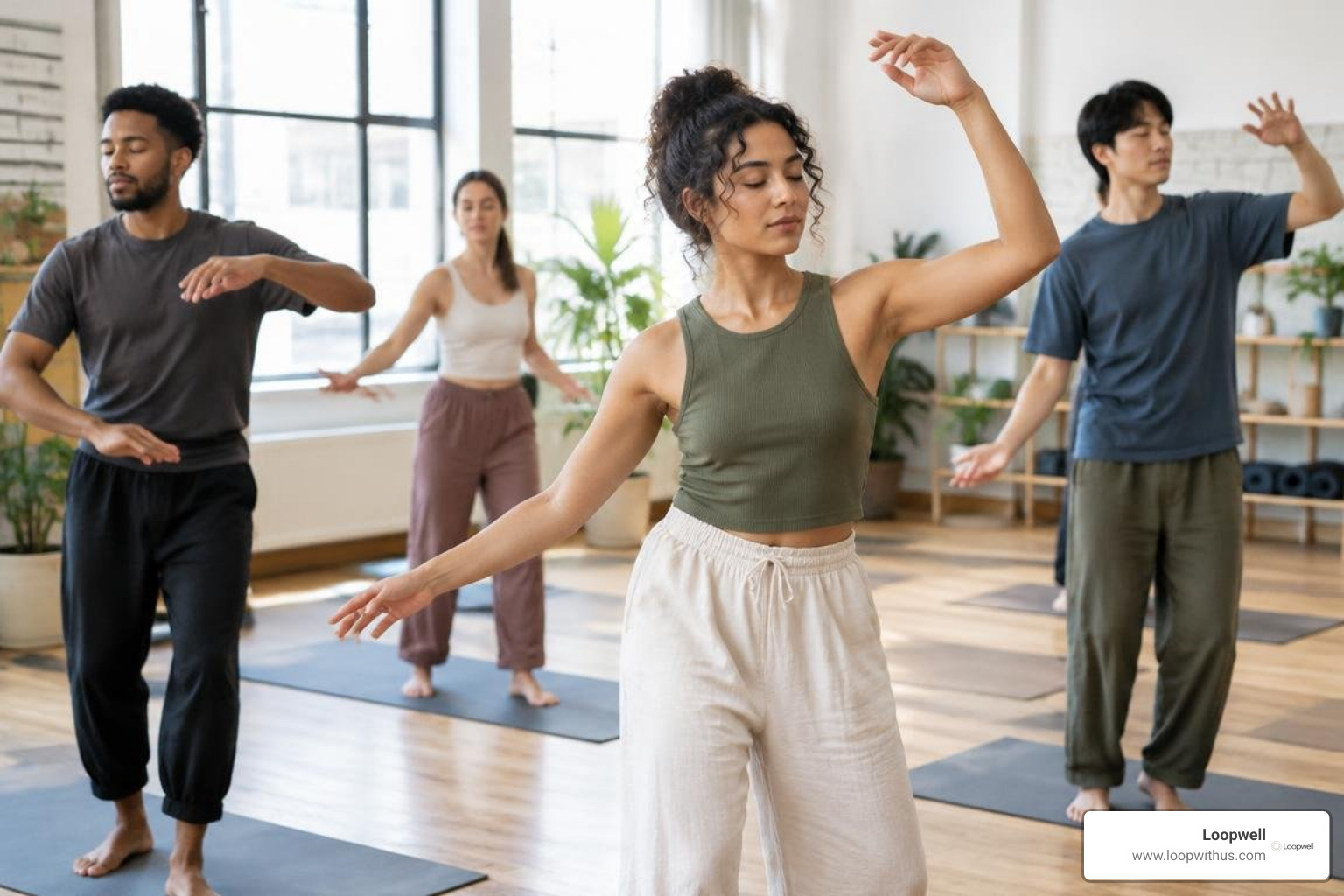
A growing body of peer-reviewed clinical research from institutions like Harvard and Stanford demonstrates that integrating movement and mindfulness delivers measurable psychological, physiological, and restorative health benefits.
A comprehensive systematic review analyzed by researchers alongside clinical insights from Harvard Medical School, evaluating 1,049 studies on mindful movement and sleep outcomes, revealed that structured interventions—including gentle yoga, Tai Chi, and somatic movement—lead to significantly better sleep quality. By downregulating evening sympathetic arousal and optimizing natural melatonin production, mindful movement supports restorative slow-wave sleep architecture.
Clinical Insights from a Movement Intervention
The clinical efficacy of movement-based mindfulness was clearly highlighted in an 8-week pre-post intervention study (Spaccapanico et al., 2024). The trial examined 38 university students (mean age 21.2 years, 60.5% male) participating in the Movimento Biologico (MB) mindful movement program.
The intervention produced statistically significant improvements across multiple validated subscales of the Multidimensional Assessment of Interoceptive Awareness (MAIA):
- Noticing bodily sensations ($p = 0.003$, effect size $ES = 0.53$)
- Attention Regulation ($p = 0.002$, effect size $ES = 0.60$)
- Emotional Awareness ($p = 0.007$, effect size $ES = 0.50$)
- Self-Regulation ($p < 0.001$, effect size $ES = 0.74$)
- Body Listening ($p = 0.001$, effect size $ES = 0.67$)
- Trusting bodily signals ($p = 0.001$, effect size $ES = 0.60$)
Furthermore, participants achieved a significant increase in their total Positive Mental Health (PMH) scores ($p = 0.015$, effect size $ES = 0.46$). These findings confirm that training young adults to tune into their bodies builds substantial emotional regulation and overall psychological vitality.
Fostering Autonomy, Confidence, and Life-Stage Resilience
The transition from late adolescence into adulthood is marked by intense cognitive pressures, professional uncertainty, and social shifts. In the Movimento Biologico study, the Autonomy subscale of Psychological Well-Being (PWB) was the single dimension that showed a statistically significant increase ($p = 0.036$) following the 8-week intervention (Spaccapanico et al., 2024). Developing interoceptive trust directly empowers individuals to rely on their own internal compass rather than succumbing to external societal expectations.
This somatic confidence is backed by embodied cognition research from Harvard and Stanford neurobiology researchers. A landmark study published in the European Journal of Social Psychology found that holding the body in an upright, open posture with the head held high makes people feel substantially more confident. Similarly, practicing open-postured yoga for just two minutes produces an immediate, subjective increase in feeling energetic, empowered, and in control.
In corporate environments, forward-thinking organizations are recognizing that true corporate well-being requires more than standard ergonomic equipment. Reports from The New York Times, Harvard Business Review (HBR), McKinsey, and Deloitte emphasize that maintaining authentic human connection and somatic resilience is critical in our high-speed, AI-driven workplace.
Thought leaders like Dr. Judith Joseph, Amina AlTai, Michelle Maros, and Dr. Mindy Pelz advocate for holistic, cycle-aware, and embodied health strategies. To support team cohesion and personal vitality, companies are moving away from sterile conference rooms and embracing luxury off-site spaces.
At Loopwell, we host premier executive retreats and dynamic community events—such as curated FIFA watch parties with high-end catering, private parking, and immersive screen walls—in our state-of-the-art Montclair retreat facilities and flexible gathering spaces.
Practical Guidelines for Sustainable Integration
Building a lasting mindful movement habit does not require overhauling your entire schedule. Sustainable adoption depends on practical habit stacking and non-striving awareness.
Incorporating Movement and Mindfulness into Daily Routines
- Stack onto Existing Habits: Attach a two-minute stretch to a daily task you already perform without fail. For example, while your morning kettle boils, complete three conscious shoulder rolls and a standing forward fold.
- Designate Unplugged Buffer Zones: When walking between meetings, leave your phone in your pocket. Use those five minutes for sensory walking, consciously observing your foot strikes and breath cadence.
- Embrace the 5-Minute Rule: On days when time is tight or fatigue sets in, commit to just five minutes of gentle somatic motion. Consistency in nervous system regulation is far more impactful than occasional, intense workouts.
- Cultivate Non-Striving Presence: Approach your practice without performance targets. If your body asks for gentle stillness over a dynamic flow, honor that internal signal without self-criticism.
Current Research Limitations and Future Directions
While the empirical evidence supporting mindful movement is compelling, current literature possesses clear limitations:
- Short Study Durations: Many clinical trials range from 6 to 12 weeks; long-term longitudinal studies are necessary to evaluate the multi-year durability of interoceptive improvements.
- Control Group Designs: Future trials require active comparator groups (such as standard aerobic exercise cohorts) to isolate the unique psychological contributions of mindfulness from general exercise benefits.
- Biometric Integration: Deeper research incorporating real-time wearable biometrics (e.g., continuous heart rate variability and vagal tone tracking) alongside self-reported scales like the MAIA will provide clearer neurobiological maps of somatic practices.
Frequently Asked Questions About Movement and Mindfulness
What is the primary difference between mindful movement and regular exercise?
Regular exercise focuses primarily on external performance metrics—such as calorie burn, strength output, pace, and repetitions. Mindful movement shifts the entire focus inward, prioritizing internal physical sensations, present-moment awareness, breath mechanics, and nervous system regulation without judgment.
How quickly can somatic mindful movement alleviate acute stress?
Research supported by institutions like Harvard Medical School and Stanford neurobiology findings shows that adopting an open, grounded posture or engaging in rhythmic, breath-synchronized movement for as little as two minutes can immediately downregulate acute stress markers, stimulate the vagus nerve, and foster subjective feelings of calm and empowerment.
Can beginners practice mindful movement without prior meditation experience?
Yes. Mindful movement is often the ideal entry point for beginners who find seated, silent meditation difficult. Physical sensations and breath mechanics provide concrete, tangible anchors that naturally stabilize wandering attention.
Conclusion
Combining movement and mindfulness provides a transformative, science-backed pathway to reclaiming your health, quieting mental noise, and restoring autonomic balance. By tuning into internal sensations, honoring your body's innate wisdom, and releasing chronic tension, you build lasting psychological autonomy and deep physical vitality.
At Loopwell, we bring world-class thought leaders and expert local practitioners together across New York City, Montclair, and Northern New Jersey to nurture whole-person well-being. Whether you are exploring our enriching author series, participating in transformative corporate wellness workshops, or stepping into our supportive community through our wellness memberships, we invite you to experience the life-changing power of living fully embodied.
References
Spaccapanico Proietti S, Chiavarini M, Iorio F, Buratta L, Pocetta G, Carestia R, Gobbetti C, Lupi C, Cosenza A, Sorci G, Mazzeschi C, Biscarini A, de Waure C. "The role of a mindful movement-based program (Movimento Biologico) in health promotion: results of a pre-post intervention study.." Frontiers in public health, 2024. PMCID PMC11196965.