
The Complete Guide to Science-Backed Interactive Learning Methods
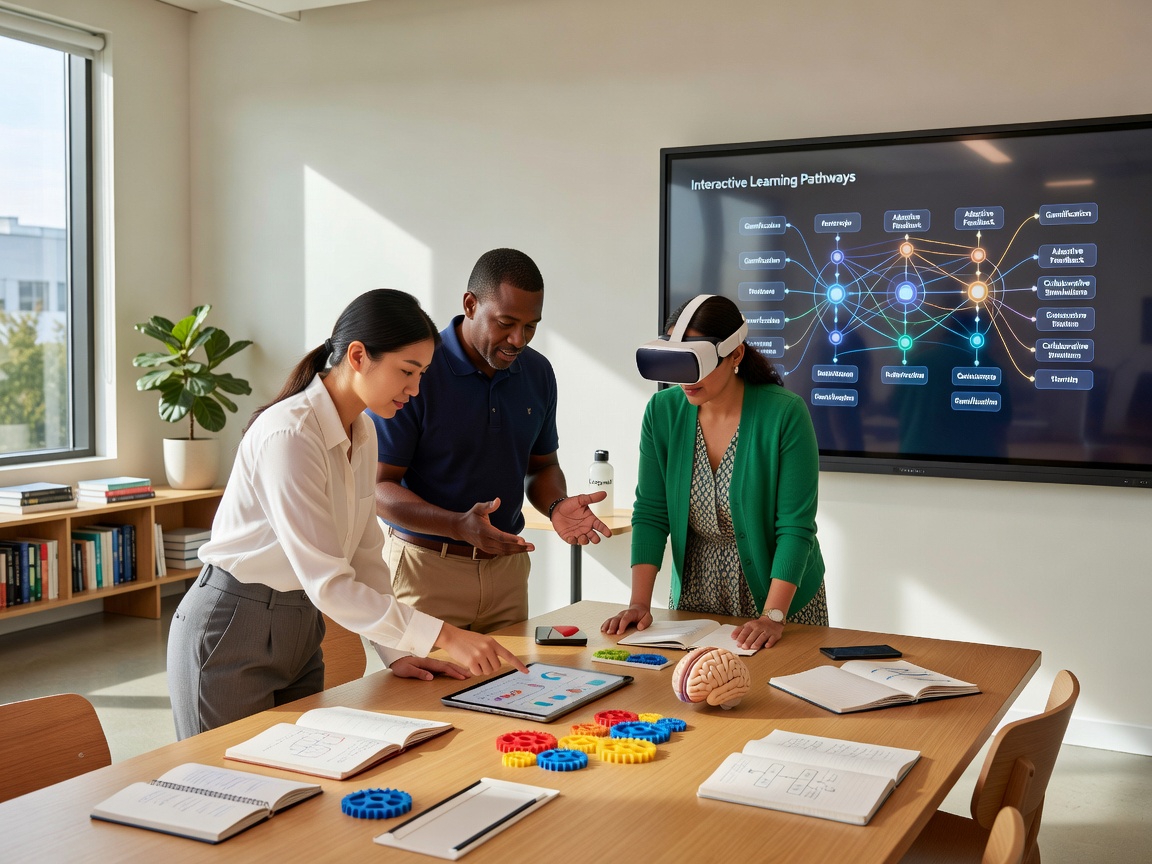
When we look at how the human brain acquires and consolidates information, passive observation falls short. Studies from leading academic institutions, including Harvard and Stanford, consistently show that active recall and deliberate practice trigger enhanced neural plasticity. When learners are forced to retrieve concepts, analyze options, and synthesize answers, they forge stronger synaptic connections.
Cognitive load theory explains why direct instruction can sometimes overload working memory while failing to create lasting mental models. Modern learners tuning into lectures often experience cognitive fatigue. However, active participation resets attention spans. Neurobiological research from Harvard and Stanford reveals that the brain seeking novelty tunes out familiar, repetitive inputs (such as endless slide decks). By inserting unexpected challenges, choices, and structured interactions, educators leverage the brain's natural response to novelty.
| Dimension | Passive Learning | Interactive Learning |
|---|---|---|
| Learner Role | Passive consumer, listening/reading | Active contributor, solving/reflecting |
| Cognitive Focus | Working memory overload, passive recognition | Active recall, synthesis, critical thinking |
| Feedback Loop | Delayed (e.g., post-exam grading) | Real-time, continuous corrective feedback |
| Attention & Novelty | Rapid decay due to monotonous stimuli | Sustained focus driven by novelty seeking |
| Skill Outcomes | Rote memorization of facts | Decision-making, judgment, 21st-century skills |
This aligns with established experiential education principles, which emphasize that deep learning occurs when action is paired with immediate reflection.
Key Benefits of Interactive Learning Experiences
Implementing interactive learning experiences yields significant advantages across cognitive, social, and emotional dimensions:
- Enhanced Information Retention: Active participation drastically increases long-term memory consolidation. Research supported by Harvard and Stanford indicates that employees retain up to 75% more information when actively participating in the learning process compared to passive formats.
- Sustained Engagement: Keeping participant focus requires continuous interaction. Academic studies from Stanford show that 94% of participants felt interactive response technology helped keep their attention during presentations.
- Development of 21st-Century Skills: Beyond core subject matter, interactive scenarios build essential soft skills, including critical thinking, complex problem-solving, active listening, and collaborative decision-making.
- Intrinsic Motivation: Grounded in Self-Determination Theory, active learning satisfies fundamental human psychological needs for autonomy, competence, and relatedness. Learners are no longer passive recipients; they control their exploration path.
For professional growth, platforms like our She Leads with Purpose Workshop bring these exact principles to life by engaging executive women in structured peer problem-solving rather than traditional lectures.
Evidence-Based Outcomes Across Educational Settings
The empirical evidence supporting interactive strategies spans every age group and domain:
- Higher Education: Comparative studies conducted at institutions like Harvard demonstrate that students in interactive STEM classrooms achieve significantly higher conceptual understanding and lower failure rates than peers in traditional lecture halls.
- K-12 Instruction: Secondary students show marked improvements in literacy and STEM when lessons incorporate gamification, physical manipulatives, and role-based discussions.
- Corporate Training & Offsites: Corporate environments are shifting away from compliance-driven slide decks. Insights from McKinsey and Harvard Business Review highlight that in the AI age, human connection, empathy, and leadership cannot be taught passively—they require live, interactive practice.
Core Strategies for Modern Interactive Pedagogy

Transitioning to interactive teaching requires deliberate pedagogical strategies. Rather than delivering a monologue, facilitators build frameworks where participants construct understanding together.
Gamification and Branching Simulations
Gamification introduces elements like challenges, real-time feedback, mystery, and dynamic scoring into learning tasks. When applied to complex technical or analytical skills, gamification turns abstract concepts into intuitive, risk-free sandboxes.
For instance, learners can master technical syntax through narrative puzzles using the Interactive SQL detective learning game, where executing correct database queries solves film-noir mysteries. Similarly, highly complex mathematical concepts become visual playgrounds in the Galois Theory laboratory simulation, allowing users to manipulate fields and geometric symmetries directly.
In soft skills and leadership training, branching scenarios allow participants to make high-stakes choices, experience consequences safely, and engage in error-based learning—a key component of cognitive growth. As holistic leadership expert Amina AlTai highlights, interactive learning allows leaders to safely process mindset shifts and build authentic resilience.
Flipped Classrooms and Peer Instruction
The flipped classroom model shifts first-exposure content (like reading or introductory videos) outside the session. Modern learners are 75% more likely to watch a video than read plain text, making short pre-class media ideal for foundation building.
During live sessions, time is dedicated to Peer Instruction:
- Individual Assessment: The facilitator presents a conceptual question, and learners commit to an initial answer.
- Peer Collaboration: Learners form small groups to debate their reasoning, particularly with peers who chose different options.
- Group Consensus & Debrief: The instructor polls the room again and facilitates a debrief, clarifying remaining misconceptions.
By assigning structured roles within small group activities—such as timer, scribe, or presenter—facilitators prevent dominant voices from driving the room and ensure psychological safety for introverted participants.
Designing Effective Interactive Learning Experiences
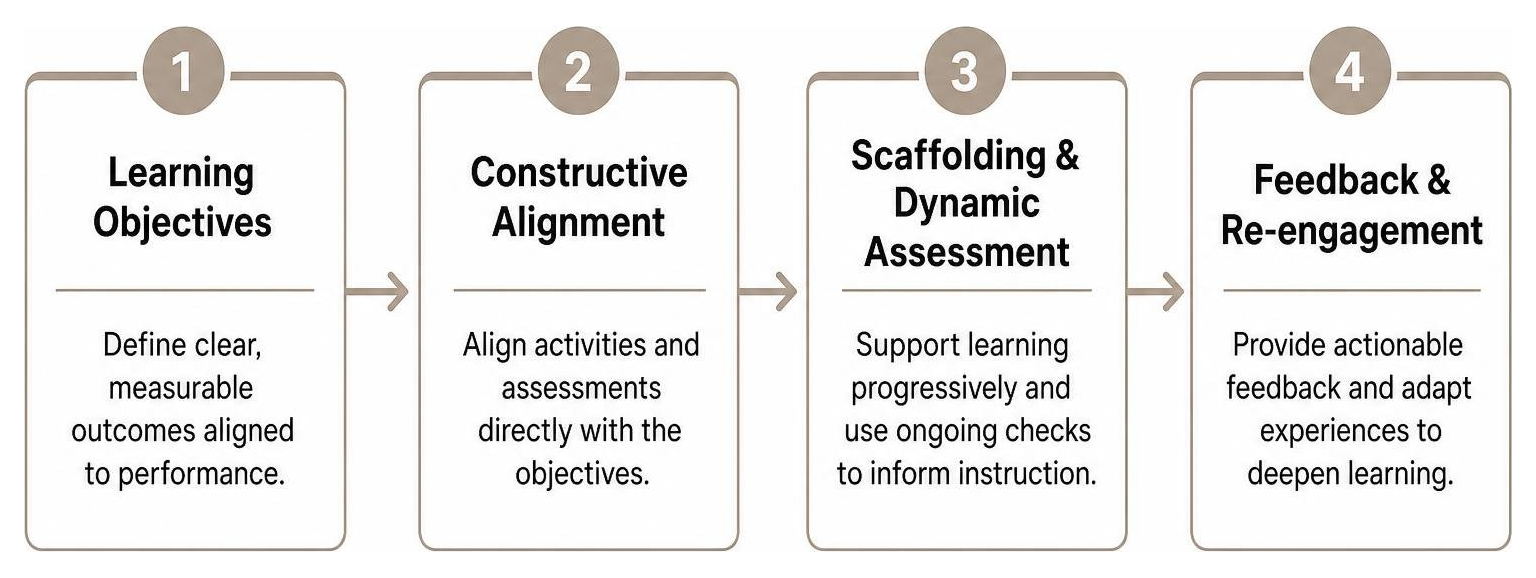
Designing a successful session requires moving from content delivery to learning experience design. As author and mindfulness expert Michelle Maros emphasizes, creating meaningful growth requires intentional environments that foster authentic connection and active engagement. Educators and corporate leaders must align activities directly with desired performance outcomes.
Universal Design and Inclusive Learning Environments
Interactivity must be accessible to every participant. Applying Universal Design for Learning (UDL) principles ensures that diverse learning styles, physical abilities, and neurodiverse backgrounds are fully supported:
- Multiple Means of Engagement: Offer choice in how tasks are completed, such as competitive team games, individual quiet reflections, or collaborative group builds.
- Multi-Device and Multi-Modal Input: Provide anonymous digital polling tools alongside physical hand-raising or written note boards. This encourages input from hesitant or introverted speakers.
- Accessibility Standards: Ensure all digital interfaces adhere to WCAG level AA compliance and Section 508 standards for screen readers, high-contrast visual display, and closed captioning.
Creative exploration environments like our Meet the Artist Within Workshop showcase how hands-on, multi-sensory experiences lower barriers to creative expression and foster inclusive engagement.
Dynamic Assessment and Continuous Feedback
Assessment in an interactive environment is not a final exam; it is a continuous driver of engagement. Formative assessments—such as real-time polls, rapid pulse checks, and open-ended reflection prompts—give facilitators immediate insight into room comprehension.
When instructors receive instant feedback, they can modify lesson plans on the fly, addressing confusion immediately rather than discovering gaps weeks later. Research from Harvard and Stanford demonstrates that this real-time error correction provides learners with metacognitive support, helping them evaluate their own understanding as they progress.
Technology and Tools Empowering Dynamic Education
Modern technology eliminates friction, allowing complex interactions to take place seamlessly across physical spaces, digital classrooms, and hybrid work environments.

Interactive Learning Experiences in Digital Environments
Zero-friction software allows learners to launch complex simulations directly inside a web browser without tedious local setups or accounts:
- Machine Learning Mechanics: Learners can experiment with hyperparameter tuning, reward curves, and decision loops in real time using the client-side Reinforcement learning interactive lab.
- Formal Mathematical Logic: Mathematical reasoning becomes interactive through drag-and-drop proof interfaces like Interactive formal logic exercises, turning formal logic into progressive achievements.
- DevOps Infrastructure Triage: Technical professionals learn container orchestration by solving live simulated job incidents using the Interactive DevOps container simulation.
Visual Systems and Mathematical Modeling
Visual metaphors make abstract, non-linear concepts instantly understandable. For example, complex system behaviors, tipping points, and feedback loops are beautifully simplified through the Scientific model of attractor landscapes, which lets users manipulate dynamic system topographies visually.
Organizations seeking to customize these experiential methodologies for their own teams can submit a Workshop Application Form to co-create tailored programs.
Frequently Asked Questions About Interactive Learning
What is the main difference between passive and interactive learning?
Passive learning positions the learner as a receptive audience, focusing on listening to lectures or reading materials with delayed feedback. Interactive learning is learner-centered; it requires active cognitive synthesis, problem-solving, collaboration, and real-time decision-making, accompanied by immediate feedback.
How does interactive learning improve knowledge retention?
Active participation activates multiple neural networks simultaneously. When learners apply concepts, participate in debates, or navigate simulations, their brains engage in active recall and memory consolidation. Research from institutions like Harvard and Stanford indicates active engagement can boost information retention by up to 75% compared to passive formats.
How can educators make interactive activities inclusive for introverted learners?
Educators can balance live group activities with anonymous digital polling, clear role assignments during small group work, and dedicated quiet reflection time. Providing options for written or digital input ensures neurodiverse and introverted learners contribute comfortably without feeling overwhelmed by vocal group dynamics.
Elevating Connection and Learning with Loopwell
At Loopwell, we believe that true transformation happens when world-class insights meet intentional, hands-on application. Grounded in research from leading institutions like Harvard and Stanford, our approach replaces passive presentations with immersive, science-backed experiences that foster genuine human connection and long-term skill retention.
Whether hosting executive offsites, wellness retreats, or corporate watching events—such as global FIFA watch parties—we provide a premier setting tailored for dynamic engagement. Located conveniently for teams in New York City, Montclair, and across Northern New Jersey, our spaces feature full screen walls, high-end catering, private parking, and luxury amenities designed to make every event unforgettable.
Discover how our unique combination of global thought leadership and expert local practice can transform your organization's offsites and workshops by exploring Loopwell Professional Events.